





 Nov 17, 2025
 View:1059
Choosing the right coolant filling machine can seem hard. You need a machine that works with your coolant. It should fit your container type. It must match your production speed. It should meet your automation needs. Picking the right machine helps you avoid problems. These problems include uneven fill levels, spills, trapped air, or clogs. Look at some common problems in the table below:
| Challenge | Description |
|---|---|
| Inconsistent fill levels | Customers may not be happy. This can hurt your brand’s trust. |
| Product spillage or contamination | Wastes materials and can make things dirty. Cleanliness is very important. |
| Air trapping | Can shorten shelf life and hurt product quality. This is worse in airtight containers. |
| Clogging or blockages | Can stop your work. This causes delays and costs more money. |
| Need for regular maintenance | You must do upkeep to stop surprise problems. This keeps your machine working well for longer. |
A good filling machine can help you be more accurate. It can make your work faster. It can help you save money when filling antifreeze or engine coolant.
Key Takeaways
Picking the right coolant filling machine stops spills and bad fills. This helps your production line work well.
Think about how thick your coolant is. Choose a filling machine that works with your coolant. This makes sure it works fast and fills right.
Look at your container shapes and sizes. Make sure the filling machine can fill all your containers. This helps the machine work its best.
Using automation can save time and money. Decide how much automation you want for your goals.
Taking care of your machine helps it last longer. Make a checklist to keep your filling machine working well.
Coolant Filling Machine Overview
What Is a Coolant Filling Machine?
A coolant filling machine puts coolant into containers. It can fill bottles, drums, or tanks. You might see these machines in car factories or chemical plants. They make sure each container gets the right amount. You can use them for thin or thick coolants.
There are different kinds of filling machines. Each type is good for a certain job. Check out this table to learn about the main types:
| Type of Machine | Description |
|---|---|
| Piston Filling Machine | Good for small containers with thick coolants. |
| Drum Filling Machine | Works for big containers like 55-gallon drums. It handles many liquids. |
| Gravity Filling Machine | Best for thin fluids. It uses gravity and works well with watery coolants. |
These machines can do many jobs. Some work with RapidCharge® M multi fluid systems to save money. Others help refill engine coolant or antifreeze in cars. Some machines fill large amounts or recycle coolant.
Why Selection Matters
Picking the right filling machine is important. If you choose the wrong one, you may have problems. You could get slow production or spend more on repairs. Bad choices can also lower product quality. The right machine keeps your work smooth and saves money.
Here are some things that matter for your production:
| Factor | Impact on Production Efficiency and Product Quality |
|---|---|
| Automation Level | Makes work faster and needs fewer workers. |
| Filling Accuracy | Helps you work better and lose less product. |
| Container Compatibility | Lets the machine fill different containers easily. |
| Build Quality | Makes the machine last longer and cost less to fix. |
| Consistent Fill Levels | Helps your brand and keeps customers happy. |
You want a coolant filling machine that fills containers right every time. Small mistakes can waste money and hurt your business. The right antifreeze filling machine gives better results and happier customers. You also save coolant and keep your line moving.
Tip: Always pick filling machines that match your coolant, container size, and production needs. This helps you get the best results with antifreeze and engine coolant.
Key Criteria for Filling Machine Selection
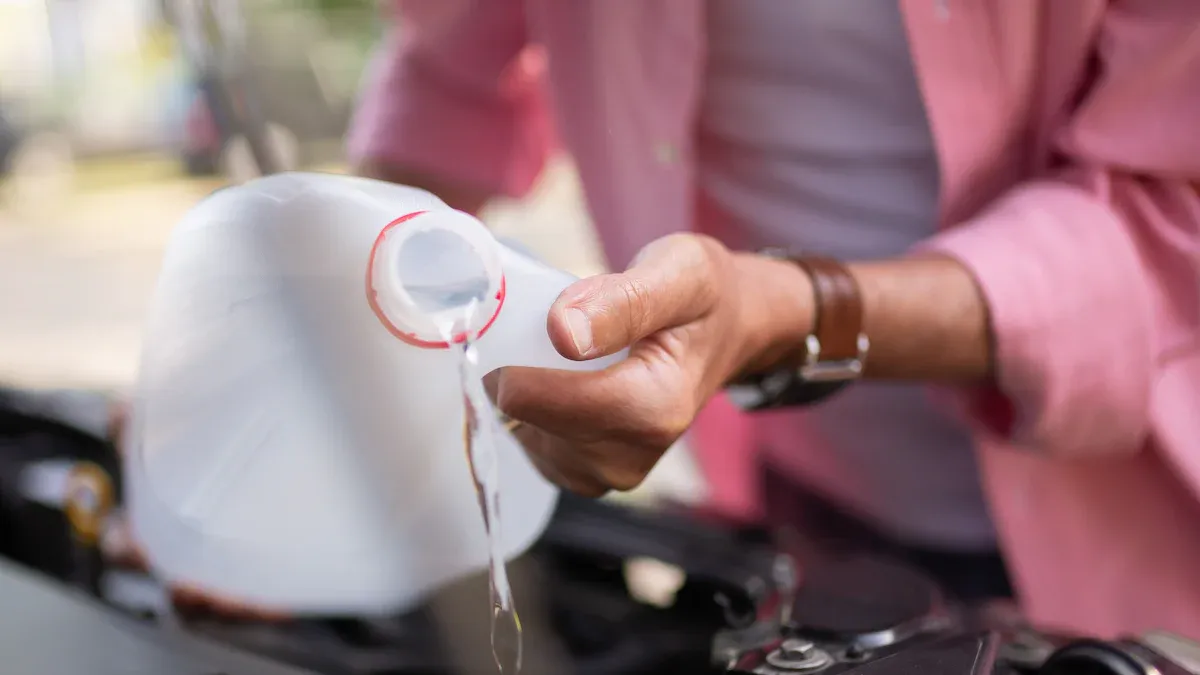
When you look for the best coolant filling machine, you should think about a few things. Each thing can change how your production line works. Let’s look at what you need to check before you pick one.
Product and Coolant Viscosity
How thick your coolant or antifreeze is matters a lot. Some coolants are thin like water. Others are thick and sticky. You need a filling machine that matches your product’s thickness. If you pick the wrong machine, you might get slow fills or messy spills.
Here is a quick guide to help you match your coolant with the right filling machines:
| Liquid Type | Recommended Filling Machines |
|---|---|
| Free-Flowing Liquid | Overflow and gravity filling machines |
| Viscous Liquid | Pump and piston filling machines, vacuum fillers |
If you use thick engine coolant or heavy-duty antifreeze, piston filling machines work well. For thin coolants, gravity or overflow machines are better. Always check your coolant’s thickness before you choose.
Container Types and Sizes
You may use different containers for your coolant or antifreeze. The size, shape, and material of your container can change which filling machine you need. Some machines work best with bottles or jars. Others handle big drums or flexible pouches.
Rigid plastic or glass bottles fill well with vacuum-level filling machines.
Jars and flexible containers often need a volumetric filling system.
Large containers (over 5 liters) may need a system with a mobile nozzle.
Narrow openings need precision-controlled nozzles for accurate filling.
Odd shapes can change how the machine works, so make sure your filling machine can handle both regular and strange-shaped containers.
Ask yourself:
What types of containers do I use most?
Do I need to fill more than one size or shape?
Are my containers easy for a filling machine to handle?
Fill Rate and Production Speed
How fast do you need to fill your containers? Your answer will help you pick between manual, semi-automatic, or automatic filling machines. If you want to fill more containers quickly, you should look at how many you need to fill each hour.
| Machine Type | Production Speed | Efficiency Level | Labor Requirement |
|---|---|---|---|
| Manual | Low | Low | High |
| Semi-Automatic | Moderate | Moderate | Moderate |
| Fully Automatic | High | High | Low |
If you run a small shop, a manual or semi-automatic machine might work. But if you want to fill lots of bottles, automatic filling machines save time and help you make fewer mistakes. They also help you keep up with high production volume.

Automation Options
Automation can make things easier. Some filling machines have smart features that help you save time and money. For example, systems like FlexxCool can automate the whole coolant process. They help you avoid spills, keep the right concentration, and let your machines run without anyone watching. Other options, like Blaser AutoPilot, watch your coolant’s temperature and level. Will-Fill systems track how much coolant you use and show you reports in the cloud.
| Automation Option | Benefits |
|---|---|
| FlexxCool Coolant System | Automates coolant process, saves labor, prevents spills, keeps concentration steady, improves safety |
| Blaser AutoPilot | Monitors and controls coolant, reduces use, lowers maintenance, keeps workers happy |
| Will-Fill | Tracks coolant use, increases tool life, gives reports, helps you manage coolant health |
Think about how much you want to automate. Do you want your team to do other jobs? Do you want to avoid coolant spills or keep your engine coolant at the perfect level? Automation can help with all of these.
Space and Layout
Don’t forget to check your workspace. Some filling machines need a lot of room. Others fit into small spaces. Before you buy, measure your area and think about how the machine will fit with your other equipment. Make sure you have enough space for workers to move around safely.
Tip: Always ask these questions before you choose a filling machine:
What type and viscosity of coolant or antifreeze do I use?
What containers do I need to fill?
How many containers do I fill each day?
Do I want to automate my process?
How much space do I have for a new machine?
If you answer these questions, you’ll make a smart choice. You’ll find a coolant filling machine that fits your needs, saves you money, and keeps your production line running well. Whether you fill engine coolant, antifreeze, or other liquids, the right liquid filling machines make a big difference.
Comparing Filling Machine Types
Piston Filling Machine for Small Containers
If you fill small bottles of engine coolant or antifreeze, piston filling machines are a good choice. These machines use a piston to push liquid into each bottle. They work well with thick coolants and pastes. You can fill bottles very accurately, with only a small error. Many people like these machines because they cost less and work with many liquids.
Here’s what piston filling machines offer:
| Advantages | Disadvantages |
|---|---|
| Reliable technology | Not as accurate for bottles under 100ml |
| Very precise filling | Cleaning can be hard because of tight spaces |
| Works with liquids and pastes | Piston parts wear out and need fixing |
| Costs less than other machines |
If you need to fill lots of small bottles, this machine helps you keep up with your work. But cleaning takes extra time, and you may need to fix worn parts.
Gravity and Net Weight Machines for Large Volumes
If you fill big drums or tanks with coolant or antifreeze, gravity and net weight machines are best. Gravity machines use gravity to move the liquid down. Net weight machines check the weight as they fill each drum. Both types help stop spills and make sure each drum gets the right amount.
You can use these machines for engine coolant, antifreeze, or other liquids. They work with large containers and help you fill many drums quickly. If you need to fill lots of drums every day, these machines can handle it.
Volumetric Filling Machine
Volumetric filling machines use a set amount of liquid for each fill. They work well for many kinds of coolant and antifreeze. You can change the amount for each bottle or drum. These machines often use a piston pump for high accuracy.
Here are some features of volumetric filling machines:
| Feature Description | Relevance to Coolant Applications |
|---|---|
| Piston pump filling | Very accurate for all types of coolant |
| Easy to clean and sterilize | Keeps your work safe and clean |
| PLC control system | Makes filling automatic and quick |
| No bottle, no filling | Stops mistakes and waste |
| Adjustable filling quantity | Lets you fill different sizes easily |
| Anti-dropping equipment | Prevents spills and keeps your area clean |
| Works with many bottle sizes | Good for different packaging needs |
| Meets GMP standards | Makes sure every batch is safe and high quality |
Machine Suitability
There are many filling machines to choose from. Piston filling machines are best for small bottles and thick liquids. Gravity and net weight machines are great for big drums and fast work. Volumetric filling machines give you accuracy and work with many coolants and antifreeze.
Tip: Always pick a filling machine that matches your product, container, and how much you need to fill. This makes choosing easier and helps you avoid problems.
You might also see inline filling machines or rotary filling machines for faster lines. Some companies use bottle filling machines for small jobs or automatic filling machines for big factories. If you need to fill powders, powder filling machines are available too. The right coolant filling machine helps you keep your engine coolant and antifreeze production running well.
Improved Accuracy and Integration
Ensuring Improved Accuracy
You want each bottle to have the right amount. Improved accuracy helps you do this. New filling machines use smart tools to help you fill bottles right. Some systems, like Coolant Fill, look for leaks and keep records. AccuFill Coolant Fill uses PLC controls for careful filling in car factories. FlexxCool mixes coolant and keeps the level correct. Precision coolant systems use strong pressure to help tools last longer and work better. Here is what these technologies can do:
| Technology | Features |
|---|---|
| Coolant Fill | Checks for leaks, gives the right mix, keeps records |
| AccuFill Coolant Fill | Uses PLC controls, works in many car factories |
| FlexxCool | Mixes coolant, watches sump level, controls concentration |
| Precision coolant | Uses high pressure, helps tools last, controls chips |
Automatic filling machines help you fill coolant and antifreeze faster. You waste less and keep your product quality high. Your production stays steady.
Compatibility with Caps and Containers
Your filling machine should work with all your bottles and caps. Some bottles are glass, and some are plastic. They come in many shapes and sizes. If your machine fits your containers, you avoid problems. You won’t get bottles that don’t line up or seal right. Filling machines need to handle different bottles and caps. This keeps your coolant and antifreeze safe and clean. Good capping machines seal bottles tight. This protects your product and makes customers happy.
Integration with Production Line
Adding a new filling machine needs good planning. You want your line to work well. Here are some tips for easy setup:
Match the conveyor height so bottles don’t fall.
Make the conveyor speed match the filler.
Use sensors to start and stop the machine.
Check power, air, and water connections.
Make sure the floor can hold the machine.
Check the machine details with your supplier.
Teach your team how to use the new machine.
Make a clear plan for installation.
If you do these things, you can fill coolant and antifreeze without problems. Your production line will work better. You will get more accurate fills in every batch.
Maintenance and Cost Considerations
Maintenance Needs
You want your filling machines to last and work well. Regular care helps your coolant and antifreeze production run smoothly. Here are some steps you should follow:
Lubricate moving parts often. This lowers friction and helps parts last longer.
Calibrate the machine to keep it accurate. This stops waste and makes sure each bottle or drum gets the right amount.
Check the electrical system often. Regular checks help you find small problems before they get worse.
Update the software when needed. New updates can help your filling machine work better and faster.
Train your team well. When everyone knows how to use the machine, you get less downtime and fewer mistakes.
If you do these tasks, your automatic filling machines will stay reliable. You will also have fewer breakdowns and lower repair bills. Good maintenance keeps your engine coolant and antifreeze products safe and high quality.
Tip: Make a simple checklist for daily, weekly, and monthly maintenance. This helps you remember every step.
Cost Factors
When you think about the cost of a new filling machine, you need to look at more than just the price. Many things can change the total cost over time. Here are some key points to think about:
The type of products you fill matters. Some machines work best with liquids, while others handle powders. If you need powder filling machines or bottle filling machines, pick the right one for your product.
Machine speed and efficiency affect how many bottles or drums you can fill each hour. Faster machines help your business grow.
Maintenance costs add up. Some filling machines need more care than others. Look for good warranties and service plans.
Space is important. Make sure you have enough room for your new machine so your workflow stays smooth.
Technology compatibility helps your machine work with your other systems. This includes inventory tracking and quality checks.
Choosing the right filling machine for your coolant and antifreeze line saves money over time. You get better accuracy, less waste, and a smoother production process.
Final Selection Steps
Actionable Steps
You want to make the best choice for your production line. Here’s how you can move forward with confidence:
List Your Needs: Write down what you need from a coolant filling machine. Think about the type of coolant, the size of your containers, and how fast you want to fill them.
Check Product Viscosity: Make sure you know if your coolant or antifreeze is thick or thin. This helps you pick the right filling machine.
Review Your Production Goals: Decide how many bottles or drums you want to fill each day. This will guide your selection.
Look at Automation: Ask yourself if you want a manual, semi-automatic, or fully automatic machine. Automation can save you time and labor.
Measure Your Space: Check your workspace. Make sure the new machine will fit and leave room for your team to move safely.
Ask About Compatibility: See if the machine works with your current line and containers. You want a smooth setup.
Plan for Maintenance: Find out how easy it is to clean and fix the machine. Ask about spare parts and support.
Compare Costs: Look at the price, but also think about long-term savings from better accuracy and less waste.
Talk to Experts: Don’t be afraid to ask for help. Suppliers can answer your questions and may offer demos.
Note: Many people make mistakes during selection. Some ignore the viscosity of their product. Others forget to check if the machine fits their production needs. Some skip checking automation features or forget about maintenance. Always ask for help if you feel unsure.
Quick Checklist
You can use this checklist to help with your final decision:
| Step | Done? |
|---|---|
| Know your coolant type | |
| Check container sizes | |
| Set your fill rate goal | |
| Decide on automation level | |
| Measure your workspace | |
| Confirm compatibility | |
| Plan for maintenance | |
| Compare total costs | |
| Ask for expert advice |
If you follow these steps, you will find a filling machine that fits your needs. You will fill engine coolant and antifreeze with less waste and more accuracy. Your production line will run smoother, and your customers will notice the difference.
You now know how to choose the best coolant filling machine for your line. Take some time to think about what you need. Use the checklist before you make a choice. Picking the right machine helps you fill bottles more accurately. It also keeps your antifreeze production running well. Here are some real benefits you will get:
| Benefit | Description |
|---|---|
| Consistent Quality | Keeps the oil and water mix just right. |
| Better Accuracy | Makes parts smoother and more exact. |
| Efficiency | Stops delays and cuts down on waste. |
You will also see your fills stay the same every time. You will spend less money fixing machines. You can save a lot of money in the long run. Ask suppliers for help or to show you how the machine works. Your production will be smoother and your results will get better.
FAQ
How do I know which filling machine fits my coolant?
You should check your coolant’s thickness. If it feels watery, a gravity filler works well. If it feels thick, try a piston or pump filler. Ask your supplier for a sample test.
Can one machine fill different container sizes?
Yes, many machines let you adjust settings for bottles, drums, or jugs. You can switch sizes fast. Just make sure the machine supports your container shapes and caps.
How often should I clean my filling machine?
You should clean your machine every day you use it. This keeps your coolant safe and your machine running well. Some machines have easy-clean features to save you time.
What if my production needs change later?
You can choose a modular filling machine. These machines let you add new parts or upgrade features. You can grow your line without buying a whole new system.
Do I need special training to use these machines?
Most machines come with simple controls. Your team can learn fast. Many suppliers offer training videos or on-site help. You can always ask for a demo before you buy.