





 Sep 08, 2025
 View:2970
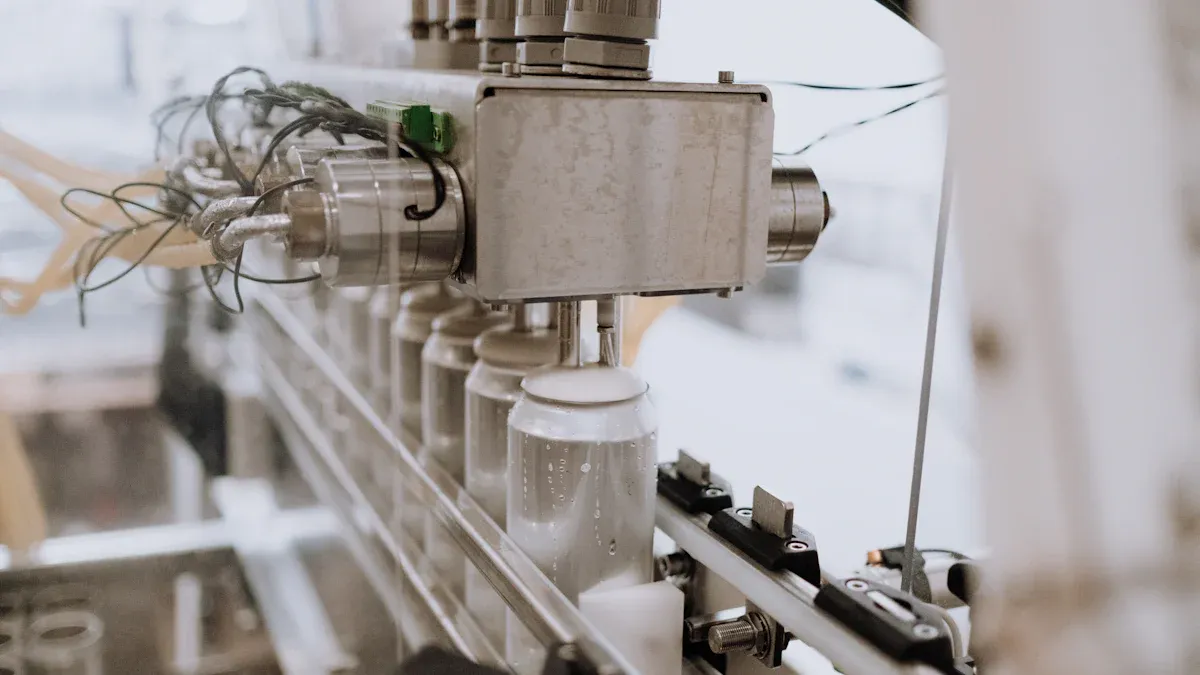
You see a liquid soap filling machine in action as it moves bottles along a conveyor. Pumps or pistons measure the right amount of soap. Sensors check each bottle for position and fullness. The machine dispenses soap quickly and keeps each step clean. Automatic systems refill the reservoir so you never stop production. This process gives you accurate fills, saves time, and keeps your product safe.
Key Takeaways
Liquid soap filling machines automate the filling process, ensuring accurate fills and reducing production time.
Key components like conveyor belts, sensors, and pumps work together to maintain efficiency and prevent spills.
Automatic refill systems keep the soap reservoir full, allowing for continuous production without manual checks.
Advanced measurement technologies guarantee consistent fill levels, which is crucial for product quality.
Hygiene standards are maintained through the use of food-grade materials and easy cleaning processes, protecting both products and customers.
Liquid Soap Filling Machine Process
Machine Components
You interact with several important parts when you use a liquid soap filling machine.
Conveyor belt moves bottles through each stage.
Rotation table turns containers so they reach the filling station at the right time.
Capping section closes bottles to stop leaks and spills.
HMI control panel lets you adjust settings and monitor the process.
Filling spouts control how much soap goes into each bottle.
Hopper holds the bulk liquid soap before filling starts.
Discharge hopper helps feed the soap into the system.
Each part works together to keep the process smooth and efficient.
Conveyor and Bottle Handling
The conveyor belt carries bottles from the start to the end of the filling process. You see bottles line up and move forward automatically. The rotation table helps position each bottle so the filling heads can work quickly. The capping section seals bottles after filling, which prevents messes and keeps your product safe. You control these steps using the HMI panel, making changes as needed.
Pump and Piston System
You rely on pump and piston systems to measure and move liquid soap. Piston fillers work well for thick soaps or those with small particles. These machines fill a cylinder with soap, then push it into bottles. Pump fillers handle different soap thicknesses and let you adjust how fast and how much soap gets filled. You get accurate fills every time, even with gritty or dense products.
Sensors and Automation
Sensors and automation make your liquid soap filling machine smarter.
Tip: Automation helps you save time and reduce mistakes.
| Feature | Benefit |
|---|---|
| Servo Motor Control | You get precise volume and steady speed, which reduces spills. |
| Automatic Bottle Detection | The machine checks for bottles before filling, stopping waste. |
| Programmable Memory | You switch between products quickly, making your work flexible. |
Sensors also watch the reservoir. When soap runs low, the machine refills it automatically. You keep production going without stopping.
Operation Steps
Reservoir Setup
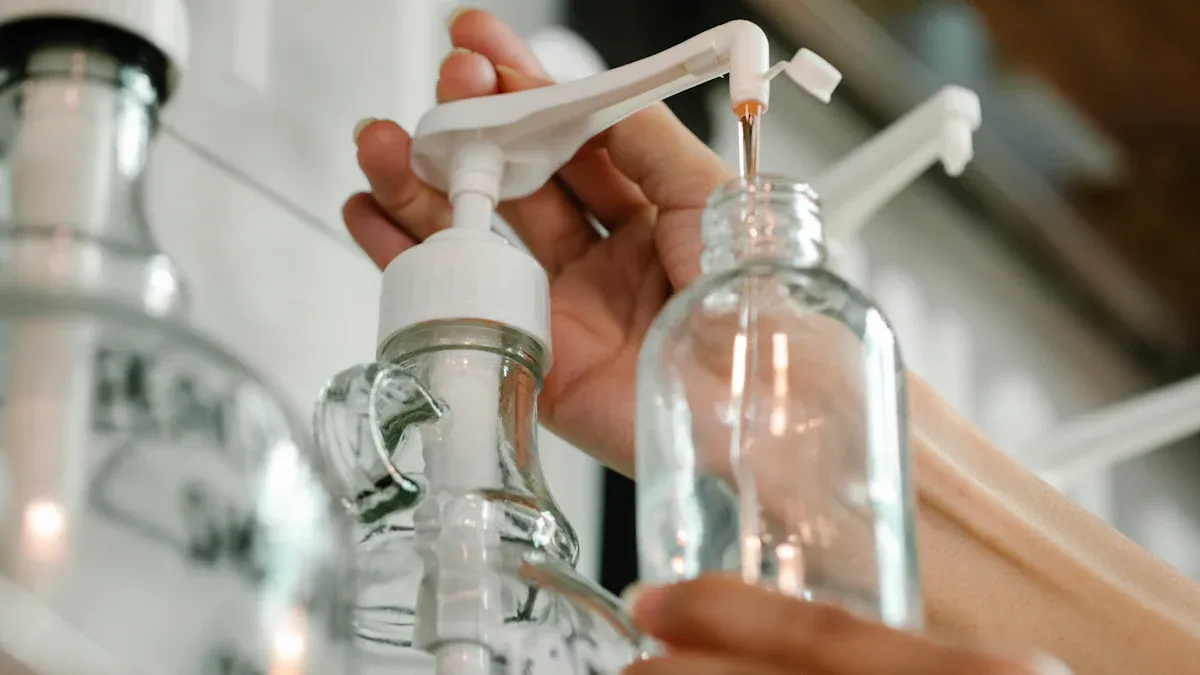
You start by preparing the reservoir. The hopper holds the bulk liquid soap before the filling begins. Level sensors monitor the amount of soap in the hopper. When the soap drops below a set level, the sensor signals the feeding pump. The pump adds more soap until the hopper is full. This automatic refill system keeps your liquid soap filling machine running without interruption. You avoid manual checks and reduce downtime.
Tip: Automatic refill mechanisms help you maintain a steady workflow and prevent production delays.
Measurement and Metering
You rely on precise measurement and metering technologies to ensure every bottle gets the right amount of soap. The machine uses volumetric filling, piston filling, and metering filling systems. These technologies guarantee consistent fill levels, which is vital for quality and efficiency.
| Technology Type | Description |
|---|---|
| Volumetric Filling | Guarantees accurate dispensing, ideal for cosmetics and personal care items. |
| Piston Filling | Draws liquid into a chamber and discharges it, perfect for thick soaps. |
| Metering Filling | Uses electronic or mechanical systems for exact dosing and less waste. |
You select the right technology based on your product’s viscosity and production needs. This step ensures that every bottle meets your standards.
Filling and Dispensing
You watch as bottles move along the conveyor. The filling heads dispense soap into each bottle with precision. Piston fillers and pump-based systems control the flow and volume, preventing spillage. The average filling speed ranges from 1,000 to 6,000 bottles per hour, so you complete large batches quickly.
Precise filling mechanisms prevent spills and keep your workspace clean.
Secure capping heads tighten caps to stop leaks.
Rotary indexing and heat sealing create airtight seals for extra protection.
You achieve consistent output and minimize product loss during this stage.
Overfill Prevention
You depend on advanced systems to prevent overfilling. Sensor calibration ensures the machine fills each bottle to the correct level. Automated systems measure sensor data and monitor performance in real time. Preventive maintenance programs help you address issues before they cause problems.
Overflow filling machines manage foam and fill bottles to a specific level.
Excess soap returns to the holding tank, reducing waste.
Real-time monitoring and AI tools alert you to performance drifts.
You keep your product quality high and avoid unnecessary waste.
Automatic Refill
You benefit from automatic refill mechanisms that keep the process smooth. Level sensors track the soap in the hopper. When the level drops, the sensor activates the feeding pump. The pump adds more soap and stops when the hopper is full.
The system works without manual intervention.
You maintain continuous production and avoid running out of material.
Note: Automatic refill systems help you save time and reduce labor costs.
Features
Precision
You achieve high precision with a liquid soap filling machine. These machines use piston pumps and adjustable filling volumes to make sure each bottle gets the right amount of soap. Automated systems help you avoid mistakes and keep every fill consistent.
You can trust the machine to fill bottles evenly, which reduces waste and keeps your customers happy.
| Feature | Benefit |
|---|---|
| Piston pumps | Push thick liquids into bottles evenly and accurately |
| Adjustable filling volumes | Measure different liquid types for correct volume in each container |
| Automated systems | Minimize human error and boost efficiency |
Advanced models reach an accuracy rate of ±0.5%, so you get reliable results every time.
Hygiene
You keep your products safe by following strict hygiene standards. The filling parts use food-grade materials like SUS304 and SUS316. Smooth surfaces stop bacteria from growing. You clean the machine easily, which helps prevent cross-contamination.
Machines include internal cleaning devices for fast sanitation.
You avoid bacterial breeding by making sure no liquid stays behind.
Note: Hygiene is important for both food and cosmetic products. You protect your brand and your customers.
Automation
Automation makes your work easier and faster. You run the machine with little operator attention, which saves labor costs. The system fills hundreds or thousands of bottles per hour.
Automated controls optimize production flow.
You reduce errors and improve safety.
Integration with other systems boosts efficiency.
| Feature | Description |
|---|---|
| Accuracy | Precise volume filling, less waste, better quality control |
| Speed | High-speed operation meets large orders quickly |
| Hygiene | Follows strict protocols for safe products |
| Integration | Connects with other machines for smooth workflow |
Tip: Automation helps you meet demand and improve profit margins.
Applications
You use liquid soap filling machines in many industries. These machines fill personal care products, hand sanitizers, cosmetics, and cleaning liquids.
Small businesses use compact, semi-automatic units for flexibility.
Large factories rely on high-speed automatic machines for big orders.
Modular designs let you add capping and labeling for a complete solution.
| Industry | Application |
|---|---|
| Personal Care | Liquid soap filling |
| Health | Hand sanitizer filling |
| Beauty | Cosmetic liquid filling |
| Cleaning Products | Various liquid cleaning products |
You can customize the machine for water, sauces, oils, and more. This flexibility helps you grow your business.
You follow a clear process when using a liquid soap filling machine. Each step helps you get accurate, clean, and fast results.
| Step | How It Helps You |
|---|---|
| 1 | Connect the soap container for steady supply. |
| 2 | Pump soap for exact measurement. |
| 3 | Dispense soap with pressure for smooth flow. |
| 4 | Close the valve to stop overfilling. |
| 5 | Use sensors to refill and keep production going. |
When you choose a machine, think about these factors:
Production speed
Accuracy
Container compatibility
Cleaning ease
Cost and return
A good machine helps you work smarter and keeps your products safe.
FAQ
How do you clean a liquid soap filling machine?
You clean the machine by running a cleaning solution through the system. You remove and wash the filling heads. You wipe down surfaces with a soft cloth.
Tip: Clean the machine after each production run to keep your products safe.
Can you fill different bottle sizes with one machine?
You adjust the filling volume and change the bottle guides. The machine handles many sizes.
| Bottle Size | Adjustment Needed |
|---|---|
| Small | Lower volume |
| Large | Higher volume |
What types of liquid soap can you fill?
You fill thick, thin, or foamy soaps. The machine works with hand soap, body wash, and sanitizer.
Thick soap: Use piston fillers
Thin soap: Use pump fillers
How do sensors help you avoid overfilling?
Sensors check each bottle’s level. The machine stops filling when the bottle reaches the set amount.
Sensors help you save soap and prevent messes.
Is it easy to switch between products?
You rinse the system and select new settings on the control panel. You change the filling heads if needed.
You switch products quickly and keep your workflow smooth.