





How Fertilizer Packaging Machines are Revolutionizing Agribusiness
 Sep 16, 2025|
 View:1536
Far from being a simple bagging apparatus, the modern fertilizer packaging line has evolved into a sophisticated, intelligent, and highly efficient nexus of data, precision, and reliability. This article explores the key technological trends transforming this vital equipment and how they are delivering tangible value to producers and the planet.
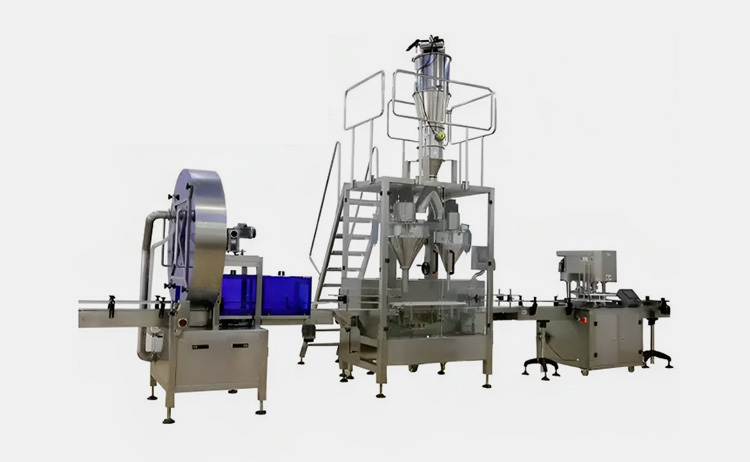
From Mechanical Workhorses to Integrated Cyber-Physical Systems
The traditional image of a packaging machine—a loud, mechanical, and purely functional device—is rapidly becoming obsolete. Today’s systems are cyber-physical, seamlessly blending advanced mechanics with digital intelligence. This transformation is driven by several interconnected innovations:
1. Precision Weighing and Filling Technologies:
The core function of any packaging machine is to accurately measure and dispense product. Modern machines have made leaps in this area, moving from simple mechanical scales to highly accurate electronic weigh cells and gravimetric or volumetric fillers. Advanced multi-head weighers, once common only in the food industry, are now being adapted for certain types of fertilizer, offering breathtaking speed and accuracy. For larger, free-flowing granular fertilizers, state-of-the-art weigh-fill systems with servo-driven gates can achieve accuracies within a fraction of a gram, minimizing "giveaway" (the costly practice of overfilling to ensure minimum weight compliance). This precision directly translates to massive savings in raw material costs over time.
2. The Rise of Robotics and Automation:
Automation has moved beyond the filling process itself. Robotic arms are now commonplace on advanced packaging lines, performing a variety of tasks:
Bag Palletizing: Robots can tirelessly stack filled bags onto pallets in precise, stable patterns, reducing reliance on manual labor and eliminating the risk of repetitive strain injuries.
Bag Handling: Delta robots can gently pick and place empty bags from a stack onto the filling spout at incredible speeds, far exceeding human capability.
Quality Inspection: Vision-guided robots can inspect bags for correct placement of labels, proper sealing, and even micro-tears, ensuring only perfect products move down the line.
This level of automation ensures consistent output 24/7, drastically improving throughput and reducing operational costs.
3. The Internet of Things (IoT) and Data Analytics:
This is perhaps the most significant shift. Modern fertilizer packaging machines are equipped with a multitude of sensors that monitor every aspect of operation: motor torque, vibration, temperature, weight accuracy, seal integrity, and more. This data is fed into a centralized SCADA (Supervisory Control and Data Acquisition) system or a IIoT (Industrial Internet of Things) platform.
The benefits are profound:
Predictive Maintenance: Instead of following a rigid maintenance schedule or waiting for a breakdown (reactive maintenance), the machine itself can predict failures. An increase in motor vibration or a slight rise in bearing temperature can trigger an alert for maintenance, allowing repairs to be scheduled during planned downtime, thus avoiding catastrophic line stoppages.
Real-Time Operational Intelligence: Managers can monitor Overall Equipment Effectiveness (OEE), production rates, and waste metrics from their desktop or smartphone. This allows for data-driven decisions to optimize line performance.
Traceability and Quality Control: Every bag can be tracked. Data on the batch, time of production, and machine settings are logged for each unit. In the event of a quality issue, this enables incredibly precise and rapid recalls, protecting brand reputation.
4. Enhanced Flexibility and Quick Changeover
The market demand for diverse product offerings is increasing. Producers now package everything from standard 50lb bags of urea to small, premium 5lb bags of organic, slow-release formulations. Modern machines are built for this challenge. Features like tool-less adjustment, recipe-based settings, and modular components allow for rapid changeover between bag sizes and types. A single line can often handle woven polypropylene bags, paper bags, and even laminated bags with minimal downtime for reconfiguration, allowing manufacturers to respond agilely to market demands.
5. Sustainability and Sanitation Focus
The industry's growing focus on environmental responsibility is reflected in packaging machine design.
Dust Control: Fertilizer dust is a significant concern for worker safety, equipment health, and environmental contamination. Advanced machines feature integrated dust suppression systems, including negative pressure systems at the filling spout and improved sealing to contain particulates entirely.
Reduced Material Waste: Precision filling directly reduces product waste. Furthermore, advanced sealing jaws ensure strong, consistent seals with optimal temperature control, eliminating reject bags due to faulty closures and reducing plastic or paper waste.
Cleanability: Designs now prioritize easy cleaning and washdown, with stainless steel construction in critical areas and minimized ledges where material can accumulate. This is crucial for preventing cross-contamination when switching between different fertilizer types.
Choosing the Right Machine: Key Considerations for Buyers
With this array of technologies, selecting the right machine requires careful thought. Key considerations include:
Product Characteristics: Is the fertilizer granular, powdered, prilled, or crystalline? Is it free-flowing or does it have poor flow characteristics? This determines the type of filler (auger, cup, gravity) required.
Bag Type and Material: The machine must be compatible with the bags you use—be it valve bags, open-mouth bags, laminated, paper, or woven plastic.
Required Speed (Bags Per Hour): This is a primary driver of cost. Determine your current and future throughput needs.
Level of Automation: Assess your labor costs and long-term strategy. A higher initial investment in automation may yield a faster return on investment (ROI) through labor savings and higher uptime.
IIoT Readiness: Even if you're not ready for a full connected factory now, choosing a machine that is "IIoT-ready" ensures you can add sensors and data capabilities in the future, protecting your investment.
The humble fertilizer packaging machine has been transformed. It is no longer just a packer; it is a strategic asset. By embracing precision, automation, and data intelligence, modern machines are delivering critical competitive advantages: reducing operating costs, minimizing waste, ensuring impeccable quality, and providing unparalleled traceability. For forward-thinking agribusinesses, investing in this smart technology is not merely an equipment upgrade—it is a essential step toward building a more productive, sustainable, and resilient operation for the future. The revolution on the farm is being supported, in no small part, by a quiet revolution on the packaging line.