



How an Automated Lubricant Filling Line Reduces Labor Cost by 60% in Oil Manufacturing Plants
 Nov 25, 2026|
 View:11
An automated lubricant filling line cuts cost by 60 percent. It does this through precise filling, less waste, more output per hour, and moving workers to more valuable tasks. Automated weighing, load cell accuracy, speed, uptime, and data-driven ROI tracking drive these gains.
Labor costs make up most of the operating budget in oil manufacturing. A small overfill on every container adds up at scale and wastes material. Manual filling hides these losses in routine rework and corrective checks. Lubricant plants that record baseline hours and waste can confirm labor cost savings directly. Each mechanism links to a number a manager can check. Plant managers who track these figures see exactly where money leaves the floor.
Key Takeaways
Automated filling lines cut labor costs by 60% by filling containers exactly and reducing waste.
Load cells make sure each container gets the right amount. This cuts down on rework and wasted material.
Quicker cycles and less downtime mean more output per hour with fewer workers.
Workers switch from filling to watching and checking quality, which saves on the number of people needed.
Keep track of starting labor hours and waste to measure savings and figure out payback.
Automated Weighing Cuts Overfill and Rework
Hidden Labor Costs of Manual Filling
Manual filling relies on an operator's eye and hand. Small weight errors happen again on every container. Each error adds material cost and extra labor to fix it. Rework takes up hours and carries a cost that plants seldom track. An automated lubricant filling line removes this hidden drain. Automated weighing filling lines measure each container and stop the cycle at the target weight. Manual filling still works for small-batch operations with frequent recipe changes. Those plants accept slower cycles and higher error rates as a tradeoff. For high-volume lubricant manufacturing, the labor costs of manual correction grow with every shift. One small drift in nozzle timing forces a full recheck of the run. That recheck pulls operators away from productive work.
Tompacks builds automatic weighing type filling machines for this exact job. The equipment category targets weight-based filling for viscous products. A lubricant filling machine from this line checks each fill and rejects drift before it reaches the case. The machine holds the target weight without operator input. The result is steady labor cost savings across the shift. Operators no longer chase weight errors by hand.
Precision Weight Control Reduces Waste
Precision filling protects material and staffing at the same time. Automated weighing filling lines hold each container to a tight target. High filling accuracy cuts product giveaway to a minimum. Less giveaway means fewer containers to recheck and fewer batches to rework. Operators spend less time on corrective tasks. The savings add up across a full production run, and downtime costs fall. A plant that fills thousands of containers per shift sees the effect on both material use and staffing hours.
Automated weighing delivers measurable overfill losses reduction. Each rejected fill carries a cost in material and the labor to inspect it. This method takes the guesswork out of the fill cycle. Plants that adopt automated lubricant filling machines report lower rework hours and steadier output. The labor savings start at the nozzle and reach the shipping dock. Fewer corrections mean fewer stops and a cleaner production record.
Load Cells Ensure Filling Accuracy
How Load Cell Technology Works
A load cell turns weight into an electrical signal. The cell bends under the container's mass and sends a matching reading to the controller. The controller compares that reading to the target weight and stops the fill at the set point. This closed-loop check runs on every container without an operator. Steady fill weights come straight from the measurement. Steady weights cut corrective labor, because operators stop chasing drifting fills by hand.
Equipment choice depends on the product and the tolerance. PLC-controlled piston filling machines suit viscous lubricants, where a fixed piston stroke gives a repeatable volume. Load-cell weighing suits high-accuracy needs, where the target weight matters more than the volume. A lubricant filling machine built on load cells holds tight fill accuracy across a long run. Plants with thin margins on product giveaway often choose this path.
Accuracy Gains That Save Labor
Automated weighing filling lines take the manual check out of the fill cycle. Each container gets the same weight-based decision, so rework hours fall. High filling accuracy also cuts material losses that drive up costs. A plant that fills thousands of containers per shift sees the effect on both staffing and scrap.
Automated lubricant filling machines pair load cells with reject logic. Off-weight containers leave the line before they reach the case packer. Operators then spend their time on monitoring instead of correction. The result is lower labor cost per filled unit and a cleaner production record. Automated weighing pays back through fewer stops, less rework, and steadier output across every shift.
Automated Lubricant Filling Machines Improve Efficiency
Faster Cycles, Fewer Operators
Automated lubricant filling machines improve efficiency by making each fill cycle shorter and cutting the number of hands on the line. The National Institute of Standards and Technology (NIST) reports that automation raises packaging line efficiency by 25 to 40 percent. That gain comes from fewer interruptions and faster changeovers between product runs. A plant that fills thousands of bottles per shift sees the effect in every hour of production.
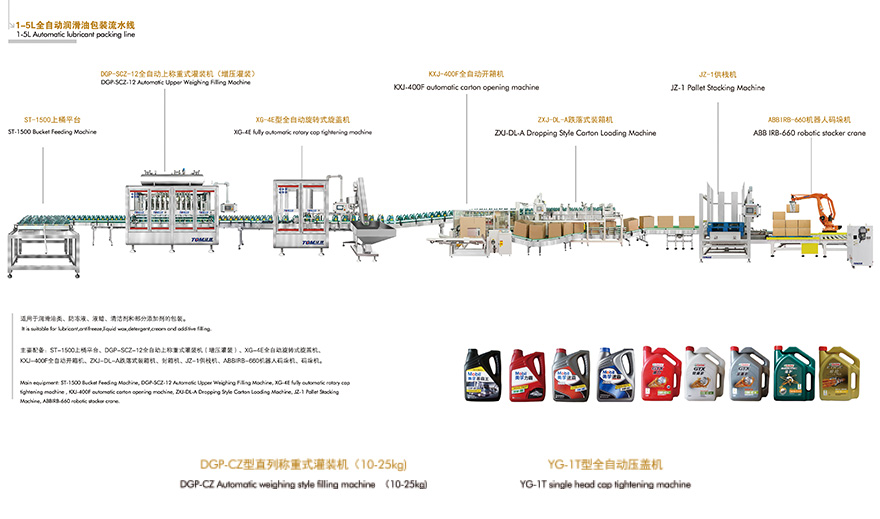
Robotic packaging of lubricant oil cuts down on mistakes and keeps the cycle steady. Simulation-based automation for 1L and 4L packages shows how a line can run those sizes without constant operator input. One operator can oversee an automatic filling line that once needed several workers at the nozzles. The labor cost savings show up as fewer hours per filled case. Automated weighing filling lines feed each container at a fixed rate, so the cycle time stays flat across the run. A lubricant filling machine built for high volume holds that pace without extra staffing.
Less Downtime, More Uptime
Uptime drives operational efficiency in manufacturing. Intelligent rotary weighing and capping machines keep containers moving without manual sorting. Bottle unscramblers feed the line at a steady rate and remove a common source of stops. These components keep throughput going across a full shift. Each stop that is avoided saves labor hours that would otherwise go to restart and recheck tasks.
Automated lubricant filling machines improve efficiency by linking these components into one flow. High filling accuracy reduces rejects, and fewer rejects mean fewer line stops. Automated weighing holds each fill to target and keeps the line running. The combined effect lowers costs on two fronts: fewer labor hours and less lost production time. Plants that track uptime against baseline hours can confirm the savings directly. Operational efficiency rises as stops fall, and the labor cost per unit drops with every steady shift.
Workforce Reallocation Drives Labor Cost Reduction
From Filling to Monitoring Roles
An automated lubricant filling line changes what an operator does during a shift. Manual filling ties one worker to one nozzle. That worker watches the fill, stops the flow by hand, and checks the weight afterward. Automation moves the fill decision to the machine. The operator steps back and takes on a different job.
Monitoring becomes the main task. An operator watches line status, reads reject counts, and makes sure each station runs at its set point. Quality control takes up more of the shift. The operator pulls samples, checks caps and labels, and logs results against the batch record. Maintenance tasks also go to the floor team. Operators do routine checks, clear jams, and flag wear before it causes a stop.
This shift changes the skill mix on the line. A plant needs fewer hands at the nozzles and more people who can read data and respond to faults. Training follows the same path. Workers learn the control interface, the reject logic, and the startup and shutdown sequence. The automated lubricant filling machines handle the repetitive motion. People handle judgment, verification, and repair.
The labor cost savings come from this split. One trained operator can oversee a line that once needed several workers at the fill stations. The plant pays for skill instead of headcount. That trade lowers labor costs without cutting output.
Staffing Models for a 60% Cut
A 60 percent labor cost reduction does not happen by accident. It comes from a staffing model that matches the line's real needs. The model starts with a baseline. A plant records the labor hours tied to filling, rework, inspection, and restart tasks before automation. That baseline shows where the hours go.
The post-automation model assigns roles by function. One lead operator runs the line and owns the shift record. A quality technician covers sampling and verification. A maintenance technician covers scheduled checks and fault response. The automated lubricant filling line does the filling, weighing, and rejecting on its own. The staffing plan reflects that division of work.
Plants can measure the result in plain terms. Total labor hours per shift divided by filled cases gives a labor cost per unit. A plant compares that figure to its baseline. The gap between the two numbers is the labor cost reduction. A lubricant filling machine that holds weight and rejects drift removes the rework hours that once inflated the baseline.
The model also protects uptime. Cross-trained staff can cover more than one role during breaks and changeovers. That flexibility keeps the line running and holds reduced labor expenses in place. Manufacturing plants that plan roles this way see the savings hold across shifts, not just on paper. The automated lubricant filling line becomes the fixed asset, and the staffing model becomes the lever that turns precision into a smaller payroll footprint.
Data Integration and Labor Cost Savings From Automation

Traceability Across the Line
Line integration connects every station into one data stream. The filler, capper, labeler, and case packer all report to a shared control system. Each container carries a record of its fill weight, cap torque, and timestamp. Managers can pull that record at any time and check it against the batch order. This traceability turns labor cost savings from automation into a number you can verify. A plant no longer depends on estimates. The system shows exactly how many containers passed, how many were rejected, and how many labor hours each shift used.
Data management supports the same goal. Reject counts, downtime events, and changeover times log on their own. A supervisor can compare one shift to the next and spot where labor hours slip. Automated weighing filling lines send weight data into the same system. That data confirms whether the line holds its target or whether a nozzle needs attention. The record replaces manual log sheets and the labor it took to fill them. Verification becomes a report, not a task.
Calculating ROI and Labor Cost Savings
A simple ROI calculation starts with the baseline. The plant records yearly labor costs tied to filling, rework, inspection, and restart tasks before automation. It also records material waste from overfill and rejected batches. After automation, the plant measures the same figures. The difference between the two sets gives the labor cost savings and the waste reduction. Dividing the total savings into the equipment investment gives the payback period in years.
Downtime and component life add to the total. Fewer stops mean fewer labor hours lost to restart and recheck. Longer component life means lower replacement costs across the year. Both figures feed into the same payback period calculation. A plant that tracks these numbers sees the full picture, not just the payroll line.
Tompacks supports this work through end-to-end line integration and EPC/EPCM-style engineering support. The company delivers the full line, from bottle unscrambler to case packer, and ties the components into one control system. That delivery model gives plant managers a single source for the equipment and the data that proves the savings. A lubricant filling machine from Tompacks connects to the same network as the capping and weighing stations. The result is a line that reports its own performance and a payback period the plant can defend with records.
The cost savings from automation become clear when the plant compares baseline and post-automation figures side by side. Labor hours fall, waste falls, and downtime falls. Each reduction shows up in the payback period. Managers who run this calculation before and after installation hold a number they can audit. That number is the strongest case for the next line.
Precision weighing, load cell accuracy, speed, uptime, workforce reallocation, and data integration work together as one system. Each mechanism removes a source of hidden labor, and together they produce the 60 percent reduction. An automated lubricant filling line turns those gains into records a manager can audit.
Plant managers should measure their own baseline labor hours and waste before they commit. ROI tracking then confirms the labor cost savings against real figures. The savings are measurable, and the cost case rests on data, not estimates.
Oil manufacturing grows more competitive each year. Plants that track their labor costs and verify results hold a stronger position. Automation gives them a factual basis for the next investment decision.
FAQ
How does an automated line reach a 60 percent labor reduction?
Precision weighing, load cell accuracy, faster cycles, and workforce reallocation work together. Each one removes hidden labor hours and lowers the cost per filled unit. Plants check the figure against their own baseline.
Where do load cells fit versus piston fillers?
Load cells work best for high-accuracy needs. PLC-controlled piston machines work best for viscous lubricants with repeatable volume. Both cut corrective labor and cost per unit.
Does manual filling still have a place?
Yes. Manual filling works for small-batch operations with frequent recipe changes. Those plants accept slower cycles and higher error rates. High-volume plants see labor costs grow with every correction, and each error adds cost.
How does a plant verify the savings?
The plant records baseline labor hours and waste, then measures the same figures after installation. The gap gives the labor cost savings. Dividing total savings into the investment gives the payback period. Downtime cuts add to the cost case, and waste reduction lowers material cost as well.
What staffing model supports the cut?
One lead operator runs the line. A quality technician covers sampling. A maintenance technician handles faults. The line fills, weighs, and rejects on its own, so headcount cost falls.