





Top 10 Hand Sanitizer Filling Line Manufacturers and Suppliers in 2026
 Jul 06, 2026|
 View:690
If you are looking for the best hand sanitizer filling line suppliers in 2026, you are in the right place. The covid-19 pandemic has transformed how people view hand hygiene products, and the global hand sanitizer market is expanding rapidly. This growth is driving increased demand for advanced hand sanitizer filling line technology across North America, Europe, and Asia-Pacific. Selecting the right partner for your hand sanitizer filling line ensures your production operates efficiently and complies with strict regulations at every stage, from ingredient measurement to labeling. In today’s world, where covid-19 has heightened the focus on safety and compliance, your choice of hand sanitizer filling line is more crucial than ever.
The global hand sanitizer filling line market is valued at approximately $3 billion.
North America leads with advanced hand sanitizer filling line technology and high disposable income.
Europe stands out for its strict standards and innovation in hand sanitizer filling line solutions.
Asia-Pacific, especially China, is experiencing rapid growth in the hand sanitizer filling line sector.
Countries like India and Indonesia are now driving new demand for hand sanitizer filling line equipment.
Key Takeaways
The hand sanitizer filling line market is worth about $3 billion. This shows it is growing fast and is very important.
Pick suppliers who help you after you buy. This makes sure your production works well and does not stop.
Find machines that can change parts to fit many bottle shapes and sizes. This helps you make different products easily.
Think about using automatic filling machines if you need to make a lot. These machines help you work faster and better, especially if your business is getting bigger.
Make sure your equipment has safety certificates like ISO and GMP. This helps you follow rules and sell to more places.
Top Hand Sanitizer Filling Line Manufacturers
Company Rankings and Profiles
You want to know which companies are important. In 2026, there are big companies and smaller ones. These companies have good machines and strong reputations. They sell their products in many places. Here are the top companies you should know:
Company Name | Founding Year | Headquarters Location | Global Reach |
|---|---|---|---|
GOJO Industries, Inc. | 1946 | Akron, Ohio | Global, with increased production due to COVID-19 |
Procter & Gamble Co. | 1837 | Cincinnati, Ohio | Global, with production in five plants worldwide |
Unilever | 1929 | London, England | Global, with significant operations in Australia & New Zealand |
Henkel AG & Co. KGaA | 1876 | Düsseldorf, Germany | Global, with production for local hospitals during COVID-19 |
Reckitt Benckiser Group plc | N/A | N/A | N/A |
LIENM Machinery | 1983 | China | Europe, North America, Southeast Asia |
Yekeey Machine | 1998 | China | Europe, South America |
NPACK Machinery | 2008 | China | U.S., Germany, Middle East |
Huituo Technology | 2003 | China | Asia-Pacific, North America, Europe |
TOM Machinery | 2006 | China | Africa, Middle East, Latin America |
You see famous brands and special equipment makers. These companies help hand sanitizer manufacturers with filling lines and packaging.
Key Strengths and Offerings
You want a good hand sanitizer filling machine. The best companies give you more than just machines. They focus on speed, flexibility, and support. Here is what makes them special:
High-Speed Production: LIENM Machinery and TOM Machinery make fast lines. You can fill lots of bottles quickly. This helps you finish big orders fast.
Customization: Yekeey Machine and Huituo Technology build machines for different bottles and caps. You get equipment that fits your product. It works for pump caps or flip-tops.
Energy Efficiency: Yekeey Machine designs machines that use less energy. You save money and help the planet.
Integrated Solutions: NPACK Machinery has semi-automatic and automatic lines. You can start small and grow bigger later.
Global Support: GOJO Industries, Procter & Gamble, and Unilever are everywhere. You get help and supply wherever you are.
Certifications: Most top hand sanitizer manufacturers have CE, ISO, or GMP certifications. Their machines meet strict safety and quality rules.
Tip: Pick a supplier with good after-sales service and technical support. Quick help keeps your production working well.
In 2026, rankings are not only about speed. You need to think about product type, packaging, and where you sell. Healthcare, schools, and stores all need different things. The best hand sanitizer filling line matches your business and market needs.
If you want a partner who understands you, choose a company with experience in your industry. They know how to solve problems that hand sanitizer manufacturers face every day.
Hand Sanitizer Filling Machine Comparison
Features and Specifications
You need a hand sanitizer filling machine that works for you. The best machines in 2026 have many smart features. These features help you fill bottles fast and safely. Look at the table below. It shows what modern machines can do.
Feature | Description |
|---|---|
ATEX Zone 1 Throughout | Explosion-proof motors, sensors, and panels for safety |
Anti-Foam Dive Nozzle | Bottom-up fill with smooth retract to prevent foaming |
N2 Headspace Blanket | Keeps alcohol concentration stable during shifts |
Servo Cut-Off Valve | No drips, clean bottles ready for labeling |
Temperature Compensation | Adjusts fill for alcohol expansion |
Pump Cap Inserter | Places and checks sanitizer pump caps with torque verification |
Inline Checkweigher | Corrects fill weight automatically |
Compliance Logging | Tracks alcohol percentage and fill weight for each batch |
Customization Capabilities | Fits different liquids, containers, and speeds |
CIP / WIP / EX-Proof | Cleaning and safety for flammable liquids |
PLC Control & Recipe | Stores settings and integrates with other machines |
You can pick a hand sanitizer filling machine with features you need. If you fill thick gels or thin liquids, you get the right nozzle. Machines also have parts that resist chemicals for tough products.
Tip: Find a hand sanitizer filling machine with recipe storage. It helps you save time when you change products.
Performance and Support
You want your machine to be fast and accurate. The hand sanitizer filling machine you choose should keep your line working well. Here is a simple comparison of automatic and semi-automatic machines:
Feature | Automatic Machines | Semi-Automatic Machines |
|---|---|---|
Filling Speed | High output, steady cycle time | Depends on operator, slower |
Accuracy Rate | Consistent, minimal variation | More variation, operator-dependent |
Automation Level | Fully automated, less human intervention | Needs operator, less automation |
Automatic hand sanitizer filling machines are good for big factories. You get fast filling and less stopping. Semi-automatic machines are better for small businesses. You control the process, but speed and accuracy depend on your team.
Support is important, too. Top suppliers give quick help and training. If your hand sanitizer filling machine stops, you want fast answers. Companies like Jiangsu Tom Intelligent Equipment Co., Ltd. have big technical teams to help you. You feel safe and keep your production going.
Note: Pick a supplier with strong after-sales service. It makes your hand sanitizer filling machine investment safer.
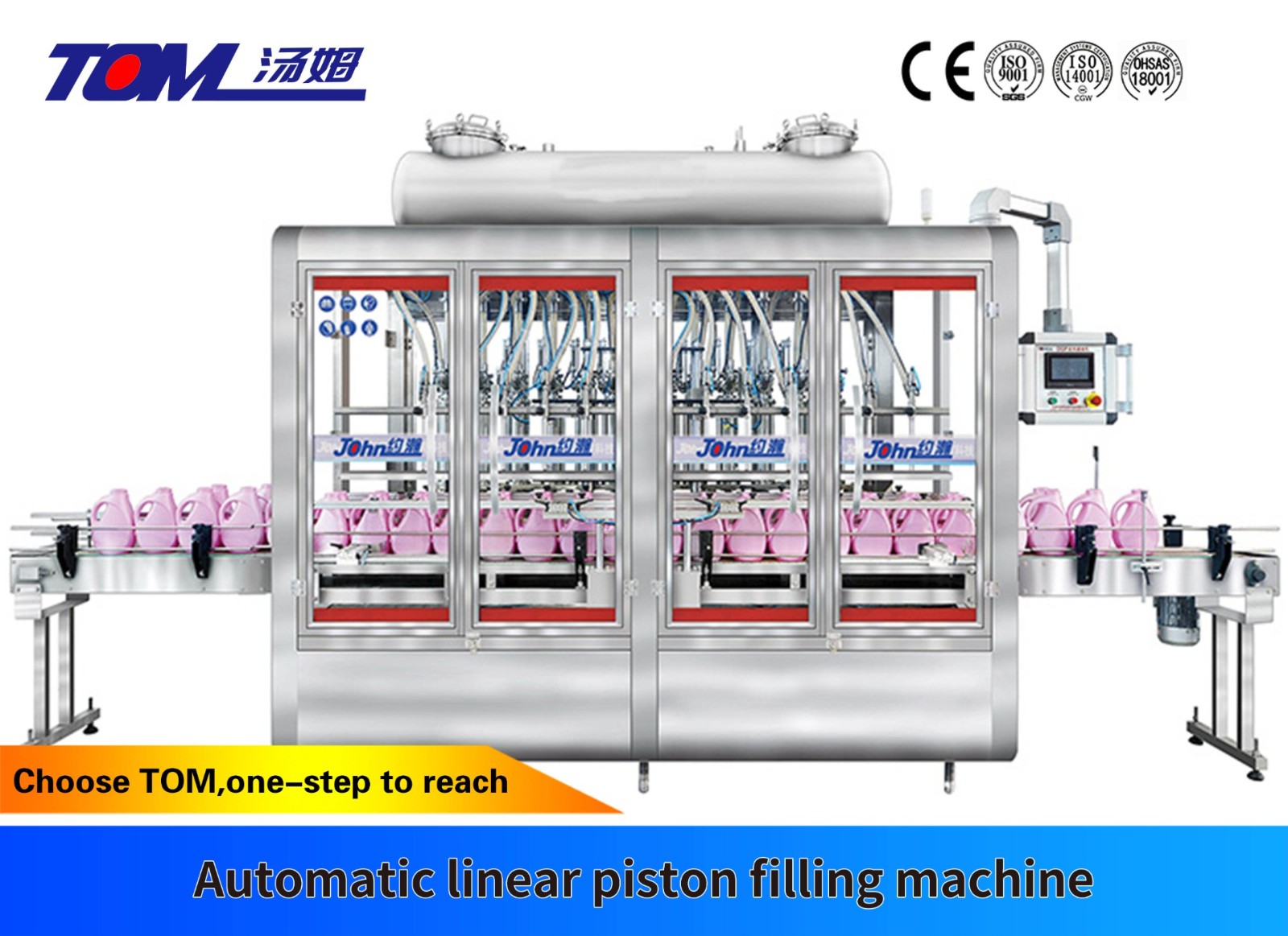
Choosing a Hand Sanitizer Filling Line Supplier
Production Capacity and Scalability
When you choose a hand sanitizer filling line supplier, you want to know if their machines can grow with your business. The best companies have machines for both small and big batches. You can see how the machines are different in the table below:
Machine Type | Features | Capacity Details |
|---|---|---|
Gear Pump Filling | Fills large amounts fast with about 1% accuracy. | Good for making lots of sanitizer. |
Capping Machines | Many types for different caps like plastic or pump caps. | Work together with filling machines. |
Hand sanitizer makers see more people wanting their products every year. You need sanitizer filling equipment that can grow as your business gets bigger. Many suppliers now have machines you can add to later. You can start with a simple line and add more parts when you get more orders. This helps you stay ahead in the hand sanitizer production line market.
More people want automatic sanitizer filling machines now.
Automation helps you work faster and make more sanitizer.
Turnkey lines help you meet new orders quickly.
Machine Features and Technology
You want sanitizer filling equipment that is easy to use. New machines have touchless controls and smart technology. These features help you work faster and keep your line safe. Touchless machines are important for hand sanitizer makers. They help keep your work area clean by cutting down on things people touch. Smart technology lets you watch your machines and fix problems before they stop your line. This means you can make more sanitizer without delays.
Certifications and Compliance
Certifications are important when you pick a certified hand sanitizer filling machine. You want machines that meet FDA cGMP, EU MDR, and EPA FIFRA rules. Top companies like CLEACE Disinfection have ISO 9001, ISO 14001, GMP, and CE certifications. These show your sanitizer filling equipment is safe and works well. They also help you sell your sanitizer in more places.
FDA cGMP checks
EU MDR paperwork
EPA FIFRA approval
ISO, CE, GMP certifications
Budget and After-Sales Service
You need to think about your budget and what features you want. Look for suppliers who give good after-sales help. Companies like Jiangsu Tom Intelligent Equipment Co., Ltd. have big teams to help you. Good support keeps your sanitizer filling equipment working and stops long breaks. Custom machines are important too. The best companies listen to you and make machines that fit your products. This makes your money go further and keeps your sanitizer filling equipment safe.
Tip: Always ask about after-sales help and training before you buy. Fast help means you lose less time making hand sanitizer.
Types of Hand Sanitizer Filling Lines
Automatic vs. Semi-Automatic
There are two main types of filling lines. One is automatic and the other is semi-automatic gel hand sanitizer fillers. Automatic lines do almost everything by themselves. You just set them up and watch them work. Semi-automatic gel hand sanitizer fillers need more help from people. You might have to put bottles in place or press a button to start.
Here is a simple chart to help you pick the right one:
Feature | Semi-Automatic Filling Machine | Automatic Filling Machine |
|---|---|---|
Automation Level | Partial | Full |
Production Speed | Low to Medium | Medium to High |
Labor Requirement | High | Low |
Initial Cost | Lower | Higher |
Filling Accuracy | Good | Excellent |
Scalability | Limited | High |
Best For | Small batches, startups | Mass production |
If you have a small business, you may want semi-automatic gel hand sanitizer fillers. When your business gets bigger, you can switch to automatic filling machines. This will help you fill bottles faster and use less workers.
Inline and Rotary Systems
There are also two main ways to set up your line. One is called inline and the other is rotary. Inline systems move bottles in a straight line. Many hand sanitizer manufacturing companies like these because they are flexible. You can use different bottle shapes and sizes. Rotary systems move bottles in a circle. These are good for making lots of bottles very fast. If you need to fill thousands of bottles every hour, rotary equipment is best.
Tip: Inline systems are easy to make bigger. Rotary systems are best if you need to go really fast.
Applications in Hand Sanitizer Manufacturing Companies
Hand sanitizer manufacturing companies use these filling lines in many ways. They fill gel-based sanitizers, alcohol-based sanitizers, and bottles of different shapes. Here is a chart that shows how much each type is used:
Type of Hand Sanitizer | Market Share (%) |
|---|---|
Gel-based sanitizers | 43 |
Alcohol-based sanitizers | 68 |
Bottled packaging | 53 |
These companies use special equipment like instrumentation, sanitary fittings, and temperature control devices. Instrumentation checks the sanitizer to make sure it is good. Sanitary fittings and valves keep everything clean and safe. Temperature control devices stop problems and keep products safe. These parts help you follow FDA rules and keep customers happy.
Remember: The right equipment helps hand sanitizer manufacturing companies work well, stay safe, and be ready for anything new.
Challenges for Hand Sanitizer Manufacturers
Supply Chain and Lead Times
In 2026, supply chain problems are new and tough. The covid-19 pandemic changed how you get materials and ship products. Many companies have trouble with rules not being enforced the same way. This lets fake products enter the market. Sometimes, there are not enough resources to check how things are made and shipped. There are times when labels are not standardized. This makes it hard for customers to trust your product and for you to stand out.
Shipping sanitizer is not easy. You need good roads and trucks to move products. Sometimes, you must use different transport companies for chemical items. Staff and drivers now need special training for shipping rules. You also need special trailers for USP-grade ethanol. These changes make lead times longer and planning harder.
Customization and Integration
You want equipment that fits your needs. The covid-19 pandemic made people want flexible machines. Companies now ask for machines that work with many bottle shapes and cap types. You need equipment that works with your current lines. Custom machines help you work faster and meet new demand. Sometimes, you must start a new quality check process. This means you need to train staff and plan carefully.
Many suppliers give custom solutions. You can pick machines that fill gels, liquids, or foaming sanitizers. It is important to connect labeling and capping machines. You want all parts to work together well. If you upgrade your line, you need help to connect new machines.
Technical Support and Training
You need strong technical support. The covid-19 pandemic made remote help more common. Companies need fast answers when machines stop working. Training is important to keep your team ready. You must teach staff how to use new machines and follow safety rules. Suppliers like Jiangsu Tom Intelligent Equipment Co., Ltd. have big teams to help you. This keeps your line running and stops downtime.
Tip: Keep training your staff often. Well-trained teams keep your machines working and help you meet demand.
You want your hand sanitizer production to work well and be safe. Picking a good supplier is important. Look for these main things:
Know if your product is thick, foamy, or has strong chemicals.
Pick the right filling method for your sanitizer type.
Use diving nozzles if your liquid makes foam.
Choose materials that can handle harsh ingredients.
Get a full line if you need capping or labeling.
Start with semi-automatic machines and upgrade later.
Give clear details when you ask for price quotes.
Check the comparison table and selection tips. Talk to top suppliers for quotes or help. You can make a smart choice for your business.
FAQ
What is the difference between automatic and semi-automatic filling lines?
Automatic lines do most of the work for you. You just set them up and watch. Semi-automatic lines need you to help with some steps, like placing bottles or pressing buttons.
How do I choose the right filling machine for my business?
Think about your production size, bottle types, and budget. If you want to grow fast, pick a machine that can scale up. Always ask about after-sales support and training.
Can I use one filling line for different bottle shapes and sizes?
Yes, many modern machines let you switch between bottle shapes and sizes. You just change some settings or parts. This helps you save time and money.
What certifications should my filling equipment have?
Look for machines with ISO, CE, or GMP certifications. These show your equipment meets safety and quality standards. Certified machines help you follow rules and sell in more markets.