





How to choose the right sauce pouch machine for my business
 Apr 20, 2026|
 View:949
You should choose the right machine that fits your sauce type. Make sure it matches how much you want to make. Check if it meets your packaging needs. The right sauce packaging machine can help you work faster. It also helps you keep your product good. Accurate filling makes sure each pouch has the right amount. This keeps your product the same and cuts down on waste. Special machines work with different thicknesses and ingredients. These machines are important for sauces. You will find easy steps to help you choose the right machine for your business.
Key Takeaways
Pick a machine that works with your sauce's thickness. Make sure it fits your sauce's ingredients. This helps fill the pouches right and cuts down waste.
Choose the pouch style that fits your sauce best. This makes storing your sauce easier. It also helps customers use your sauce without trouble.
Think about how much sauce you make when picking a machine. Automatic machines are good for making lots of sauce. Semi-automatic machines work well for smaller amounts.
Put hygiene first by picking machines that are simple to clean. Make sure the machines follow food safety rules. This keeps your sauce safe for everyone.
Look at suppliers to see if they are trustworthy and helpful. This makes sure you get good machines. You will also get help when you need it.
Why Choose a Specialized Sauce Packaging Machine
Sauce Packaging Challenges
Packaging sauce is not easy. Sauces are all different. Some are thick like mayonnaise. Some are thin like soy sauce. Salsa has chunks and is harder to pack. Each sauce needs special care to stay fresh and safe. You must stop spoilage and keep quality high. You want your sauce to reach customers in great shape. Portion size and easy use are important. Nice packaging makes your sauce stand out. You need a machine that can handle these jobs.
Specialized sauce packaging machines fix problems regular machines cannot. Liquid sauces can clog normal machines. You need machines that work with thick and chunky sauces. Cleanliness matters a lot. Machines that are easy to clean keep your sauce safe. The right machines make your work easier.
Tip: Pick a sauce packaging machine that fits your sauce’s texture and ingredients. This helps you waste less and keeps your product the same.
Challenge | Solution |
|---|---|
Thick, Viscous Sauces Are Hard to Fill | Thick sauces need careful filling to stop clogging and fill pouches right. |
Nozzle Contamination | Nozzles that are easy to clean help keep things safe and accurate. |
Maintaining Hygiene and Easy Cleaning | Machines with clean surfaces and parts you can take apart make cleaning faster and safer. |
Benefits of the Right Machine
Using the right sauce packaging machine gives you many good things. Smart machines help keep your sauce fresh and safe. You avoid spoilage and keep your sauce tasting the same. Customers like when your sauce looks and tastes the same every time. New machines let you share information fast. This builds trust and makes customers happy.
Your brand gets stronger too. Good machines help you follow food safety rules. You can check conditions and keep your sauce fresh. Codes and tracking stop theft and fake products. Your sauce stands out and people remember it.
Benefit | Description |
|---|---|
Maintains Product Quality | Smart machines keep sauce fresh and tasting the same. |
Enhance Customer Experience | Technology lets customers get information fast and helps them choose your sauce. |
Builds Brand Recognition | Modern packaging meets what customers want and makes buying your sauce special. |
Strengthens Food Safety | Checking conditions all the time keeps sauce safe and fresh for customers. |
Prevents Theft and Counterfeiting | Codes and tracking protect your sauce from theft and prove it is real. |
You need the right sauce packaging machine for liquid products. The right machine helps you work faster and keeps your sauce safe. Specialized machines help you meet your packaging needs and grow your business.
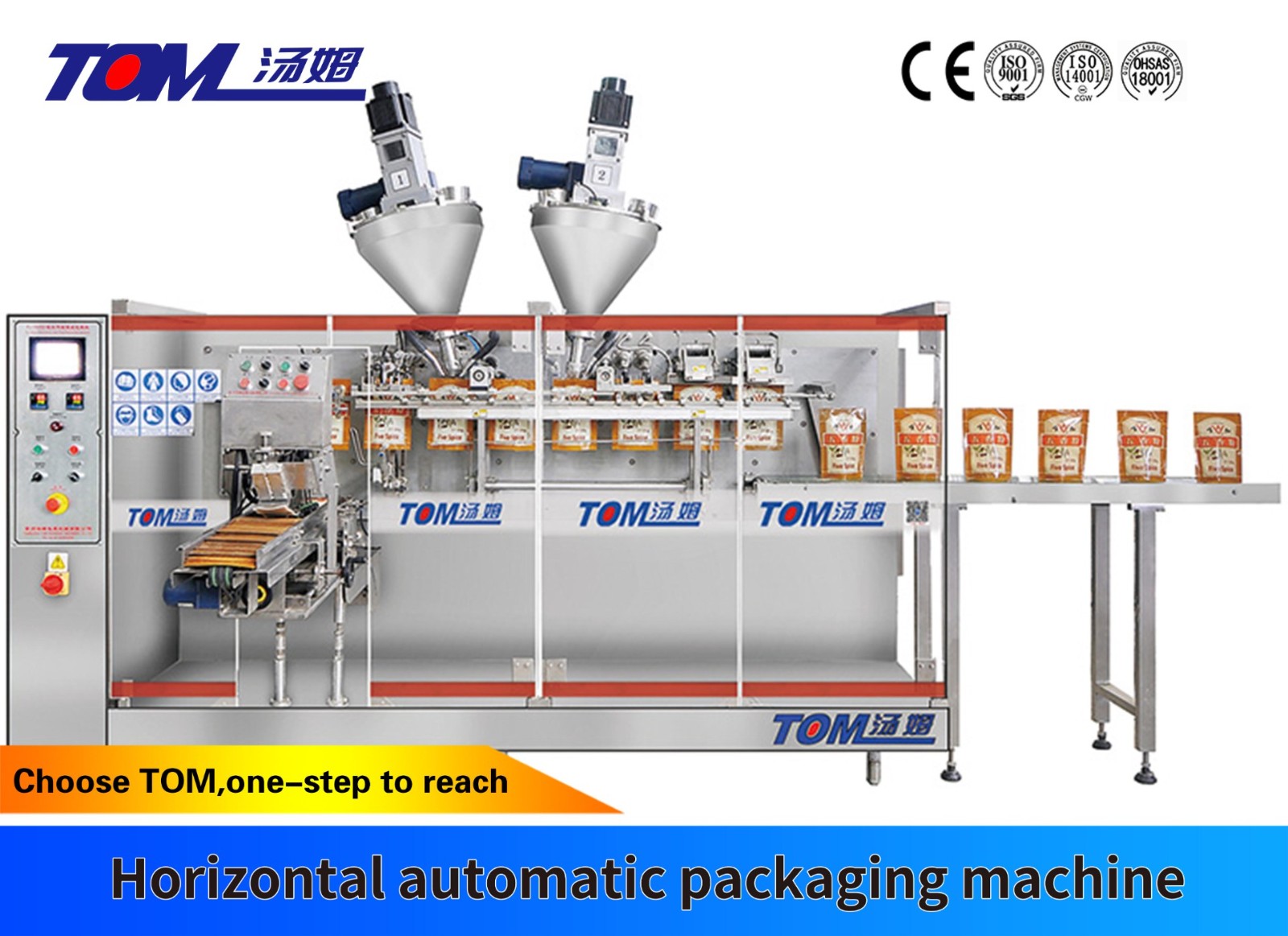
Main Types of Sauce Packaging Machines
To pick the right pouch machine, you need to know the main types. There are different machines for different sauces and how much you make.
Piston vs. Pump Fillers
You should choose a filler that matches your sauce’s thickness. Piston fillers are good for thick or chunky sauces. Pump fillers work well for thin sauces that flow easily. The table below shows which filler fits each sauce.
Filler Type | Accuracy and Suitability for Viscosity | Ideal Applications |
|---|---|---|
Piston Fillers | High accuracy for thick, heavy, or sticky products; suitable for high-viscosity and chunky sauces. | Mayonnaise, thick ketchup, peanut butter, honey, chunky pasta sauces. |
Pump Fillers | Best for low-viscosity, free-flowing liquids; fast and efficient for continuous motion packaging. | Soy sauce, vinegar, thin salad dressings, edible oils, clear broths. |
Tip: If your sauce is thick or chunky, piston fillers help you avoid clogs and fill pouches right.
Pouch Styles and Formats
There are many pouch styles you can pick for your sauce. Each style has its own good points for storage and use.
Spout pouches make pouring sauce easy and less messy.
Sachets help you give the right amount for things like ketchup.
Stand-up pouches hold more sauce and stand up on shelves.
You can also use VFFS machines for pillow and flat pouches. Premade pouch machines work for spout or resealable pouches. Stick pack machines are good for single-serve sauces.
Manual, Semi-Automatic, Automatic
You need to choose how much automation your business needs. Manual machines are best for small batches. Semi-automatic machines need more workers but are flexible. Automatic machines are fast and good for big jobs.
Feature | Semi Automatic | Automatic |
|---|---|---|
Cost | Low | Medium–High |
Labor Needed | 2–3 operators | 1 operator |
Speed | 10–25 BPM | 40–100+ BPM |
Production Scale | Small batch | Mass production |
Consistency | Moderate | High |
ROI Speed | Slower | Faster |
Semi-automatic machines cost less but need more people. Automatic machines cost more but save work and make more sauce. You get your money back faster with automatic machines.
Note: Modular lines can fill, seal, label, code, and check pouches. You can change these machines to fit your sauce, pouch size, and how fast you want to work.
How to Choose the Right Machine for Your Sauce
Sauce Viscosity and Ingredients
You need to pick a machine that works with your sauce’s thickness and what is in it. If your sauce is runny, piston and rotary pump systems work well. Thick or chunky sauces need special machines called positive displacement mechanisms. These stop clogs and help fill each pouch with the right amount. Big rotary valves can cut through chunks and keep the amount right. Machines made from 316L stainless steel last longer and are easy to keep clean. The filling system should match how your sauce flows and feels. Liquid pouch packing machines keep your sauce tasting good and the same every time. They also help stop spills and keep your sauce fresh.
Tip: Always use a filling system that matches your sauce’s thickness and what is inside. This helps fill pouches right and keeps your sauce good.
Packaging Format and Size
The type of pouch and its size matter a lot for your machine and how fast you can work. You need to choose between premade pouches or vertical form-fill-seal (VFFS) machines. Premade pouch machines are flexible and let you switch fast. VFFS machines are very fast and can make many pouches in a short time. Pick the machine that fits your sauce’s packaging and how much you want to make.
Comparison Dimension | Premade Pouch Packaging Machine | Vertical Form-Fill-Seal (VFFS) Machine |
|---|---|---|
Production Efficiency & Speed | Medium to high speed, but not as fast as VFFS. | Very fast, can make hundreds of pouches each minute. |
Flexibility & Changeover Efficiency | Easy to change and flexible for different pouches. | Not as flexible, takes longer to switch. |
Typical Applications | Good for odd shapes and special products. | Best for powders, grains, and liquids. |
Pick the best pouch for your sauce. The right pouch makes storage, display, and using the sauce easier for customers.
Production Capacity
How much sauce you make decides which machine is best. Figure out how many pouches you need each hour or day. Small businesses can use semi-automatic machines. These are cheaper and make less at a time. Big companies need automatic machines. These are faster and need fewer workers. The filling system should keep up with how much you want to make. This stops slowdowns and keeps your sauce moving.
Note: Think about growing your business. Pick a machine that can make more sauce if you need it later.
Sealing and Cleaning
Sealing keeps your sauce from leaking and helps it stay fresh. You can use heat sealing, ultrasonic sealing, or vacuum sealing. Heat sealing uses heat and pressure to close pouches tight. Ultrasonic sealing uses sound waves to seal even if there is sauce on the edge. Vacuum sealing takes out air and keeps sauce fresh longer. Pick the sealing method that works with your pouch and sauce.
Cleaning is very important for safety and taste. Machines that are easy to clean save time and stop germs. Sealed systems keep your sauce safe while packing. Machines must follow rules like HACCP and FDA. Clean tanks, pipes, valves, and nozzles often to stop buildup. Smooth parts and easy-to-take-apart machines help with washing. Take care of pistons, seals, pumps, and lines to keep your machine working well.
Feature | Description |
|---|---|
Easy-to-clean components | Parts are simple to clean and check. |
Sealed systems | Stops germs from getting in during packing. |
Compliance with hygiene standards | Follows safety rules like HACCP and FDA. |
Automation Level
Automation changes how many people you need and how fast you can work. Fully automatic machines are best if you make over 500,000 pouches a year. These machines save work and make more pouches fast. More automation means fewer workers and quicker jobs. Semi-automatic machines are good for smaller businesses. You need to think about how much you want to spend and how much you want to make. Automation helps you keep up with orders and makes fewer mistakes.
Fully automatic lines make lots of pouches with little work.
Semi-automatic machines are flexible for making less sauce.
Automation helps you work faster and make fewer errors.
Tip: If your business is small, start with semi-automatic machines. You can get bigger machines when you grow.
Supplier Reliability and Support
You need to check suppliers before buying a machine. Good suppliers give you strong machines and help when you need it. Look for these things:
Product quality: Machines should be strong and last a long time.
Technical expertise: Suppliers should know how to handle tricky filling systems.
Customization: You may need a machine made just for your sauce.
After-sales support: You need help, training, and spare parts.
Cost-effectiveness: Think about the price and how much it costs to run.
Reputation: Read what other people say about the supplier.
Note: Good suppliers help you fix problems and keep your machines running well.
Budget and Upgrade Options
Your budget helps you pick the right sauce packaging machine. Think about the total cost, not just the price to buy. This includes running and fixing the machine. If you are just starting, buy a small machine. Pick one that fits your money and how much you want to make. Plan to get better machines as your business grows.
Upgrade Option | Description |
|---|---|
Automation | Add PLC systems and IoT sensors to work faster and track things. |
Quality Equipment | Buy good mixing and cooking tools to make sauce the same every time. |
Preventative Maintenance | Use Clean-in-Place (CIP) systems to clean fast and stop breakdowns. |
Outsourcing Production | Use co-packers to make more sauce without building a new factory. |
You can use PLC systems and IoT sensors to make your work easier. Buy good mixing and cooking machines. Clean your machines often to stop problems. If you need to make more sauce, you can hire co-packers.
Tip: Pick a machine that works for you now but can get better later. This helps you grow without wasting money.
Choosing the Right Machine: Quick Checklist
Match the filling system to your sauce’s thickness and ingredients.
Pick the pouch type and size that fits your product and market.
Figure out how much you want to make and plan to grow.
Choose sealing and cleaning features for safety and quality.
Decide how much automation you need for your business.
Check if the supplier is reliable and gives good support.
Set your budget and think about upgrades.
If you follow these steps, you can pick the best machine for your sauce business. This helps you get good packaging, keep your sauce tasty, and grow your business.
Common Challenges and Solutions
Handling Thick or Chunky Sauces
Thick or chunky sauces can be hard to pack. They may drip after filling and make packages messy. This can cause weak seals. Standard filling systems might crush chunks. This hurts the sauce’s texture and quality. Some machines, like the Rinser Filler Capper, rinse, fill, and cap in one step. These machines work well for thick or chunky sauces. They handle solid pieces without crushing them. Pick a sauce packaging machine that matches your sauce’s texture. This helps keep the quality high.
Challenge | Description |
|---|---|
Dripping After Filling | Thick sauces may keep flowing after filling, causing dirty pouches and weak seals. |
Inaccurate Dose for Thick Sauces | Thick sauces are harder to control, which can lead to underfilling or overfilling. |
Packaging Chunky Sauces Without Damage | Standard equipment may crush chunks, so you need special machines for these sauces. |
Preventing Leaks and Spills
Leaks and spills happen often when packing sauce. You can use smart caps and bio-polymers to keep your product safe. Good sealing methods, like heat or ultrasonic sealing, help stop leaks. Automated filling systems with anti-drip nozzles fill pouches neatly. This reduces mess. Test for leaks by filling pouches with water and boiling them. Seal tests and burst tests help find weak spots. Always leave enough space in each pouch. Check fill volume to keep it the same. Calibrate your machines for your sauce’s thickness and pouch size.
Use smart caps and bio-polymers for safety.
Test seals and check for leaks often.
Calibrate machines for each sauce and pouch.
Maintaining Hygiene
Clean packaging equipment is important for food safety. Surfaces should be smooth and have no cracks. This stops residue from building up. Clean and check all parts of your equipment. Automated cleaning systems help reach every area. The machine should protect the product zone from outside germs. This keeps your sauce safe and meets hygiene standards.
Principle | Description |
|---|---|
Prevent the Accumulation of Residues | Surfaces must be smooth and easy to clean to stop germs. |
Enable Effective and Verifiable Cleaning & Sanitation | All parts must be easy to reach and clean, supporting automated cleaning. |
Prevent the Introduction of Contaminants | The machine must keep out both outside and inside contaminants. |
Adapting to Growth
When your business grows, you need to change your packaging process. Automation and IoT let you watch packaging conditions in real time. This helps you plan maintenance and keep equipment working longer. You can use 3D printing to make new pouch designs fast. AI-powered analytics give you data to improve operations and cut downtime. These upgrades help you meet demand and keep quality high as you grow.
Tip: Pick equipment that can grow with your business. This helps you stay flexible and keep your sauce packaging efficient.
Table: Common Challenges in Sauce Packaging
Challenge | Description |
|---|---|
Dripping After Filling | Thick sauces may continue to flow after filling, leading to dirty packages and poor seal quality. |
Nozzle Contamination | Sauce residue can build up around nozzles, affecting filling accuracy and hygiene. |
Inaccurate Dose for Thick Sauces | Thick sauces are harder to control, leading to underfilling or overfilling issues. |
Sealing Area Contamination | Sauce splashes can contaminate the sealing area, resulting in weak seals and leakage. |
Packaging Chunky Sauces Without Damage | Standard filling systems may crush particulates in chunky sauces, requiring special handling. |
Maintaining Hygiene and Easy Cleaning | Equipment must be easy to clean to meet strict hygiene standards. |
If you know these common challenges in sauce packaging, you can pick the right machine and equipment. This keeps your product safe, your quality high, and your business ready to grow.
You can find the best sauce pouch machine by doing these things:
Know how thick or chunky your sauce is.
Pick the packaging style that fits your sauce.
Decide how much sauce you want to make.
Look at different machines and use this table to compare:
Factor | Description |
|---|---|
Sauce characteristics | The filling method depends on thickness. |
Packaging material | The sealing must match the pouch film. |
Cost | Think about buying and fixing costs. |
Talk to suppliers for advice that fits your needs. Ask for prices or a meeting to learn about machines, costs, and help after you buy.
FAQ
What type of machine works best for thick sauces?
You should use a piston filler for thick sauces. This machine handles chunky or sticky products well. It gives you accurate filling and keeps your sauce texture safe.
How do I keep my packaging machine clean?
You need to clean all parts that touch food every day. Use warm water and food-safe soap. Check for leftover sauce. Clean nozzles and tanks often to keep your packaging safe.
Can I use one machine for different pouch sizes?
Yes, many machines let you change pouch sizes. You can adjust settings or switch parts. This helps you pack different amounts for your customers.
How do I know if I need an automatic or semi-automatic machine?
Think about how much you want to make each day. If you pack a lot, choose an automatic machine. For small batches, a semi-automatic machine works well.
What support should I expect from a supplier?
You should get training, spare parts, and help with setup. Good suppliers answer questions fast. They help you fix problems and keep your machine running.