



Why High Accuracy Filling Machines Ensure Stable Production for Agrochemical Enterprises
 Oct 16, 2026|
 View:20
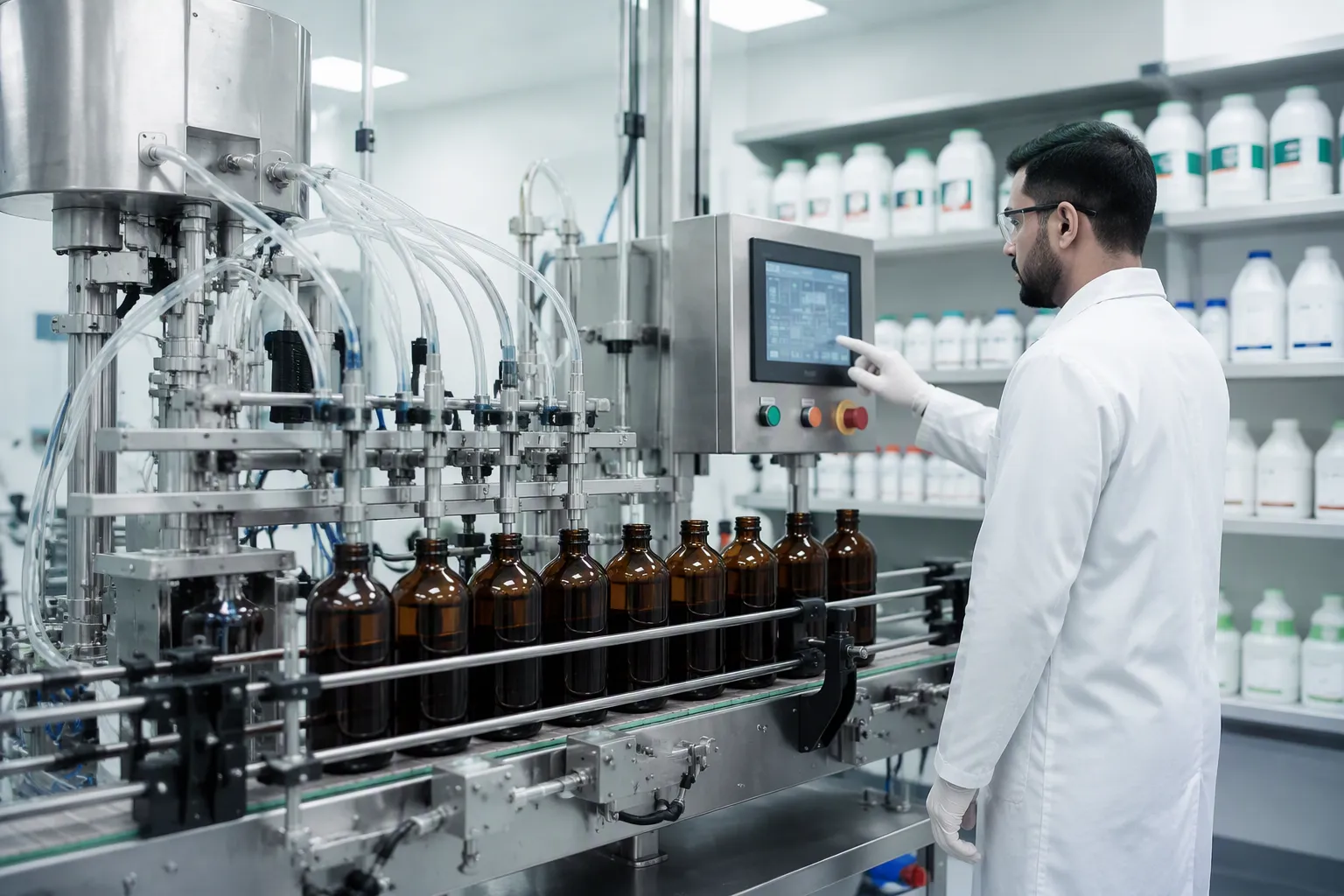
High accuracy filling machines keep production steady by cutting waste, keeping product quality the same, and lowering downtime. For agrochemical companies, the risks are big. Costly formulas leave little room for mistakes. Strict rules require exact dosing on every bottle. Constant output needs mean any stop hurts.
Filling precision directly affects business results. One wrong fill can cause rejected batches, fines from regulators, or product giveaway. Knowing the difference between accuracy and repeatability helps companies judge equipment wisely. Modern filling machine designs offer advanced controls, real-time monitoring, and dependable calibration. These features help with compliance and safety on high-speed lines.
This article looks at the business impact of filling precision, the difference between accuracy and precision, key machine features, and the company benefits of investing in high accuracy filling machines.
Key Takeaways
Filling machines that are very accurate cut down on waste and keep product quality the same.
Knowing the difference between accuracy and precision helps you pick the right filling machine.
Today's filling machines use advanced controls and monitoring to fill products reliably.
Checking and fixing filling machines on a regular schedule keeps them accurate over time.
Buying high accuracy filling machines saves money and helps you follow the rules.
The Business Impact of Filling Precision
Filling precision matters to the money side of every agrochemical maker. Small volume mistakes add up over thousands of units each shift. The money and rule effects of both underfilling and overfilling need close attention.
Underfilling and Overfilling Consequences
A container filled too low does not give the labeled dose. Regulators may reject the whole batch, and the maker pays rework costs and maybe fines. Customers who get short fills complain, and repeat problems hurt the brand.
Overfilling makes a different problem. The line gives away costly product with every bottle. Raw material waste grows, and profits shrink on pricey formulas. Both errors lower efficiency and break dosing rules.
Why Agrochemical Products Raise the Stakes
Agrochemical liquids differ a lot in thickness and how they eat away materials. These traits directly shape filling precision and filling accuracy. The table below shows how.
Factor | Effect on Dosing Accuracy | Supporting Detail |
|---|---|---|
Viscosity | Sets the pump type, which controls dosing accuracy | Thin liquids work with gravity fillers or peristaltic pumps; thick liquids need piston pumps to make enough force for accurate dosing |
Corrosiveness | Sets the wetted-part material, saving accuracy from chemical breakdown | SS 316 is required for internal wetted parts like syringes and nozzles because it resists corrosion, pitting, and chemical breakdown better; the whole line needs anti-corrosive construction |
Combined context | Dosing accuracy is key for cost control and rule demands | Agrochemical formulas are highly toxic, very corrosive, and volatile, so accuracy must meet strict environmental and operational rules |
Temperature changes and shear effects change how materials act through the day, so repeatability drifts. Trapped air quietly ruins weight accuracy in thick fills. Valve timing and nozzle design affect both accuracy and cleanup work. Steady heating beats hard pumping for keeping accuracy. Slower, controlled fills with real-time feedback loops cut downtime. Thick products do not forgive changes: small shifts in drum position, nozzle depth, or container tolerance turn into rework. Weighing logic, guided alignment, and interlocks prove more reliable than operator guesswork.
A well-matched filling machine protects safety standards and handles hazardous chemicals and corrosive chemicals with confidence. Proper handling of liquid chemicals supports safety goals.
Accuracy Versus Filling Precision Explained
Defining Accuracy and Precision
Accuracy shows how close a fill gets to the target volume. Precision shows how closely one fill after another repeats the same volume. Think about a 500 mL pesticide dose. A machine that gives 498 mL, then 502 mL, then 499 mL has good accuracy on average. A machine that gives 512 mL, then 512 mL, then 512 mL has high precision but poor accuracy. Both traits matter for steady output.
A machine can be precise but not accurate, and this problem often hides in plain sight. Every bottle gets the same wrong dose, so operators see no variation and think the line runs well. The error stays the same until a check against the target volume finds it. Precision without accuracy wastes product or causes rejected batches. Accuracy without precision makes fills unpredictable and they fail weight checks. Stable production needs both.
How Both Drive Consistent Output
Real-world accuracy comes from two main kinds of technology. Volumetric piston systems pull a fixed volume into a cylinder and push it out through the nozzle. Flow-based systems measure the liquid as it moves, using valves and nozzles to start and stop the stream cleanly. The table below compares how each approach supports filling precision.
Technology | Accuracy Mechanism | Accuracy Outcome |
|---|---|---|
Volumetric piston | Piston-cylinder mechanism draws and discharges a fixed volume; adjustable stroke length and interchangeable piston sizes cover a range of containers | Suits high-viscosity liquids and products with large particulates |
Flow meter | Learns and adapts to each product over time | Guarantees accuracies of ±0.5%, with higher accuracy achievable as the machine adapts |
Modern volumetric with real-time monitoring | Analyzes flow, density, and pressure and recalculates the valve closing point up to 100 times per second | Maintains true industrial accuracy (σ < 0.15%) under real production conditions |
Supporting hardware sharpens both traits. Positive shut-off nozzles cut flow at the stroke end, and suck-back mechanisms pull the meniscus into the nozzle for a clean break. Bottom-up nozzles rise with the fill level to prevent foaming and air trapping. These details protect safety on hazardous products and keep every dose on target.
How High Accuracy Filling Machines Deliver Stability
Advanced Controls and Monitoring
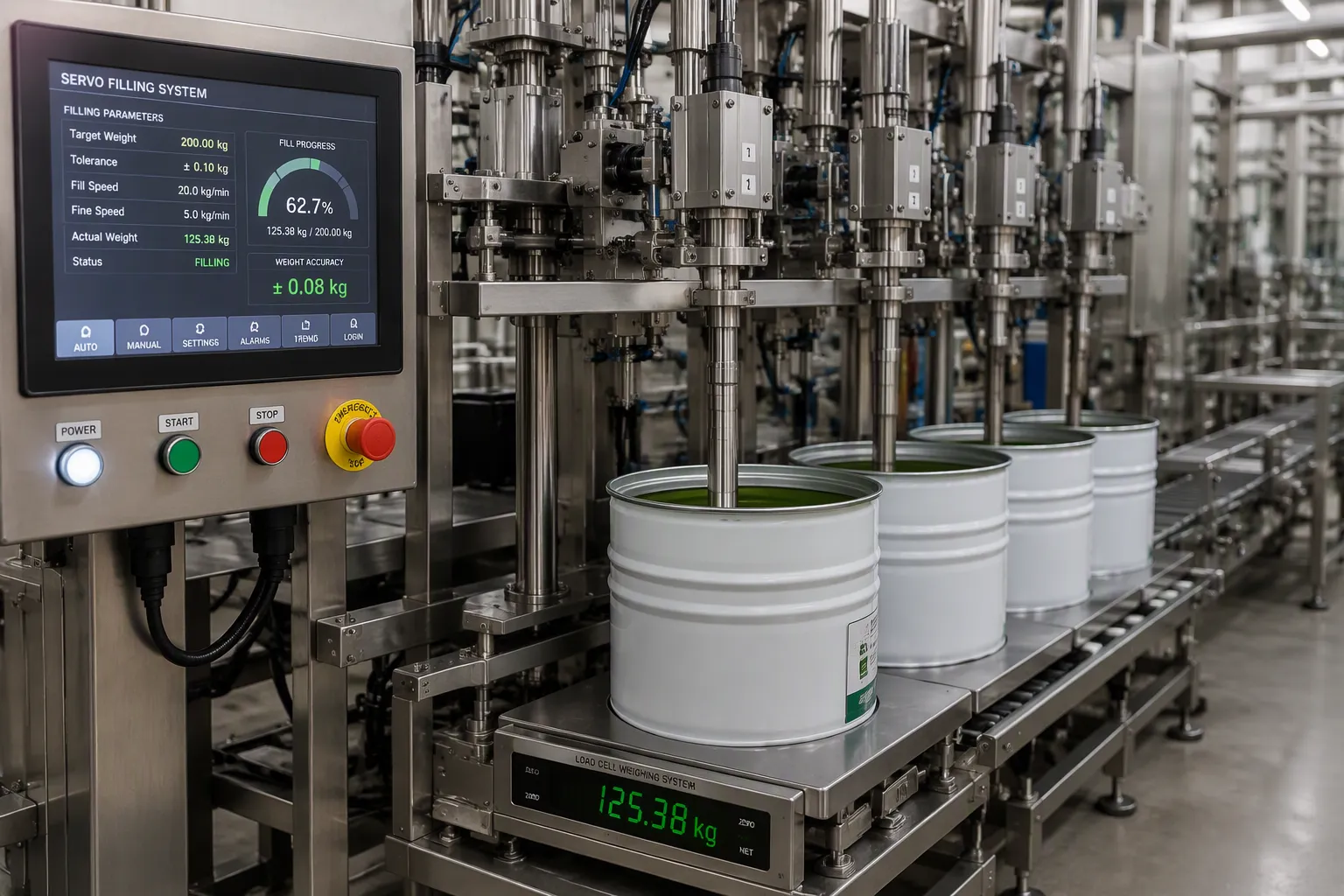
High accuracy filling machines use smart designs to keep each dose steady. PLC-controlled piston filling is one core design. The PLC keeps fill volume within ±1%, and a touch screen HMI lets operators set recipes fast. Servo-driven pistons run one to twelve fill heads, and 304 stainless steel frames protect the line. Blocked nozzles stop drips, and diving nozzles fill from the bottom up to prevent foaming. These features give controlled accuracy on every cycle.
Weighing-based filling systems add another layer. Load cells check the weight of each fill and fix overfilling or underfilling right away. Weight-based control keeps the fill amount steady even when product density shifts. High-precision weighing sensors check each batch, and automatic calibration keeps precision strong. Stated filling accuracy reaches up to ±0.2%. Dual-speed valve switching starts fast and slows near the target weight, which shortens per-drum time. Bottom-up filling keeps emulsifiable concentrates and suspensions from foaming over.
Three-way one-way valve piston injection rounds out the options. The valve sends liquid in one path and blocks backflow, so each stroke delivers the same volume. Real-time monitoring watches flow, density, and pressure, then recalculates the valve closing point many times per second. Automated adjustment trims the fill without stopping the line. On high-speed lines, this design cuts cleanup work and product loss. A chemical drum filling machine for bulk output uses the same logic. The drum filling machine measures by weight and controls the valve, so every drum gets a consistent fill volume. Operators trust these systems for hazardous chemicals and liquid chemicals because safety stays built in.
Calibration and Long-Term Reliability
Setup must be exact. One wrong bottle signals a system-wide deviation, so technicians calibrate the filling machine before each run. Full gravimetric PQ validation belongs at initial qualification and after any major change. End-of-shift gravimetric spot checks catch drift early. Weekly volumetric correlations cross-check flow-based systems against mass results. Balance calibration follows a written, tighter schedule with records kept. Flow meters and pressure sensors get calibration per manufacturer recommendations. Re-qualification follows significant maintenance or software updates. These steps protect filling precision and filling accuracy over time.
Long-term reliability keeps production stable. Motor thermal and torque stability prevents speed variation and timing inaccuracy between stations. Automatic lubrication reduces friction and premature wear. Continuous feeding with vacuum loaders and level sensors refills hoppers without stopping production. Dust control seals powder from shafts and bearings. A precision internal groove cam cuts vibration and holds stable positioning at high speed. Power compatibility, grounding, and wiring discipline prevent intermittent faults. Vacuum system performance keeps caps and containers aligned. A fully automatic drum filling line and a precise liquid filling machine both depend on these habits. Regular calibration, adjustment, and detailed logs keep high accuracy alive. This discipline supports compliance, efficiency, and safety standards across high-precision applications. Fully automatic systems and weighing systems reward teams that treat calibration as routine, not repair.
Enterprise Benefits of High Accuracy Filling
Compliance and Cost Savings
Accurate dosing connects straight to meeting industry rules. Regulators set tight limits on the fill volume stated on the label. A line that stays on target keeps every batch within those limits. This habit lowers the risk of fines, recalls, and rejected shipments. High accuracy filling machines turn compliance from a daily worry into a routine result.
Cost savings follow the same path. Product loss drops when every nozzle hits its target. Labor hours fall as operators stop chasing weight checks and rework. Maintenance costs shrink because clean fills mean less spillage on frames and conveyors. Less human contact also improves hygiene on the line. One practitioner reports a striking result:
A practitioner reports that small changes—vision-guided nozzle positioning, dynamic flow control, real-time leak detection, and data logging—cut spillage rates from 3% to under 0.5% on agrochemical filling lines. This saved thousands in product loss and cleanup time without needing a full line rebuild.
Conventional systems lose 3–7% of product inventory to pressure-related packaging failures. Well-tuned lines recover much of that value. Total cost savings across all factors usually exceed 15–25%. A drum filling machine built for bulk output captures these gains at scale. The same drum filling machine pairs with check weighers to confirm every drum before shipment.
Reliable Output and Higher OEE
Consistent fill volumes drive overall equipment effectiveness. OEE combines availability, performance, and quality into one score. Stable fills lift the quality term directly. Fewer rejects mean more good units per shift. Steady cycle times lift the performance term. Less unplanned stopping lifts availability. Together, these gains raise OEE and hold production rates steady.
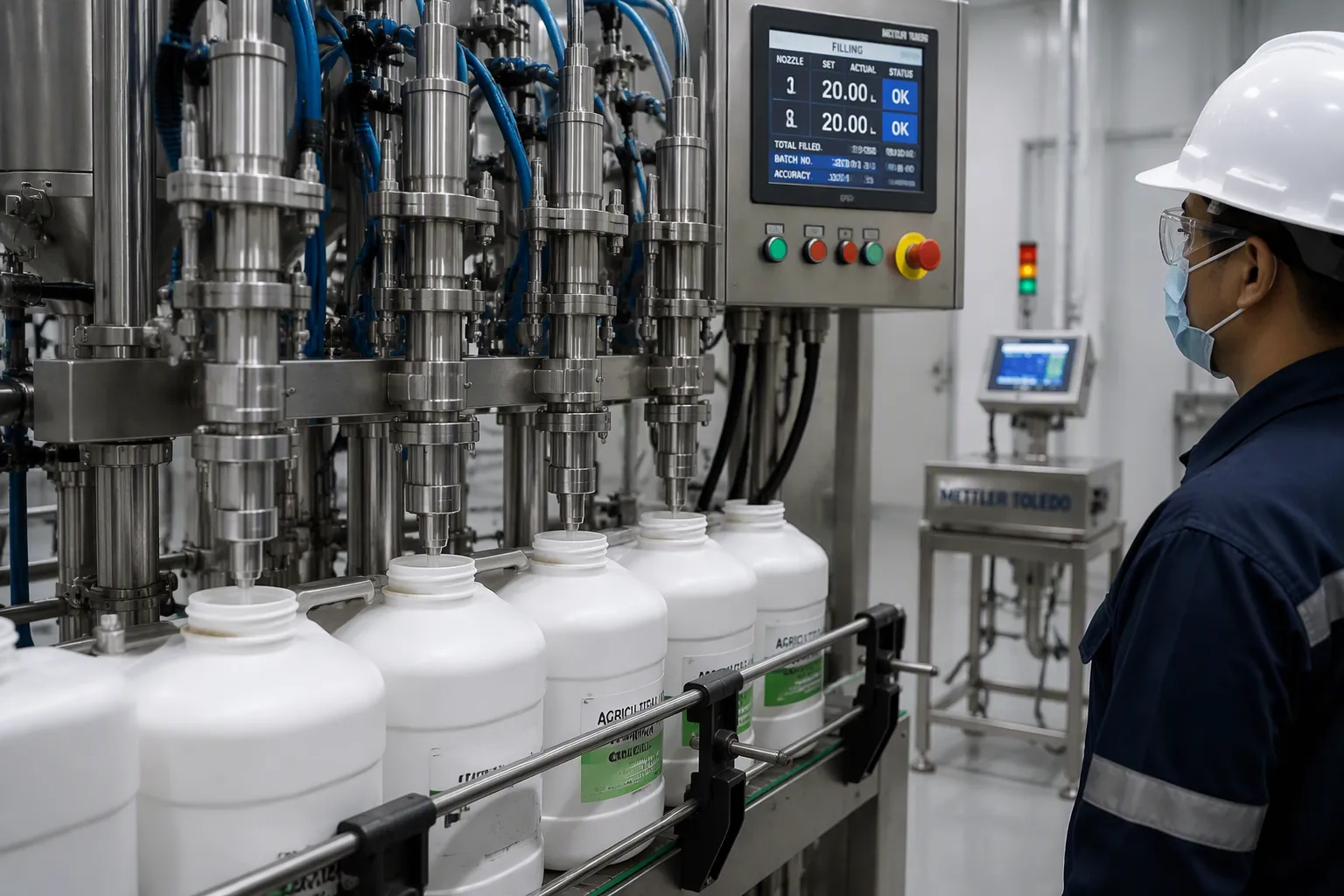
Fully automatic systems reinforce this stability. Automated adjustment trims each fill without stopping the line. Real-time monitoring catches drift before it spreads. A third drum filling machine role appears here: bulk lines run continuous shifts with minimal intervention. Turnkey agrochemical filling and packaging solutions offer a practical integration path. These packages bring precision filling, safety, consistency, speed, cost savings, and regulatory compliance in one scope. They also meet strict standards such as USFDA and EU GMP. Integrated check weighers and monitoring protect accuracy on every unit.
The payoff reaches beyond the filling station. Uniform fills support consistent and high-quality production across the plant. Reduced spillage protects worker safety and product integrity. Teams that treat calibration as routine enjoy long-term operational efficiency. Every gain in filling precision compounds into lower cost, stronger compliance, and reliable output. Buyers who measure current spillage and reject rates will see where a high accuracy line fits. That review is the first step toward consistent and high-quality production.
High accuracy filling machines secure stable production through three linked gains: less waste, consistent product, and minimal downtime. Filling precision connects cost efficiency, regulatory compliance, and reliable output into one operating result. Each on-target dose protects margins and satisfies inspectors at the same time.
Agrochemical enterprises should measure current fill accuracy and reject rates before the next equipment decision. A review of spillage, giveaway, and weight-check failures reveals where a better filling machine fits. Teams that act on those numbers gain safety, steady production, and stronger compliance. Readers can explore high accuracy filling machine options and request a line assessment to confirm the right fit for their formulations.
FAQ
What fill accuracy can an agrochemical enterprise expect from a high accuracy filling machine?
Modern weighing-based systems can reach up to ±0.2%. Flow meter designs promise ±0.5%, and results get tighter as the machine learns each product. PLC-controlled piston filling keeps volume within ±1%. Volumetric systems with real-time monitoring hold σ < 0.15% in real production. Buyers should match the stated tolerance to their label rules and formula cost.
How does liquid viscosity change the right machine choice?
Thin liquids work well with gravity fillers or flow-based systems. Thick liquids and products with large particles need volumetric piston pumps to make enough force for accurate dosing. Corrosive formulas need SS 316 wetted parts and anti-corrosive construction all along the line. Matching pump type to liquid behavior protects filling precision and supports safety every shift.
How often should teams calibrate a filling machine?
Technicians calibrate before each run, because one wrong bottle points to a system-wide deviation. End-of-shift gravimetric spot checks catch drift early. Weekly volumetric correlations cross-check flow-based systems against mass results. Full gravimetric PQ validation belongs at initial qualification and after major changes. Routine records keep filling accuracy steady over the machine's life.
Do the cost savings justify the investment in higher accuracy?
Well-tuned lines cut spillage from 3% to under 0.5%, according to one practitioner report. Conventional systems lose 3–7% of product inventory to pressure-related packaging failures. Total cost savings across all factors usually pass 15–25%. Lower product loss, labor, and maintenance costs add up with stronger compliance and higher OEE.
How can a buyer verify filling performance before purchase?
Buyers should first measure current spillage, giveaway, and weight-check failure rates. Those numbers show where a better line fits. Ask for a line assessment and confirm stated tolerances against the target volumes and label rules. Check that the supplier documents calibration schedules and monitoring features. This review protects safety and confirms reliable output.