



filling line is suitable for edible oil, soy souce, vinegar, white spirits, rice wine, juice, beverages
 Nov 19, 2026|
 View:40
Choosing the right sauce filling line starts with three facts: the product you fill, the container you use, and the output you must sustain. This page describes a configuration built for jam and viscous sauces requiring hot filling and sterilization, with verified capacities and a clear equipment list so you can judge fit before you request a quote. A well specified system protects product quality, reduces changeover waste, and keeps sanitation predictable across shifts.
The figures below are taken from a published configuration. They are typical ranges rather than a binding offer, because viscosity, temperature, and bottle geometry all move the final numbers. Read the specification table first, then use the selection notes to decide which options matter for your plant.
Key Takeaways
A sauce filling line is defined by fill range, accuracy, and sustained speed, not by the number of nozzles alone.
The system handles jam and viscous sauces requiring hot filling and sterilization within a working range of sauce and jam containers.
Output reaches 3000 bottles per hour, with jam filling with cap sealing as the quoted accuracy reference.
Hygienic design, CIP coverage, and tool-light changeover decide long term yield.
What Is a Sauce Filling Line
Definition and scope
It is an integrated machine group that meters product into a container, closes it, and hands it to downstream labelling and packing. In this arrangement the metering stage is jam filling machine, which suits jam and viscous sauces requiring hot filling and sterilization. Unlike a generic filler, a dedicated line is balanced so that the filler, capper, and conveyor share one speed envelope; that balance is what keeps the line stable at the stated output.
Where the capacity comes from
Rated output is normally quoted against one reference container. This configuration states 3000 bottles per hour, measured on the 3000 bottle per hour duty. Smaller formats often run faster and heavier formats slower, so always ask for the curve rather than a single headline number. The equipment is designed to hold accuracy across its adjustment span rather than only at one point.
Standards and public-health guidance shape how hygienic filling equipment is specified: international food safety management standards, global food hygiene and product standards, and public health guidance on foodborne risks are useful references when defining hygienic design and sanitation targets.
Typical process sequence
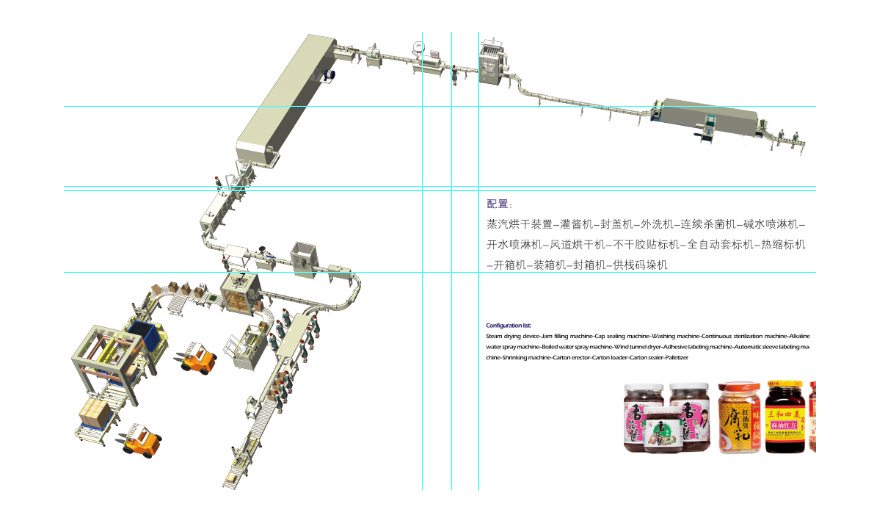
The standard sequence for this group is steam drying, jam filling, cap sealing, washing, continuous sterilization and packing. Each station is interlocked so a fault at one point stops the feed before product is wasted. Understanding this sequence helps you locate the true bottleneck when you compare one configuration against another.
Sauce Filling Line Specifications
Use the following table as the first filter for a buyer. Values reflect a published configuration and should be confirmed against your samples during acceptance testing.
| Parameter | Value | Why it matters |
|---|---|---|
| Capacity | 3000 bottles per hour | Complete line rating |
| Core filler | Jam filling machine | Handles viscous product |
| Sterilization | Continuous sterilization machine | With alkaline and boiled water sprays |
| Drying | Wind tunnel dryer | After spray stages |
| Downstream | Labelling, sleeving, carton and palletizer | Full packaging sequence |
Configuring a Sauce Filling Line
A line works well when the named modules are supplied as a matched set. The list below is the configuration published for this arrangement; adding a different capper or conveyor without rechecking timing is a common source of lost output.
| Module | Role in the line |
|---|---|
| Steam drying device | Pre-fill bottle drying |
| Jam filling machine | Meters the viscous sauce |
| Cap sealing machine | Seals the filled container |
| Washing machine | Cleans containers |
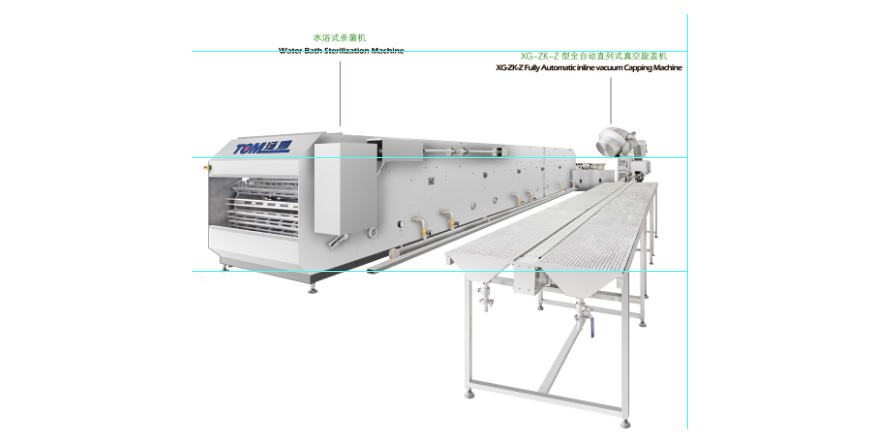
| Continuous sterilization machine | Thermal treatment with spray stages |
| Alkaline water and boiled water spray | Rinse and cool stages |
| Wind tunnel dryer | Removes surface water |
| Adhesive labelling and automatic sleeve labelling | Container identification |
| Shrinking machine | Sleeve finishing |
| Carton erector, loader and sealer | Secondary packaging |
| Carton palletizer | End of line palletising |
Ask your supplier to confirm that every module in this group shares a common control platform. When the filler and capper speak different protocols, small stoppages accumulate into meaningful downtime over a full shift.
Applications of a Sauce Filling Line
This sauce filling line is specified for jam and viscous sauces requiring hot filling and sterilization. The table maps common use cases to the reason the configuration fits, so you can see whether the line matches your product family before you invest in a trial.
| Application | Fit with this line | Note |
|---|---|---|
| Fruit jam | High fit | Named core application |
| Viscous sauces | High fit | Piston style metering |
| Hot fill condiments | Good fit | Sterilization section included |
| Glass jar packing | Good fit | Confirm jar and closure |
Hygiene and CIP in a Sauce Filling Line
Food grade sauce filling line systems use stainless product contact surfaces and a clean in place circuit that reaches the hopper, metering chamber, and discharge. For a line running jam and viscous sauces requiring hot filling and sterilization, verify that the CIP program covers every wet surface and that dead legs are avoided. Request the cleaning validation record rather than a verbal assurance.
Changeover is the second hygiene lever. Equipment that swaps format parts without tools shortens the window in which product is exposed. Confirm which parts are tool free, how long a product change takes, and whether the system supports separate recipes for allergen bearing and non allergen batches.
Need a sauce filling line matched to your container and recipe?
Share your bottle drawings and target output. Our engineers will return a configuration, a layout, and a budget for this line.
Send an InquiryView ProductsHow to Choose a Sauce Filling Line
Start with the real viscosity and temperature of your product, then confirm that the stated 3000 bottles per hour still holds at those conditions. Compare the line against your floor space, utilities, and operator count. Two closely related configurations are worth reviewing side by side.
Within this product family, the jam filling machine covers the metering stage, while the hot fill sauce line addresses the container and product range and the continuous sterilization tunnel handles closure. Reviewing these three together helps you define the sauce filling line without over- or under-specifying.
Continuous Sterilization Machine
Thermal tunnel with alkaline and boiled water spray stages.
View ProductWhichever sauce filling line you shortlist, insist on a factory acceptance test with your own containers and product. Equipment that performs on water can behave very differently on a viscous or particulate recipe.
In practice the jam filling machine, the hot fill sauce line, and the continuous sterilization tunnel should be specified as one coordinated package, not purchased as separate machines.
Conclusion
The right sauce filling line balances metering accuracy, sustained speed, and hygienic design. For jam and viscous sauces requiring hot filling and sterilization, the configuration on this page delivers 3000 bottles per hour at jam filling with cap sealing, provided the product and container match the stated range. Treat the numbers as a starting point for an engineering conversation, not a fixed promise of performance.
If you are looking for a reliable sauce filling line manufacturer, choose Tompacks. We supply the full line, from metering and closing to labelling and packing, with installation support and a documented spare parts plan.
Figures above are typical published ranges for this equipment family and may vary with product, container, and plant conditions.
Ready to compare configurations?
Send your product and container details to receive a tailored specification and lead time.
Request a QuoteFAQ
What does the 3000 bottles per hour sauce filling line include?
It includes steam drying, jam filling, cap sealing, washing, continuous sterilization, spray and drying stages, labelling, sleeving, carton packing and palletising.
Can the sauce filling line handle jam?
Yes. A jam filling machine is the specified metering unit for viscous product.
Is sterilization part of the sauce filling line?
Yes. A continuous sterilization machine with alkaline and boiled water sprays is included.
Does the line label and pack the bottles?
It includes adhesive labelling, automatic sleeve labelling, a shrinking machine, carton erector, loader, sealer and palletizer.
Can Tompacks commission this sauce filling line overseas?
Tompacks provides installation, commissioning, training and spare parts for the complete sauce filling line.