





 Oct 13, 2025
 View:1896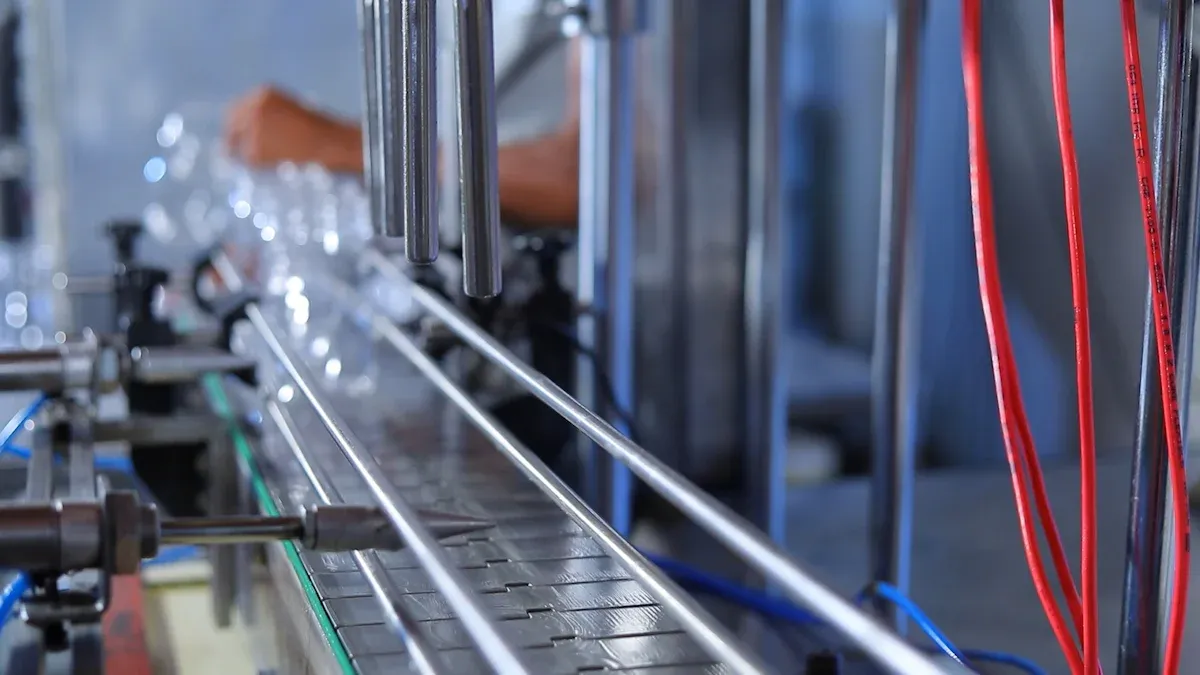
You use an oil filling machine to fill bottles with oil quickly and accurately. Precision matters because it delivers highly accurate fills, ensures each bottle gets the right amount, and reduces waste. When you rely on precise filling, you streamline production and cut costs. The global market for oil filling machine technology keeps growing.
| Year | Market Size (USD Billion) |
|---|---|
| 2022 | 3.5 |
| 2030 | 5.2 |
Key Takeaways
Oil filling machines ensure precise and accurate fills, reducing waste and streamlining production.
Automatic machines maximize efficiency by handling the entire filling process with minimal human intervention.
Semi-automatic machines offer flexibility and control, making them ideal for medium-scale production.
Regular maintenance and cleaning of oil filling machines are crucial for consistent performance and hygiene.
Choosing the right machine depends on production size, oil viscosity, and budget to meet specific business needs.
Oil Filling Machine Types
When you choose an oil filling machine, you need to know the main types. Each type works best for different production scales and oil types. Here are the four main categories:
Automatic Machines
Automatic machines handle the entire filling process for you. You only need to check the system sometimes. These machines work fast and fill many bottles in a short time. They use advanced technology to keep fills precise and clean. You can adjust settings quickly, and the control system is easy to use. Automatic machines work with many oil types, so you do not need separate machines for each product. They also store data to help you make better decisions.
Tip: Automatic machines help you maximize profits because they run continuously and reduce waste.
Key Features of Automatic Machines:
Precision and accuracy for every fill.
Cleaner production with less mess.
Easy maintenance and quick adjustments.
User-friendly controls.
Versatility for different oils.
Smart data storage and analysis.
Strong design for nonstop operation.
| Criteria | Semi-Automatic Machines | Automatic Machines |
|---|---|---|
| Human Intervention | Operator starts and monitors | Minimal, self-controlling |
| Operational Process | Operator places containers | Fully automatic |
| Speed | Slower, manual steps | High-speed, continuous |
| Cost | Lower initial investment | Higher upfront, saves labor |
Semi-Automatic Machines
Semi-automatic machines balance manual work with automation. You place the containers and start the filling. The machine fills the bottles, but you can adjust the volume and check the process. These machines suit medium-scale production and work well with medium-viscosity oils.
How Semi-Automatic Machines Work:
You place empty containers on the conveyor.
You set the filling volume for each batch.
You watch and adjust the process for quality.
You can fine-tune the machine in real time.
Semi-automatic machines give you more control and flexibility. They cost less than automatic machines and fit smaller operations.
Manual Machines
Manual machines work best for small-scale production. You control every step, from placing bottles to pouring oil. These machines are common in labs and small businesses. They help you fill bottles faster and more accurately than pouring by hand. Manual machines suit low-viscosity oils and simple tasks.
You use manual machines for small batches.
You often see them in laboratories.
They improve speed and accuracy compared to hand pouring.
Specialized Machines
Specialized machines fill oils like lubricants or chemicals. These machines handle different viscosities and keep fills accurate. They use strong materials to last longer and stay safe. Some have explosion-proof designs for flammable oils. You find these machines in food, cosmetics, and chemical industries. They meet hygiene standards and run at high speeds.
Handle various viscosities.
Ensure accurate fills.
Maintain hygiene for sensitive products.
Built from durable materials.
Include safety features for flammable oils.
Support high-speed production.
| Machine Type | Production Scale | Suitable Oil Types |
|---|---|---|
| Manual Filling Machines | Small-scale | Low-viscosity oils |
| Semi-Automatic Machines | Medium-scale | Medium-viscosity oils |
| Fully Automatic Machines | Large-scale | High-viscosity oils |
| Specialized Machines | Varies | Lubricants, chemicals |
How Oil Filling Machines Work
Core Mechanisms
You find several core mechanisms inside every oil filling machine. These machines use different methods to move oil from a storage tank into bottles or containers. The most common systems include positive displacement, piston, gravity, overflow, volumetric, and vacuum methods. Each system helps you achieve accurate and efficient filling, no matter the type of oil or container.
Positive displacement pumps work by capturing a set amount of oil in a chamber and then pushing it out. This method gives you a steady flow, which is important when you fill thick or sensitive oils. Inside the pump, you might see gears, lobes, screws, or pistons. These parts create the pressure and flow needed to move the oil. You can rely on this system for consistent results.
Piston pumps use a back-and-forth motion. When the piston moves back, it creates a vacuum that pulls oil into the chamber. When the piston moves forward, it pushes the oil out. This action lets you control the amount of oil in each bottle. You can adjust the stroke length to change the fill volume. This dual-action design makes piston pumps ideal for precise dosing and metering.
Pump and Piston Systems
Pump and piston systems play a big role in many oil filling machines. You can count on these systems for accurate and repeatable fills. Here’s how they work:
The piston moves backward and creates a vacuum. This vacuum draws oil into the cylinder. You can set the stroke length to control how much oil enters.
The piston then moves forward. It pushes the oil out through a controlled outlet. This step ensures each bottle gets the same amount of oil.
You get reliable results because the system repeats the same motion every time. You can also adjust the settings to match different bottle sizes or oil types. This flexibility helps you maintain quality and reduce waste.
Tip: If you need to fill bottles with thick oils, choose a pump and piston system for better control and accuracy.
Gravity and Overflow Fillers
Gravity and overflow fillers use simple but effective methods to fill bottles. You can use gravity fillers for free-flowing oils. The oil flows from a tank above the bottles and fills each one by volume. This method works well for food, beverage, and chemical products.
Overflow fillers help you achieve a uniform fill level in each bottle. You use these machines when you want every bottle to look the same, especially with clear containers. The system fills each bottle until the oil reaches a set level, then the extra oil flows back into the tank.
Here’s a quick comparison:
| Feature | Gravity Fillers | Overflow Fillers |
|---|---|---|
| Fill Method | By volume | By visual level |
| Best for Product Types | Free-flowing liquids | Transparent liquids needing uniform level |
| Cost | More affordable upfront | Higher due to more components |
| Industries | Food, beverage, chemical | Beverage, personal care, household |
| Precision | High volume accuracy | High visual consistency |
You can choose the right system based on your product and the look you want for your bottles.
Volumetric and Vacuum Methods
Volumetric and vacuum methods help you reach high accuracy and efficiency in your oil filling machine. Volumetric fillers measure the exact amount of oil for each bottle. You can set the volume to match your needs. This method reduces product loss and keeps your operation efficient.
Vacuum fillers use suction to pull oil into each bottle. This system works well for containers of different shapes and sizes. You get uniform fill heights, which is important for product appearance. The vacuum method also adapts easily to changes in container design.
| Feature | Description |
|---|---|
| Precision | Ensures precise volume measurement for accurate filling |
| Customizability | Lets you adjust filling parameters for different products |
| Efficiency | Reduces product loss with ultra-precise dosing |
| Uniform Fill | Achieves consistent fill levels for better product presentation |
| Adaptability | Works with many container sizes and shapes |
You can rely on volumetric and vacuum systems to keep your filling process smooth and your products looking great.
Filling Process
Setup and Preparation
You start by making sure every part of the oil filling machine is secure. Check that load cells and filling nozzles are in place. Next, calibrate the load cells so you get accurate weight measurements. Place each container correctly on the filling platform to avoid spills or misalignment. Set the fill volume and adjust the speed and weight tolerance on the control panel. Run a sample test to confirm the settings. Always monitor the filling weight and flow rate during setup. This step helps you catch problems early and keeps your process smooth.
Typical setup steps:
Secure all machine components.
Calibrate load cells for accuracy.
Position containers on the platform.
Set fill volume and speed.
Run a sample test.
Monitor for any issues.
Tip: Careful setup and calibration help you avoid costly mistakes later.
Filling Operation
When you begin the filling operation, you choose the right method for your product. Piston filling machines work fast and give you precise fills. Overflow filling machines help you get the same fill level in every bottle. Pump filling machines handle thick oils well and use pulse timing for accuracy. You can adjust the machine for different oils and container sizes. Watch the process closely to make sure each bottle gets the right amount.
Piston fillers: Fast and precise, best for many products.
Overflow fillers: Great for even fill levels.
Pump fillers: Handle thick oils with accuracy.
Quality Control
You need strong quality control to keep your products consistent. Oil filling machines help you avoid human error and give you steady fill levels. Sensors in the machine watch the process in real time. If something goes wrong, you can fix it right away. You can also change settings for different oils or bottles. This flexibility keeps your products high quality and reduces waste.
Precise dispensing means less variation.
Sensors allow quick corrections.
Adjustable settings fit many products.
Consistent fills build trust with customers.
Maintenance
Regular maintenance keeps your oil filling machine running well. Clean and grease the machine often to stop wear and rust. Inspect parts for damage and fix small problems before they grow. Lubricate moving parts and calibrate the machine as needed. A good maintenance schedule means fewer breakdowns and longer machine life.
| Maintenance Task | Benefit |
|---|---|
| Cleaning and greasing | Prevents wear, rust, and contamination |
| Routine inspections | Finds problems early, reduces downtime |
| Calibration | Keeps fills accurate and consistent |
| Lubrication | Ensures smooth operation |
Note: Clean machines help you meet hygiene standards, especially in food production. This protects your product and your customers.
Applications

Food and Cooking Oils
You see oil filling machines in many food factories. These machines help you package edible oils and other liquids quickly and safely. You can fill bottles with vegetable oils, virgin oils, and refined oils. Many companies use oil filling machines for coconut oil and peanut oil. You can also fill water-thin liquids and more viscous liquids with ease. When you use these machines, you keep your products clean and consistent.
Vegetable oils
Virgin oils
Refined oils
Coconut oil
Peanut oil
Water-thin liquids
More viscous liquids
Tip: Quick-change tooling lets you switch between different oils fast, which helps you save time and boost productivity.
Lubricant and Automotive Oils
You rely on oil filling machines to handle lubricants and automotive oils. These machines fill containers with high-speed and accurate controls. You can use gravity filling for low-viscosity oils or piston filling for thicker oils. Pump filling helps you control the flow rate, while overflow filling gives you a consistent fill level. You get safer operations and less product contamination. Automation reduces labor costs and speeds up production.
High-speed filling for bulk orders
Accurate filling to prevent waste
User-friendly controls
Safety features to reduce spills
Scalability for changing demand
Note: Automated oil filling machines help you avoid overfilling and underfilling, which keeps your costs low and your products reliable.
Chemical and Industrial Oils
You use oil filling machines in chemical plants and factories. These machines fill mineral oils, synthetic oils, and biodegradable oils. You can adjust one machine for oils with similar viscosity. For oils with different attributes, you need separate equipment to prevent cross-contamination. Modular designs and fast changeovers help you stay efficient and meet safety rules.
| Filling Method | Suitable For |
|---|---|
| Gravity Filling | Free-flowing oils |
| Piston Filling | Thicker or high-viscosity oils |
| Pump Filling | Wide range of viscosities |
| Overflow Filling | Consistent fill levels |
Tip: Modular oil filling machines let you switch between products quickly, which helps you meet strict industry standards.
Other Uses
You find oil filling machines in many other industries. Cosmetic companies use them to fill bottles with oils and serums. Cleaning product makers rely on these machines for fast and accurate filling. Automated systems help you reduce manual labor and human error. You set precise fill levels, which increases consistency and minimizes waste. When you use quick-change tooling, you cut downtime and improve productivity.
Cosmetics (serums, essential oils)
Household cleaners
Industrial lubricants
Specialty chemicals
Note: Automation in oil filling machines transforms your production process, making it faster and more precise.
You have learned how an oil filling machine supports fast, accurate, and safe production across many industries. When you select equipment, think about speed, accuracy, oil viscosity, and container type. Automatic machines boost efficiency and product quality, while digital technology and eco-friendly designs help you meet future demands. Always match your choice to your production needs and environmental goals for the best results.
FAQ
How do you choose the right oil filling machine for your business?
You should look at your production size, oil type, and budget. Automatic machines work best for large factories. Manual machines fit small shops. Always check if the machine can handle your oil’s thickness.
What oils can you fill with these machines?
You can fill many oils, such as vegetable oil, motor oil, and chemical oils. Some machines work better with thick oils. Others handle thin, water-like oils. Always match the machine to your product.
How often should you clean your oil filling machine?
You should clean your machine after every production run. This keeps your oil pure and your machine working well. Regular cleaning also helps you meet hygiene rules, especially for food oils.
Tip: Set a cleaning schedule and stick to it for best results.
Can you use one machine for different types of oil?
Yes, you can use one machine for different oils if you clean it well between batches. Some machines have quick-change parts to help you switch products faster. Always check for cross-contamination risks.