





Tom Packs Delivers Smart Filling Lines for Global Agrochemical Plants
 Sep 09, 2026|
 View:354
Agrochemical packaging is very challenging. Plants handle dangerous liquids every day, need exact fill amounts for costly concentrates, and must follow strict safety rules around the world. A single mistake can expose workers, waste product, or bring fines.
TOM (Jiangsu TOM Group) is a trusted maker of filling machines. Their smart equipment meets these challenges head-on, offering filling solutions that keep workers safe while maintaining excellent quality.
Is your current filling process hurting accuracy, safety, or speed? This article shows how TOM's smart filling lines—with precision up to ±0.5% and speeds up to 7,200 bottles per hour—can boost production efficiency and improve workplace safety.
Key Takeaways
TOM's smart filling lines are highly accurate, with a margin of error of just ±0.5%, and they work fast, filling up to 18,000 bottles every hour.
Automation cuts the number of workers needed from 5-10 down to 2-3, which lowers costs and makes the work safer.
These systems help plants follow OSHA, EPA, and NFPA rules by using closed-off areas and exact filling.
Quick changeovers let you switch products in minutes, cutting downtime and raising efficiency.
Investing in TOM's lines pays back in 18-24 months through less waste and higher output.
Why Agrochemical Plants Need Smart Filling Lines
Safety and Compliance Challenges in Chemical Handling
Agrochemical plants handle dangerous liquids every day. When workers fill containers by hand, they risk contact with toxic chemicals. OSHA rules for farming (29 CFR 1928) and factories (29 CFR 1910) demand strict safety measures. Each chemical container must show the material name, hazard type, and handling warnings. Labels have to stay readable during shipping and storage. EPA rules require proper training and keeping records. Workers need Safety Data Sheets to understand material dangers. Spill rules say you need a second container that can hold 10% of the total liquid or 100% of the biggest container. NFPA standards sort agrochemicals by how flammable and toxic they are.
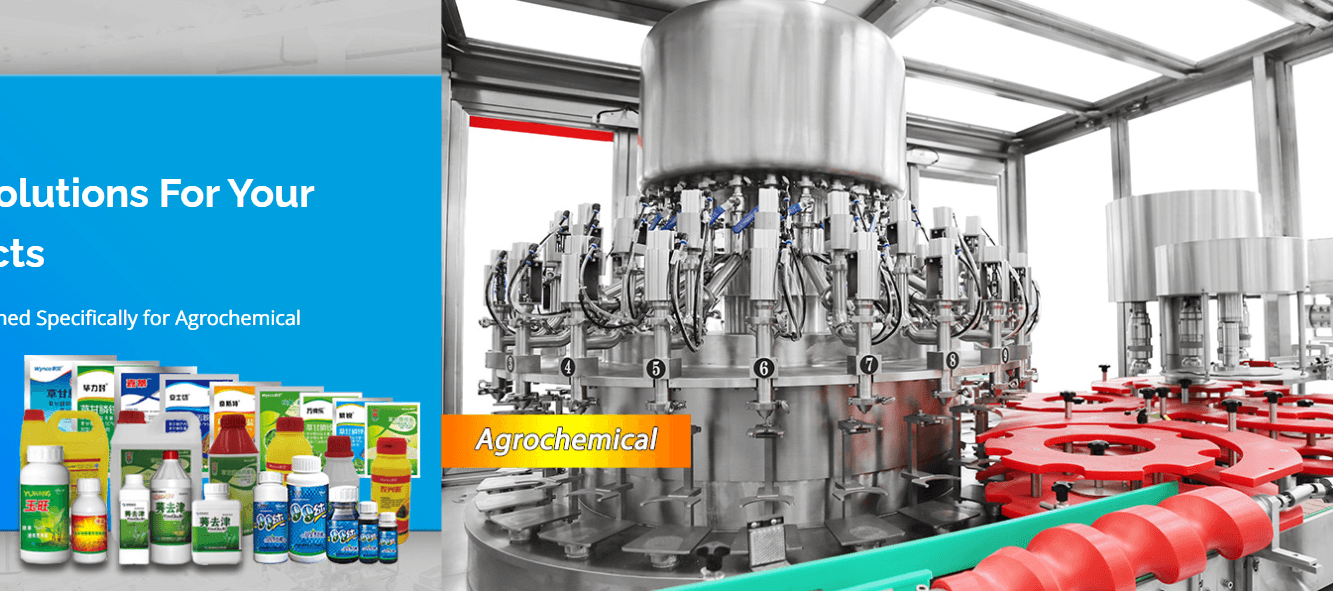
Meeting these rules is hard with manual methods. Automated chemical packaging systems cut down human contact with dangerous materials. These systems focus on safety and help follow rules. TOM's agrochemical filling machines have safety features that protect workers. Precision sensors always check fill levels. Systems work in a closed, controlled setting. This helps plants meet OSHA, EPA, and NFPA standards. Good pesticide filling solutions make sure every container meets labeling needs correctly.
Inefficiencies and Waste in Traditional Filling Processes
Old filling methods create a lot of waste. Typical machines waste 2% to 5% of product because they don't fill accurately. For costly chemical concentrates, this loss directly cuts into profits. In a big plant, a 2% loss means thousands of dollars of wasted product each month. Overfilling wastes product; underfilling breaks rules. Slow changes between different product types reduce how much work gets done. Workplace conditions also get worse when workers often handle many different dangerous chemicals.
TOM solves these problems with smart filling lines that are accurate to ±0.5%. This accuracy cuts down product waste and makes sure fill amounts follow rules. Labor costs drop a lot. Old lines require a larger workforce. TOM's automation reduces the team significantly. This helps with worker shortages and lowers costs a lot.
Modern agrochemical packaging equipment puts many jobs into one smooth flow. Intelligent machines like unscramblers, fillers, cappers, and checkweighers work together without people helping. This smooth flow removes material handling slowdowns between stations. Automation boosts quality by cutting human mistakes. Quick changeovers let plants switch products without long stops. TOM's filling systems offer IIoT connections for real-time monitoring and full batch tracking. Chemical and agrochemical filling equipment from TOM gives the safety, accuracy, and speed that modern agrochemical plants need.
TOM's Smart Filling Lines: Technology and Precision
TOM makes two different filling platforms for different production needs. These smart filling lines are the heart of modern chemical packaging. Each system uses advanced tech to give precision and speed. The choice between platforms depends on product value, thickness, and needed speed.
High-Speed and Medium-Speed Filling Solutions
TOM offers two main platforms for containers from 50 ml to 5 L. The 50-1000ML High-Speed Weighing Filling Capping Monoblock uses high-precision electronic load cells. This system measures real weight during filling. The valve shuts the moment the set weight is reached. This method gives an average error of just 0.1%. The monoblock runs at a maximum speed of 7,200 bottles per hour for 100ml bottles.
The 50-1000ml Medium-Speed Piston-Type Intelligent Filling Line uses a piston-cylinder system. This design pulls in and pushes out a fixed, set amount of product. Piston fillers give very repeatable, accurate filling with about 0.5% accuracy. They offer good working speed while balancing accuracy with output. This line offers good operating speed for medium-to-high throughput. Quick changeovers let workers switch between product types in minutes.
The table below compares the two main technologies:
Feature | High-Speed Weighing (Load Cell) Filling | Medium-Speed Piston-Type Filling |
|---|---|---|
Core Technology | Measures real weight with high-precision electronic load cells; valve shuts when set weight is reached | Uses a piston-cylinder system to pull in and push out a fixed, set amount of product |
Speed Characteristic | Runs at slightly lower speeds because each cycle needs a precise weighing step | Offers good working speed, balancing accuracy with output |
Accuracy Basis | Not affected by temperature or thickness changes; ideal for liquids with changing density | Very repeatable for steady volume filling, but can be affected by product density changes |
Primary Trade-off | Focuses on product value protection and accuracy over maximum speed | Balances speed, flexibility, and reliability for many different thicknesses |
Net weight fillers measure by weight with an unmatched accuracy of 0.1%, but their downside is slower speed because each fill must be weighed. In contrast, piston fillers give very repeatable, accurate filling with about 0.5% accuracy, and are known for their working speed, making them good for medium-to-high-speed uses.
For larger volumes, the 1-5L Automatic Intelligent Filling Line handles containers from 500 ml to 5 L. This system gives precision of ±0.5% per batch and can produce more than 10,000 bottles per day. Chemical producers using this line reported strong results:
Performance indicator | Reported result |
|---|---|
Daily output | More than 10,000 bottles per day |
Rework | 15% reduction |
Production capacity | 20% increase |
Filling accuracy | ±0.5% per batch |
Container range | 500 ml to 5 L |
"Tom Packs' filling machine made our pesticide production easier and safer."
Integrated Automation: From Unscrambling to Palletizing
A single TOM filling line joins many machines into one smooth flow. The process starts with an intelligent bottle unscrambler that lines up and feeds containers onto the conveyor. A filling machine then puts in the product using either weighing or piston technology. A capping machine puts closures on tightly. Online weight detection systems check every container in real time. Aluminum foil sealing machines add a tamper-evident seal. Spray coding machines mark each bottle with batch info. QR code tracking systems let you trace everything from production to end user. Cartoning machines pack the bottles into boxes. Robotic palletizing systems stack the finished cases onto pallets for shipping.
This integrated automation significantly reduces the required workforce. The system also includes advanced tech for IIoT connectivity. This connection allows real-time data collection for full batch tracking. Adaptive control systems adjust to product thickness changes without human help. TOM's intelligent equipment parts work together to keep steady quality and safety throughout the production cycle. Strong safety features such as enclosed filling zones and emergency stops protect every operator. These chemical filling machines handle tough chemical recipes with reliable performance. The company gives complete filling solutions that match each plant's unique needs. As high-precision pesticide filling machines, these systems make sure every container meets exact specs. Each line works as trusted liquid filling equipment for daily production demands.
Operational and Economic Benefits of TOM's Smart Filling Lines
Maximizing ROI Through Precision and Reduced Waste
Precision directly drives profitability in agrochemical packaging. TOM's smart filling lines achieve an average deviation of ±0.5%, which translates into measurable savings on expensive chemical concentrates. Overfill on a high-volume line creates substantial product giveaway. Underfill triggers regulatory penalties and customer rejection. The weighing technology shuts the valve the instant the target weight registers, eliminating both problems.
The financial impact becomes clear within two years. Industry data shows that agrochemical plants recover their equipment investment in 18 to 24 months. Most operations see profits within 18 months of installation. Plant managers report that the machines pay back their costs within two years of continuous operation.
Several factors accelerate this return:
Labor reduction significantly cuts payroll expenses
Quick-change tooling allows operators to switch bottle types or caps in just 5 minutes without tools, minimizing downtime between product runs
Reduced rework lowers material waste and reprocessing costs
Higher throughput per labor hour increases overall plant capacity without adding floor space
The 1-5L Automatic Intelligent Filling Line demonstrates these gains in practice. Chemical producers using this system report daily output exceeding 10,000 bottles, a 15% reduction in rework, and a 20% increase in production capacity. These improvements compound over time, making the payback period shorter than most capital equipment investments.
Quality control improves alongside cost savings. The integrated online weight detection system checks every container in real time. This continuous monitoring catches deviations immediately rather than discovering problems after a full batch runs. The system's adaptive controls adjust to product viscosity changes without manual intervention, maintaining consistent quality across every shift.
Ensuring Global Compliance and Production Scalability
Agrochemical manufacturers exporting to different regions face complex regulatory landscapes. TOM's filling solutions carry certifications that open doors to international markets. The company obtained ISO 9001:2000 certification in 2001, establishing a quality management framework for consistent manufacturing. CE certification followed in August 2009, confirming that the equipment meets EU safety, health, and environmental requirements. In 2019, TOM added the ISO three-system certification, covering ISO 9001 for quality, ISO 14001 for environmental management, and OHSAS 18001 for occupational health and safety.
"You will see certifications like ISO 9001 and CE marking. Tom Packs is a top company in China for filling machine solutions. Their machines work for agrochemicals, foodstuff, and personal care products."
These credentials matter for agrochemical exporters. CE marking grants legal access to the European Union market. ISO 9001 demonstrates consistent process control that international buyers expect from suppliers. The comprehensive certification framework signals that TOM's intelligent equipment meets rigorous standards for safety and environmental responsibility.
Scalability comes from modular design. Plants can start with a single machine for small-batch production and expand to full customized lines as demand grows. The modular architecture supports this growth path:
Modular Design Feature | Direct Scalability Support |
|---|---|
Modular heads and quick-change template design | Operators switch bottle types or caps in 5 minutes without tools, minimizing downtime across different batch sizes |
Handles various containers (glass, metal, plastic, fiberboard) and cap types | Accommodates diverse product lines, scaling from small-batch specialty runs to high-volume standardized output |
Scalable solutions from single capping machines to customized filling lines | Provides a growth path from one machine to complete automated systems |
Smart, modular automated designs with intelligent servo monitoring | Ensures stable, efficient production at any scale while minimizing waste |
This flexibility proves valuable for agrochemical plants managing multiple product SKUs. The multi-product line supports small batches from 50 to 1000 ml, allowing production planners to respond quickly to market demands. As volume grows, the same equipment platform expands to meet higher throughput requirements. This liquid filling equipment adapts to changing business conditions without requiring complete replacement.
Safety remains paramount throughout the scaling process. TOM's smart filling lines incorporate enclosed filling zones and emergency stops that protect operators at any production volume. The combination of compliance certifications, modular scalability, and robust safety features positions TOM as a strategic partner for agrochemical manufacturers pursuing global growth.
TOM's Global Expertise and End-to-End Support
A Track Record of Delivering Turnkey Factory Solutions
TOM brings extensive know-how to every agrochemical project. The company operates a large factory and maintains a tech showroom where clients can see machines working before they buy. A team of engineers designs each system to hit specific production targets. This deep knowledge makes TOM a trusted filling machine maker for plants around the world.
The company provides complete turnkey filling line solutions that go from idea to startup without any gaps. One good example is a 200L pesticide filling line built for large drum packaging. This system handles pesticide products with great accuracy and combines many tasks into one automated process.
Parameter | Value / Detail |
|---|---|
Production capacity | 80 BPH (customizable); also stated as 40 barrels/hour |
Filling accuracy | ± 0.1% |
Applicable container | 200L drum/barrel |
This setup shows how TOM adapts pesticide filling machines to work with heavy industrial containers. The line uses four workstations and can run up to 80 barrels per hour. Clients can adjust filling speed and capacity to fit their own needs. The stainless steel build lasts long even with harsh chemicals. This project is just one example of TOM's worldwide presence in agrochemical packaging.
Personalized Engineering and Factory Layout Optimization
TOM engineers start each partnership with a one-on-one talk. They look at the current factory floor, how work flows, and what skills the operators have. This review shows where automation helps the most. The team then creates a layout that fits with current operations while leaving space to grow later.
Several factors help new equipment work well in existing plants:
Centralized control systems: Simple machine-to-machine links are not enough. A central control system adjusts each machine's speed and the conveyor system to handle the whole process.
Standardization (PackML): Machines often come from different makers. Using standard interfaces like PackML makes setup easier, cuts work for system integrators, and avoids problems when OEMs lock controller code.
Incremental integration: Adding automation step by step reduces disruption. Plants might start with semi-automatic casing, then add conveyors, then automate the infeed. Integration gateways and upgraded HMIs connect old and new systems.
Simulation and digital twins: Tools like Emulate3D or Plant Simulation check speeds, layouts, and buffer sizes before any physical changes. This method cuts downtime during the switch.
Buffer and capacity planning: Packaging systems should run at 20% above the fastest upstream speed. Buffering and accumulation systems keep upstream processes from stopping.
These integration methods show TOM's focus on custom solutions that respect current operations. The company's advanced tech ensures smooth changes without long production stops. Every pesticide filling solution gets full testing before shipping. This care for quality and reliability has earned TOM certifications like CE and ISO standards. Plants worldwide trust TOM to deliver equipment that works steadily shift after shift. The company's safety features protect workers while keeping high output. TOM's agrochemical filling machines set the standard for modern chemical packaging operations.
TOM's smart filling lines deliver exceptional precision (±0.5%), high throughput (up to 7,200 BPH), and significant labor savings by reducing the workforce. These integrated systems ensure workplace safety and full regulatory compliance through intelligent equipment and robust design principles. TOM stands apart as a dedicated strategic partner, not merely a filling machine manufacturer. The company provides comprehensive filling solutions, guiding clients from initial consultation through installation to ongoing support. Each high-speed line reflects an unwavering commitment to quality. This positions TOM as the clear choice for global agrochemical manufacturers. The advanced equipment enhances workplace safety through sophisticated automation. Manufacturers seeking to modernize their operations should visit TOM's technology showroom or request a personalized consultation today.
FAQ
What level of filling accuracy can TOM's lines achieve?
TOM's high-speed weighing filling monoblock has an average error of only 0.1%. The 1-5L automatic intelligent filling line is accurate to within ±0.5% per batch. This accuracy cuts down on wasted product for costly chemicals and helps every container meet safety rules.
How do TOM's smart filling lines protect workers from hazardous chemicals?
TOM uses enclosed filling areas, emergency stop buttons, and automated material handling on every line. These features cut down on workers touching toxic chemicals. The system needs fewer operators instead of a larger team, greatly lowering worker exposure while keeping production running.
Can TOM customize filling lines for different container sizes?
Yes. TOM engineers make systems for containers from 50ml to 200L drums. The 200L pesticide filling line can fill 40 barrels per hour with an error of only ±0.1%. Each line has quick-change parts, so operators can switch bottle types in about 5 minutes without tools.
What certifications does TOM's equipment hold?
TOM got ISO 9001:2000 certification in 2001 and CE certification in 2009. The company added ISO 9001, ISO 14001, and OHSAS 18001 certifications in 2019. These certifications show the equipment meets international quality, environmental, and safety standards for agrochemical exporters worldwide.