





Custom Monoblock Filling Systems Built for Corrosive Chemical Liquids
 Sep 21, 2026|
 View:26
How do you build monoblock filling systems for corrosive chemical filling? You make them from the start with materials that resist corrosion and precise controls. The risks are serious: one leak or vapor release can hurt workers, damage equipment, and lead to regulatory fines. Without the right design, these liquids break down standard parts quickly. That's why the equipment uses stainless steel, special seals, and built-in safety features. They also include exact weighing and filling mechanisms to handle harsh formulas. This article covers the design features, corrosion-resistant materials, safety integration, and customization options that keep your operations safe and accurate.
Key Takeaways
Custom materials like stainless steel and HDPE do not get damaged by harsh chemicals.
Explosion-proof designs get rid of flammable vapor dangers and keep workers safe.
Precision weighing with 0.5% deviation finds bottles that are not up to spec and reduces waste.
Fast swaps and high speeds cut labor costs and increase output.
Choosing pumps and seals that fit the chemical makes the equipment last longer.
Why Customization Matters for Corrosive Liquids
Safety Risks of Standard Fillers
Standard filling machines often fail when used with corrosive or acidic liquids. Their rubber seals, gaskets, and metal parts wear out over time. A leak can release dangerous chemicals into your workspace. Workers then face burns, trouble breathing, or worse. Gases from volatile solvents can build up and create fire risks.
You cannot risk these dangers in your facility. One failure can lead to injuries, costly equipment damage, and fines from regulators. Standard fillers simply do not handle how corrosive or caustic liquids behave. They lack the protective barriers and ventilation controls your operation needs.
Precision and Material Compatibility
Corrosive chemicals damage normal metals and plastics. A standard filler might use aluminum or soft steel parts. These materials react with acids and bases. This causes rust, pitting, and contamination of your product. You also lose filling accuracy as parts wear down unevenly.
A customized liquid filling solution solves these problems. You get corrosion-resistant materials like stainless steel and HDPE. These materials stand up to chemical attack without breaking down. Your customized liquid filling solutions also include exact weighing systems. They stay accurate even after thousands of cycles. This protects both your product quality and your profits.
Key Components of Corrosion-Resistant Filling Machines
Corrosion-Resistant Materials and Seals
The materials you pick decide how long your equipment will last. TOM makes corrosion-resistant filling machines using strong stainless-steel construction. The standard frame is SS304, and you can upgrade to SS316 for tougher chemical environments. Both grades fight off damage from acids, alkalis, and detergents. HDPE machined parts cover the wetted surfaces where harsh liquids flow. These non-reactive contact materials stop contamination and make service life longer.
Seal selection is just as important. PTFE seals stand up to polar solvents such as ketones, including acetone. They keep their structure during harsh chemical cleaning and sterilization. PTFE can outlast elastomeric seals by up to 5-to-1 in tough chemical service. That cuts down your maintenance frequency a lot. Viton, on the other hand, is fundamentally incompatible with ketones. Exposure can cause volumetric swelling over 100%, leading to extrusion and catastrophic failure. For acetone service, PTFE is the clear choice.
Seal material | Acetone compatibility | Service-life implication |
|---|---|---|
PTFE | Highly resistant to polar solvents such as ketones, including acetone; maintains structural integrity during severe chemical cleaning and sterilization processes. | Can outlast elastomeric seals by up to 5-to-1 in aggressive chemical service, reducing maintenance frequency. |
Viton | Fundamentally incompatible with ketones like acetone; exposure can cause volumetric swelling exceeding 100%, leading to extrusion and catastrophic failure. | Not suitable for acetone service; its service life is dramatically shorter than PTFE and failure can be immediate. |
Pump selection also depends on your chemicals. You can choose magnetic, diaphragm, ceramic, or peristaltic pumps. Each option fits different acids, alkalis, detergents, and chemical products. Magnetic pumps handle thin liquids well. Diaphragm pumps work for viscous formulas. Ceramic pumps resist abrasive slurries. Peristaltic pumps keep the liquid inside the tube only.
Explosion-Proof and Precision Filling Design
Flammable chemicals need explosion-proof designs. A customized explosion-proof weighing filler protects your facility from ignition risks. These explosion-proof filling systems include automatic extraction of fumes from a total enclosure of high-risk areas. Special ATEX-rated electric wiring and components must be used throughout. Real-time detection monitors flammable vapor concentration inside the filler. The system shuts down automatically if concentrations reach or bypass pre-set danger levels.
ATEX is not required for every filling machine. It becomes relevant when product and site conditions create explosion-risk requirements. Non-flammable products may not need the same configuration. Your site owner or a qualified safety party should define the hazardous zone. The equipment can then be configured accordingly. The most useful documents for an ATEX review are the product Safety Data Sheet and the site hazardous-area classification. Key specification inputs include site hazardous-area classification, container size and format, grounding and ventilation requirements, and required certificates.
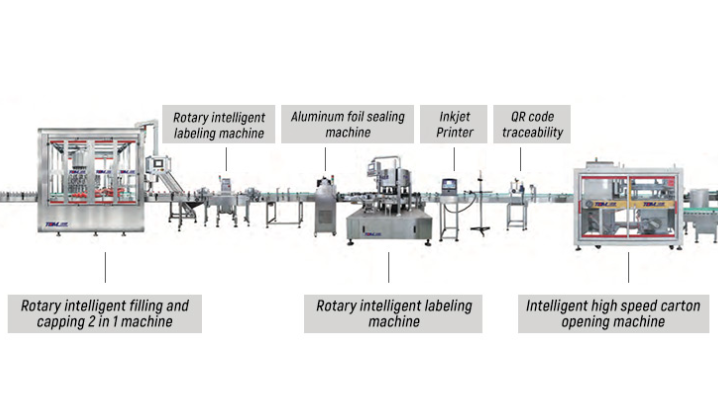
Precision separates good filling machines for hazardous chemicals from average ones. TOM's customized weigh-filling systems deliver high-precision weighing with plus or minus 0.5% average deviation. Integrated online weight detection catches every container. The rejection system removes out-of-spec bottles automatically. This keeps your product quality consistent across thousands of cycles.
Types of Corrosion-Resistant Filling Systems
Gravity, Overflow, Piston, and Pump Configurations
You can pick from four main types of corrosion-resistant filling systems. Gravity fillers let liquid flow from a raised tank into containers. They work well for thin liquids under 100 cP, like acids and fast-evaporating solvents. These fillers have no seals, packings, or moving parts. That makes them simple to run and cheap to maintain.
Overflow fillers work for thin to medium-thick liquids. They give the same fill level in every container. Return ports and overflow nozzles make the design more complex. Piston fillers handle liquids thicker than 1,000 cP. They do not work for the thin range under 100 cP. Pump fillers, especially peristaltic pumps, are good for corrosive chemicals because you can use throwaway tubing. Their accuracy is about plus or minus 1.0%. Gravity fillers reach a level-based accuracy of about plus or minus 2.0% by volume.
Dosing Technology | Target Viscosity Range | Volumetric Accuracy | Cleaning & Washdown (CIP) | Ideal Application Fit |
|---|---|---|---|---|
Piston Pump Filler | 1 to 100,000+ cP | ±0.5% | Very High (CIP/SIP compatible) | Sauces, creams, honey, cosmetics, shampoo, condiments, motor oils |
Peristaltic Pump | 1 to 5,000 cP | ±1.0% | Excellent (Single-use tubing) | Pharma, reagents, low-volume sterile micro-dosing |
Gravity / Overflow Filler | 1 to 500 cP | Level-based (±2.0% volume) | Moderate | Water, spirits, vinegar, transparent glass bottle fills |
Matching Systems to Acids, Bases, Solvents, and Slurries
What chemicals you use decides which setup works best. Thin acids and bases flow easily through gravity fillers. These automatic machines need little upkeep because no seals touch the chemical. Solvents need careful material choices. PTFE seals resist polar solvents like ketones. This keeps your machine from swelling and breaking.
Slurries and thick pastes need piston or diaphragm pumps. These machines push thick material through the line without blocking. A system built for one product type may not work for another. You must match the pump type, seal material, and wet parts to your specific formula. This keeps your equipment reliable run after run. A well-matched setup cuts downtime and keeps your workers safe from exposure.
Advantages of Custom Monoblock Filling Systems
Enhanced Safety and Filling Accuracy
These custom monoblock filling systems protect your workers and keep your product accurate. They use materials that resist corrosion and have sealed designs. This stops leaks and harmful vapor release before they happen. As a result, your workplace is safer and you have fewer accidents.
Speed and flexibility are also important. TOM builds monoblock filling systems with speeds you can set from 1,000 to 18,000 bottles per hour. The container sizes range from 50ml to 5L. You can run small batches or high-volume lines on the same machine. This flexibility lets you switch products quickly without losing output.
Labor costs go down when you use these machines. A full line needs only 2 to 3 workers. This cuts your staffing needs while increasing production. Your team focuses on watching over the process instead of filling by hand. The result is higher output with lower operating costs.
Filling accuracy stays tight for every cycle. TOM's systems hold a plus or minus 0.5% average deviation. Online weight detection finds containers that are out of spec. The rejection system removes them automatically. You protect product quality and cut waste at the same time.
Regulatory Compliance and Reduced Downtime
You must follow rules when you handle corrosive chemicals. TOM's equipment carries CE and ISO certification. These certificates show your line meets global safety and quality standards. You pass audits with less worry and fewer delays.
Fast changeovers keep your line running. You can switch between products in minutes, not hours. This cuts downtime and improves your overall equipment effectiveness. QR code tracking gives you more control. You trace every batch and container through the system. This paperwork helps with regulatory reporting and recalls.
A customized liquid filling solution from TOM also includes remote diagnostics. Your team gets quick help when problems come up. A steady supply of spare parts keeps your line running. You avoid waiting long for new parts. These features protect your investment and keep your operation following the rules.
Challenges and How a Corrosion Resistant Filling Machine Solves Them
Common Corrosion, Leak, and Vapor Problems
Aggressive chemical vapors create three main failure modes in filling equipment over time. You need to understand these risks before choosing any corrosion-resistant filling machine.
Pitting and crevice corrosion. Standard stainless steels like 304 and standard 316 lose their protective chromium oxide layer under sustained bleach exposure. Deep micro-pitting appears within weeks.
Stress corrosion cracking. Welded joints, high-pressure fittings, and valve stems become brittle. This leads to sudden liquid leaks.
Mechanical seizure. Salt precipitation and surface oxidation lock up valve cores, shafts, and piston cylinders. Your line stops running.
Escaped chlorine gas also attacks structural chassis parts, linear bearings, pneumatic cylinders, and electrical conduits. Chemical corrosion is not uniform. It shows up as general wasting, crevice corrosion, intergranular attack, stress corrosion cracking, or pitting. Picking the wrong material for a chemical filling system causes product contamination and unsafe equipment failure.
For oxidizing reagents and bleaches such as sodium hypochlorite at 15% and hydrogen peroxide at 50%, you must avoid carbon steel, 304 stainless steel, copper, and nylon. Recommended contact metallurgy includes titanium, PVC, PVDF, and HDPE.
Engineering Solutions Built Into the Design
A corrosion resistant filling machine solves these problems through careful material selection and smart design. TOM builds corrosion-resistant filling machines with SS304 frames and offers SS316 as an upgrade for tougher environments. HDPE machined parts cover all wetted surfaces. These materials resist attack from acids, alkalis, and volatile solvents.
Seal choice matters just as much. PTFE seals handle polar solvents like ketones. They outlast elastomeric seals by up to 5-to-1 in harsh service. This cuts your maintenance frequency significantly.
Every corrosion-resistant filling machine from TOM includes explosion-proof options for flammable chemicals. Automatic fume extraction removes vapors from enclosed high-risk areas. Real-time detection monitors flammable vapor concentration. The system shuts down if levels reach pre-set danger points.
Precision weighing holds plus or minus 0.5% average deviation. Online weight detection catches out-of-spec containers. The rejection system removes them automatically. These features keep your corrosion-resistant filling machines accurate and safe across thousands of cycles.
Designing a Custom System Step by Step
From Chemical Assessment to Safety Integration
Building a custom monoblock filling system starts with studying your chemical. You cannot pick materials or pumps until you know what flows through the line. TOM's 70 engineers begin every project by checking your product. They ask how thick, how fast it evaporates, and how corrosive it is. The engineering team also reviews container size, output needs, and plant layout.
This review step guides every later choice. Your custom liquid filling solution depends on correct data about the chemicals you handle. A solvent that evaporates quickly needs different seals than a thick slurry. An acid needs different wetted parts than a base. The engineering team uses this information to plan a custom design.
Safety integration comes next. Your plant's hazardous area classification decides which standards apply. ATEX covers equipment used in explosive atmospheres in the European Union. UL sets safety requirements for the United States market. NFPA codes guide fire and explosion protection in North America. TOM's engineers configure the system to meet the standards your site needs. They add explosion-proof wiring, fume extraction, and real-time vapor detection where required.
The design stage also covers automation choices. You can add robotic palletizing for a fully automated line from production to storage. This removes manual handling at the end of the line. Your team stays safer and your output rises.
Testing, Validation, and Commissioning
Once the design is set, manufacturing begins. TOM builds the monoblock filler and runs factory acceptance testing before shipping. The team checks filling accuracy, speed, and safety systems at the facility. You watch the machine run before it leaves the factory. This step catches problems early and saves time during installation.
Installation and commissioning follow. TOM provides remote or on-site guidance to get your line running. Operators receive training on the new system. They learn how to switch products, handle chemicals safely, and respond to alarms. The goal is a smooth startup with no surprises.
Validation shows the system meets your production goals. Engineers run flow analysis and simulations to check accuracy before full production starts. They test the rejection system and weight detection. They confirm every container meets your specifications.
After-sales support keeps your line stable for years. TOM's 100 after-sales experts offer maintenance contracts and remote diagnostics. You get quick help when problems come up. A reliable spare parts supply means less downtime. This long-term support protects your investment and keeps your operation running.
The full process goes from chemical review to safety integration to testing and startup. Each step builds on the last one. You finish with a system that fits your chemicals, your containers, and your rules.
Maintenance Tips for a Corrosion-Resistant Filling Machine
Inspection Schedules and Replacement Parts
You need a regular inspection plan to keep your corrosion-resistant filling machine working well. Check seals, gaskets, and wetted parts often. PTFE seals last up to 5-to-1 longer than elastomeric seals in harsh service. Even so, you should inspect them on a set schedule. Look for swelling, cracks, or color changes. Replace any seal that shows wear before it breaks.
Pump parts also need attention. Magnetic, diaphragm, ceramic, and peristaltic pumps each wear out at different speeds. Peristaltic pump tubing is a part that wears out. Replace it before it gets weak and splits. Keep spare tubing, seals, and HDPE machined parts on hand. TOM provides a steady spare parts supply and remote diagnostics. This support helps you avoid long waits for replacements.
Cleaning and Operator Best Practices
Clean your corrosion-resistant filling machines after every product change. Flush wetted surfaces with a cleaning fluid that works with your chemicals. This step removes leftover acids, alkalis, and other chemicals. Traces of old chemicals can eat away at parts or spoil your next batch. Follow the cleaning method your supplier suggests for each chemical you use.
Train your operators on safe handling and daily checks. They should look for leaks, strange noises, and vapor smells. A small leak can turn into a serious safety problem. Operators must know how to stop the line and report issues fast. TOM's 100 after-sales experts offer training and maintenance contracts. Good habits and quick reporting keep your corrosion resistant filling machine accurate and safe. These practices also protect your team from contact with dangerous chemicals.
Case Study and ROI Benefits
Agrochemical Corrosive Liquid Filling Scenario
Think of a farm chemical plant that puts weed killers and bug killers into 1L and 5L jugs. These liquids can damage equipment and come in many thicknesses, from thin mixes to gooey pastes. The plant must follow strict safety rules and fill every bottle with the same amount. A regular filler breaks down fast in this job. Seals swell up, metal parts get pits, and leaks put workers near harmful liquids.
The plant moves to a custom monoblock filler from TOM that resists corrosion. The new line runs 8,000 bottles each hour with just 3 workers. It uses SS316 parts that touch the liquid and PTFE seals to stand up to the strong formulas. An online weight checker keeps errors to plus or minus 0.5%. A reject system kicks out bad bottles before they get packed. Workers stay safe, and the plant passes safety checks with no trouble.
Payback Through Safety, Uptime, and Accuracy
The money case for a corrosion resistant filling machine is not just about safety. You lower labor costs, cut waste, and stop expensive down time. The table below shows typical yearly savings for a farm chemical plant that makes this change.
Cost Savings Category | Annual Savings Amount | Key Details |
|---|---|---|
Labor Cost Savings | Up to $230,000 | Cut staff by 80%; manual line costs $125k–$300k per shift, automated line costs $30k–$70k |
Line Operational Savings | ~$27,500 | Less waste, lower cost per unit; average time to pay back is 18–24 months |
Cumulative 5-Year Labor Savings | $1,150,000 | Manual line: $1,500,000; Automated line: $350,000 |
TOM backs this payback with lifelong upkeep, remote checks, and a steady spare parts supply. Your automatic corrosion resistant filling machines stay running longer. The 120,558 m² factory and Industry 4.0 standards show TOM can deliver big. You invest once and get years of safe, exact output.
Custom monoblock filling systems fix your biggest problems with corrosive liquids. They fight corrosion using stainless steel and HDPE parts. They stop leaks with PTFE seals and sealed designs. They keep accuracy at plus or minus 0.5% deviation. They meet CE and ISO standards for compliance. You get safety and efficiency at the same time.
Customization is an investment in your operation, not just equipment. You protect workers, cut downtime, and reduce waste. You also lower labor costs with lines that need only 2 to 3 operators.
Ready to upgrade your chemical filling line? Contact TOM's engineers for a custom design assessment. Their team will match materials, pumps, and safety features to your exact product.
FAQ
What materials make a filling system safe for corrosive chemicals?
TOM builds these systems with SS304 frames and offers SS316 for tougher environments. HDPE machined parts cover all wetted surfaces. PTFE seals resist polar solvents like ketones. These materials stop corrosion, contamination, and seal failure. You get equipment that lasts through thousands of filling cycles without breaking down.
Which pump type works best for my chemical?
Your chemical's thickness and behavior decide the pump. Magnetic pumps handle thin liquids well. Diaphragm pumps work for viscous formulas. Ceramic pumps resist abrasive slurries. Peristaltic pumps keep liquid inside the tubing only. TOM's engineers match the pump to your specific product during the design review.
How accurate are these custom monoblock filling systems?
TOM's systems hold a plus or minus 0.5% average deviation. Integrated online weight detection catches every container. The rejection system removes out-of-spec bottles automatically. You protect product quality and cut waste at the same time. This accuracy stays tight across thousands of cycles.
Can one machine handle different container sizes and products?
Yes. TOM's monoblock lines run containers from 50ml to 5L. Speeds range from 1,000 to 18,000 bottles per hour. Quick changeovers let you switch products in minutes. You run small batches or high-volume lines on the same equipment. This flexibility cuts downtime and improves your overall equipment effectiveness.
What support does TOM provide after installation?
TOM's 100 after-sales experts offer lifetime maintenance and remote diagnostics. You get quick help when problems come up. A reliable spare parts supply means less downtime. Operators receive training on safe handling and daily checks. This long-term support protects your investment and keeps your line running.


Recent News
1.What is a Monoblock Filling Machine?
2024-12-132.What are the advantages of using a monoblock filler?
2026-04-283.Which industries most commonly use monoblock filling machines
2026-07-134.Custom Monoblock Filling Systems Built for Corrosive Chemical Liquids
2026-09-215.How do I choose a monoblock filling machine
2024-08-096.TOM’s Intelligent Filling Line Achieves ±0.5% Accuracy for Pesticide and Chemical Liquids
2026-07-207.The best filling machine manufacturer for Agrochemical In china
2026-01-098.Tom Packs Delivers Smart Filling Lines for Global Agrochemical Plants
2026-09-099.Corrosion-Resistant Filling Machines for Hazardous Chemicals
2026-08-2610.How Labor Costs Cut by 60% with Automated Agrochemical Filling Lines
2026-08-04