





Automated Weighing Filling Lines Improve Efficiency for Lubricant Production Plants
 Aug 31, 2026|
 View:340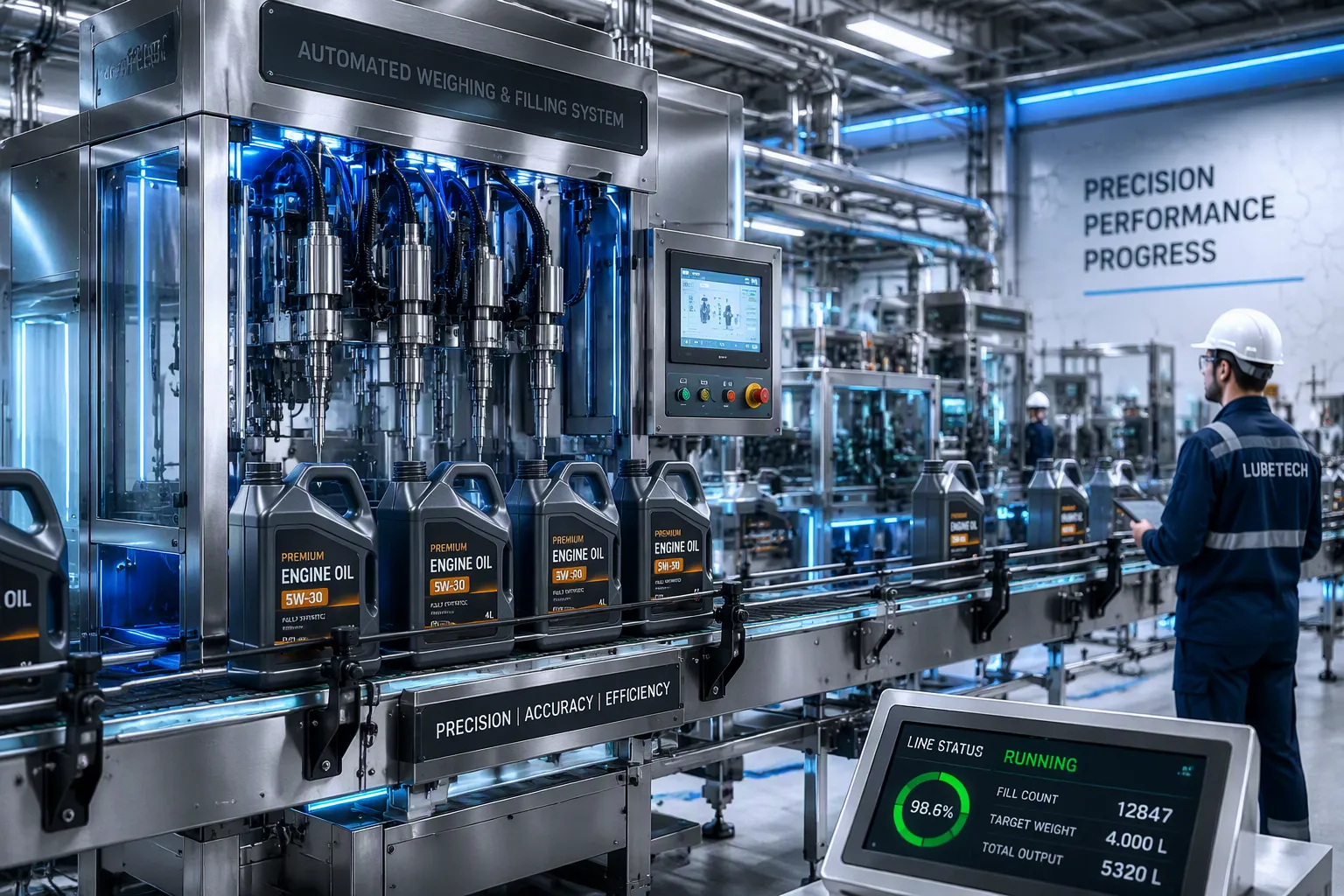
Manual filling mistakes in lubricating oil production cut into profits. Product giveaway, rework, and complaints waste your resources. You need steady accuracy and speed. Automated weighing filling lines deliver that improvement. They boost efficiency by removing guesswork. These systems raise operational efficiency across your oil production lines. With automated lubricant filling machines, you get precise fills. Automation cuts waste and improves quality. Leading providers like Tompacks offer tailored lubricating oil overall solutions. They fit smoothly into your setup. These solutions optimize your oil lines for maximum output. See this technology as a smart investment for long-term competitiveness. Improve Efficiency with every automated step, from precise metering to consistent capping, ensuring your production runs faster and leaner.
Key Takeaways
Automated weighing filling lines reduce product waste by up to 74%.
Weight-based filling works with any oil thickness without needing to change settings.
These systems fill 2,000-3,000 bottles per hour, so they produce more.
Automation cuts labor costs by 64% and frees workers for better tasks.
Most plants get back their investment in 18 to 30 months.
How Automated Lubricant Filling Machines Improve Efficiency
Manual filling adds mistakes that hurt your profits. Workers get tired, lose focus, and guess at fill levels. These mistakes cause overfills that waste costly product and underfills that make customers unhappy. An automated system takes this guesswork out of your oil production lines. Automated lubricant filling machines work with steady precision, every time. They give the same exact fill weight whether you run ten bottles or ten thousand. This steadyness improves your whole operation.
Eliminating Human Error and Overfill
Human error costs more than you think. Think about this: cutting overfill by just 1 gram per bottle in a 1-million-bottle run saves a whole metric ton of oil. That single gram is lost as giveaway when workers use their eyes or manual adjustments. Automated lubricant filling machines stop this waste with exact weight measurement. The numbers show the effect. Plants that switch from manual to automated weighing report an 18–23% drop in giveaway. Waste drops by 30% after using precision filling. Overfill losses go down by 74%. These numbers mean more profit recovered.
The weighing filling machine is the key technology behind these gains. It measures each fill by mass, not volume, so the result stays accurate no matter the product's density or temperature. This method gives high filling accuracy that manual methods cannot match. You get steady quality in every container. The automated system also rejects underfilled or overfilled bottles right away, acting as an inline quality check. Bad output never moves down the line, which cuts rework and ensures batch compliance. Your operational efficiency improves because you stop wasting materials and labor on fixes.
Adapting to Viscosity Variations
Lubricants are a special challenge because their thickness varies a lot. Thin oils flow easily, while thick greases resist movement. Temperature changes alter how they flow, even within the same product. Volume-based filling struggles with these changes because the same volume can weigh differently depending on density. A weighing filling machine avoids this problem completely. Weight stays the same no matter how the liquid flows or how much air gets trapped. The system measures mass, not volume, so thickness changes do not affect the result.
For high-thickness lubricants over 500 cP, load cells achieve ±3g precision. This level of accuracy matters because thick fluids resist flow and create volume-based errors. The weighing method also handles foaming or trapped air, which often happens in certain lubricants. Even when the liquid's volume is unstable, the weight measurement stays correct. Built-in anti-drip nozzles prevent sticky residues from clinging between batches. Self-cleaning cycles remove leftover product when you switch between synthetic and mineral-based oils. These features keep your filling process accurate and clean.
The change from volume-based to weight-based measurement greatly improves your operation. You get accuracy that adjusts automatically to every lubricant type you make. Your oil production lines run smoothly whether you fill thin hydraulic fluid or heavy gear oil. This flexibility means you keep quality without constant manual adjustments. The automated system handles the complexity, and you get the benefits of steady, precise fills. Every bottle leaves your line with the exact weight your customers expect, and your profit shows that dependability.
How the Weighing Filling Machine Helps with High Accuracy
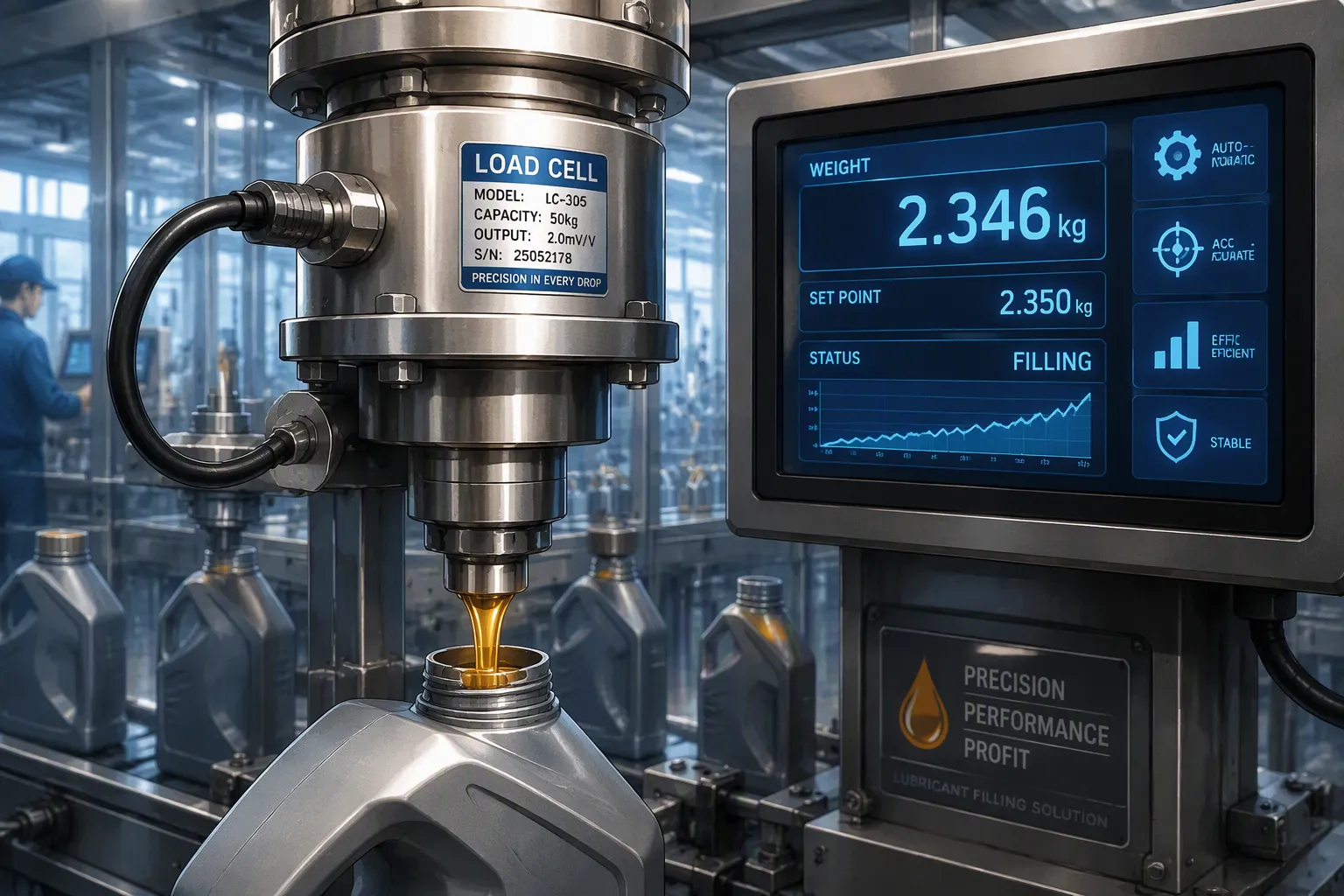
Getting High Filling Accuracy with Load Cell Technology
The weighing filling machine uses special load cells to measure weight directly. This method gives you the results you need.
Load cells make fill-weight better by giving direct, real-time weight readings during and after filling. Closed-loop systems use load cell feedback to stop the filling exactly when the target weight is reached. This removes the guesswork of volume-based filling and directly adjusts for changes in product density. It gives fill accuracy of ±0.1% or better.
This system is key for your oil filling. Changes in thickness and temperature mess up volume-based measurements. Weight-based measurement stays steady and reliable. The technology gives high filling accuracy every time.
Key features of load cells and sensors include:
Real-Time Weight Measurement: This removes the need for volume-based measurements that change with temperature, pressure, and liquid thickness.
Precise Filling Control: The system keeps sending weight data to the PLC. Filling stops right at the set weight.
Less Product Loss: The system cuts down on both overfilling and underfilling. This helps you get the most yield.
Works with Different Liquids: The system is not affected by changes in liquid density, thickness, or temperature. It gives steady results across product types.
These features work directly in your oil production lines. Precise weight control stops costly overfill. It also helps you meet rules. Tompacks offers automatic weighing filling machines as a good example. These machines use the same load cell technology to give exact weight measurements for your operation.
The accuracy you get from this system improves your overall quality. You get better quality control because every container has the exact weight you need. Your filling process becomes more reliable and steady.
Cutting Down on Product Spills and Waste
Manual filling creates waste that hurts your profits. Overfilled containers get thrown away. Underfilled products lead to refunds or a bad reputation. The automated system changes this completely.
Automated equipment uses precise measurement and even delivery. It makes sure all containers get the same fill volume from first to last. This stops spills and thrown-away containers. You no longer need costly damage control.
The weighing filling machine reduces waste in several ways:
Steady accuracy: Precise fill volumes cut down on overfilling, underfilling, and product giveaway. This improves yield and reduces material waste.
Less human error: Automation lowers labor costs and removes the risks of manual work. These are main causes of waste in manual filling.
Steady operation: Smart controls and precise dosing keep output even. This reduces variation and the need for rework or rejection.
The system also uses special methods to prevent waste:
Real-time watching and adjusting: Sensors and algorithms keep adjusting filling speed, pressure, and time. This removes human error and makes sure fills are steady.
No splashing or overflow: Anti-splash nozzles, gentle filling, and overflow sensors stop spills and overfilling. These are common in manual work.
Post-filling recovery systems: The system collects extra product. It filters and puts this material back into the line. This recovers material that would otherwise be wasted.
The automated lubricant filling machines you use make your overall quality better. You keep more of your valuable oil in the container instead of on the floor. The weighing method makes sure you get the exact weight every time. Your oil operation runs cleaner and more profitably.
Achieving Improved Production Efficiency with High-Speed Filling
Speed gives you an edge over competitors in lubricant production. Manual lines struggle to keep up with demand. Automated systems change that completely. A fully automated liquid filler handles 2,000–3,000 bottles per hour. Manual workers manage only 200–300 in the same time. That difference transforms your output capacity. Tompacks offers intelligent rotary weighing type filling and capping machines that combine this speed with precision. You get both throughput and accuracy in one integrated system.
Streamlining the Filling Cycle
The filling cycle has several distinct stages. Each stage offers chances to speed up. Traditional methods waste time during container indexing. The container stops moving, and filling pauses. This waiting reduces overall cycle speed by 30–50%. You lose valuable production time during every single bottle change.
The bucket system eliminates this delay completely. The bucket fills at high speed while the next container moves into position. Once the container arrives, the bucket discharges instantly. The feeder immediately starts recharging for the next cycle. No waiting occurs. Filling continues without interruption.
The weighing filling machine optimizes each stage within the cycle:
Bulk Fill Stage: The main valve opens fully. The pump runs at maximum capacity. Product flows at high speed until the weight reaches 90–95% of the target.
Dribble Fill Stage: The control system throttles the valve to a slow flow for the final 5–10%. This ensures precision without overfill.
Real-Time Monitoring: A load cell tracks the dispensed weight continuously. The system switches from bulk to dribble at the optimal moment. This maximizes time spent in high-speed filling.
This staged approach gives you faster filling cycles without sacrificing accuracy. You maintain quality while increasing output.
Reducing Downtime and Changeover Time
Downtime kills your production targets. Every minute of stopped production costs you money. Automated capping machines maintain speeds of 60–600 bottles per minute. A NIST study shows automation improves packaging line efficiency by 25–40%. These gains come from reduced interruptions and faster changeovers.
Rotary cyclic operation design enables uninterrupted filling work. The optimized mechanical structure supports 24-hour continuous industrial operation. Low noise and low failure rates keep your line running longer. PLC touch screen intelligent control simplifies operation. Automatic bottle feeding, filling, and discharging reduce manual dependence.
Automated fillers may be ten times quicker than manual labor. This speed advantage, combined with consistency and reduced human error, directly improves your production efficiency.
Changeover between different oil types becomes faster with automated systems. Self-cleaning cycles remove leftover product quickly. You switch between synthetic and mineral-based oils without lengthy cleaning procedures. Your oil production lines stay productive across multiple product runs. The intelligent rotary machines integrate with filling, labeling, and inspection systems. Full-line automation enables real-time monitoring. You achieve improved production efficiency through every part of your operation.
Labor Cost Reduction and Waste Minimization
Labor is one of the biggest costs in a lubricant plant. Manual filling lines need many workers per shift to fill, cap, and check containers. These workers do the same tasks over and over. That adds little value to your business. Automated lubricant filling machines cut down on the need for workers. One automated line can do the work of several manual stations. You can move those workers to jobs that help your bottom line more.
Reallocating the Workforce to Higher-Value Tasks
When you take workers off repetitive filling jobs, you free them for important work. Your team can focus on quality checks, equipment care, and making the process better. These tasks improve how the whole plant runs. Workers who watch automated systems learn technical skills that make them more valuable. You build a stronger team while spending less on payroll.
The money you save from this change is big. You cut overtime costs that come from busy times in manual work. You spend less on training because automated systems need less hand‑on supervision. Your remaining staff handle problems instead of routine tasks. This way you get the most from your investment in people.
Tompacks knows this change needs careful planning. They offer custom solutions that fit your exact production needs. Their full support includes training for workers and ongoing help. You get guidance at every step of moving to automation. This partnership helps your team adjust smoothly to new jobs.
Reducing Product Loss and Environmental Impact
Wasting product costs you money and harms the environment. Every liter of spilled oil is lost revenue and can cause pollution. Manual filling always leads to drips, overfills, and rejected containers. These losses add up fast over a shift.
Modern weighing systems fix this problem directly. The table below shows how special features cut spills and protect the environment:
Design Feature | How It Reduces Spills | Environmental Impact |
|---|---|---|
Spill-free filling line with tray collection | Catches oil drips at the machine | Stops soil and water pollution |
Spill-proof machine operation | Stops leaks during filling | Cuts down on product waste |
Leakage sensors and weight checks | Finds pipe problems right away | Prevents big accidental spills |
Barrel filling safeguards | Stops spills when filling barrels | Reduces local pollution |
These features work together to lower product waste. You keep more valuable oil in containers and less on the floor. The weighing technology gives exact measurements every time. This precision makes your product quality better and more consistent.
Energy use also gets better with modern automated systems. Smart motors and better designs use less power than old equipment. You lower your plant’s impact on the environment while cutting utility costs. This double benefit helps your green image and your profits at the same time.
Lower labor costs and less waste make a strong money case. Your investment in automation pays back in many ways. You run your plant better while showing you care for the environment.
Integration, Data Management, and Return on Investment
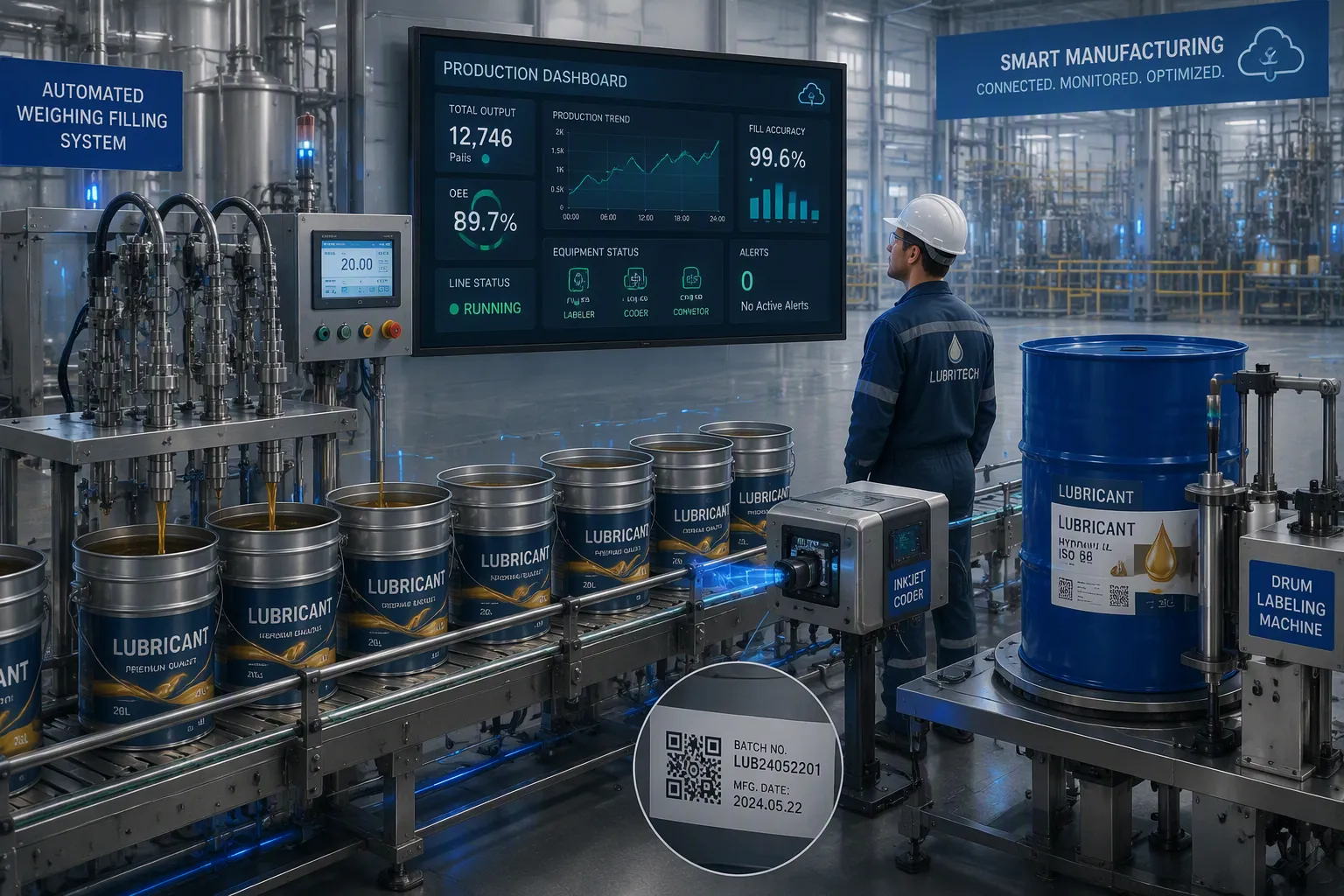
Your automated weighing filling line does more than just fill containers. It creates useful information. This information changes how you handle your oil production work. Live monitoring gives you a clear view of every filling cycle instantly.
Real-Time Monitoring and Traceability
Live weight monitoring changes how you make choices. You no longer wait for end‑of‑shift reports to find problems. The system tells you right away when a fill is off target. You make quick fixes that boost accuracy and output. Companies that use machine learning for data analysis see a 15% cut in material waste. Live data directly helps you make decisions that lower costs.
Cloud‑based systems go even further. You can see operation numbers from anywhere. Managers make fast choices based on key machine performance data. Industry reports show these cloud solutions improve operation efficiency by 20‑25%. Adding IoT allows live monitoring and data analysis. This helps decision‑making and supports early maintenance warnings.
Smart Technology with IoT allows live monitoring and data analysis, which helps decision‑making and supports early maintenance warnings. Live monitoring systems give instant feedback, so operators can make quick changes.
Tracking products becomes easy with built‑in labeling systems. Your weighing filling machine connects directly to coding equipment. Every oil container gets full tracking information.
Equipment | Tracking Feature |
|---|---|
Inkjet Printer / Laser Coding Machine | Prints production date, batch number, QR code on pails or labels |
Drum Labeling and Coding Equipment | Puts labels on and prints batch numbers on large drum surfaces |
Labeling and Coding Equipment | Puts product labels on and prints batch data on IBC surfaces |
This tracking helps with batch management and following rules. You can follow every container from your line to your customer. This ability matters for quality control and meeting rules. Tompacks gives full pesticide mixing engineering (EPC/EPCM) and custom solutions for complex production setups.
Calculating the Financial Payback
The money case for automation becomes clear when you look at the numbers. A comparison of manual versus automated processes shows big improvements.
Metric | Manual Process | Automated System | Improvement |
|---|---|---|---|
Yearly labor costs | $412,000 | $148,000 | 64% savings |
Material waste | 8.2% | 1.7% | 79% reduction |
Compliance audit pass | 76% | 98% | 29% increase |
These savings directly affect your return on investment. The math follows a simple formula:
Yearly Net Benefit = Labor Savings + Throughput Value + Giveaway Reduction + Material Waste Reduction – Extra Costs
Simple Payback Period = Total Equipment Cost ÷ Yearly Net Benefit
A real example shows the power of this method. For a packaging line with a $180,000 yearly net benefit on a $250,000 equipment cost, the simple payback is about 1.4 years. Your oil production lines can get similar results.
Payback periods vary based on your situation. A sample study of a $500,000 automatic filling line shows a simple payback period of 2.5 years. A fully automatic powder weighing line can pay back in 18‑24 months through labor savings alone. For automated aerosol fillers, the payback period is 18‑24 months. Plants that average 50,000 units per day break even in 20 months.
Your weighing filling machine investment pays for itself through many channels. Labor savings cut your payroll. Less waste keeps more oil in containers. Better compliance stops costly fines. Energy savings from modern systems lower utility bills. The weighing technology ensures accuracy that protects your brand name. These factors combine to boost efficiency across your operation. The sensors and monitoring systems give continuous feedback. This data helps you improve every part of your filling process. You get speed without losing quality.
Automated weighing filling lines deliver more than equipment. They provide a complete path to operational efficiency. You gain four key advantages: precision, speed, cost-efficiency, and data intelligence. Each pillar strengthens your oil production lines.
The weighing technology ensures exact fills every cycle. You reduce waste and protect your oil investment. Quality improves consistently across every batch. Speed keeps your output high without sacrificing accuracy.
Now take action. Audit your current filling operations today. Identify where manual steps cost you time and product. Then consult automation experts like Tompacks. They can model the potential ROI for your specific plant. You will see the financial impact clearly before you commit. Your path to better efficiency starts with that first assessment.
FAQ
How quickly will an automated weighing filling line pay for itself?
Most plants get their money back in 18 to 30 months. Saving on labor brings the fastest returns. Cutting product waste adds more savings. A line making 50,000 units each day breaks even in about 20 months. Your payback time depends on your labor costs and how much waste you have now.
What maintenance does a weighing filling machine require?
Daily cleaning stops residue from building up between product runs. Load cells need regular calibration checks. Anti-drip nozzles should be checked for clogs. Most makers suggest preventive maintenance every three months. Your team can handle daily tasks with basic training. Tompacks offers full after-sales support for all equipment.
Can these systems handle different oil viscosities?
Yes. Weight-based measurement ignores viscosity changes completely. The system measures mass, not volume. Thick gear oils and thin hydraulic fluids fill with the same accuracy. Temperature changes do not affect results. You switch products without manual adjustments. The weighing technology adjusts on its own to each lubricant type.
How does automation improve product quality?
Precision filling removes underfills and overfills. Every container gets the exact weight you set. Inline checks reject bad bottles right away. This consistency builds customer trust. Your quality stays the same across every batch. The system also lowers contamination risks from manual handling.
What training does my staff need for the new system?
Operators learn the PLC touchscreen interface within days. Maintenance staff need extra training on load cell calibration and nozzle care. Tompacks offers on-site training during installation. Your team gains confidence through hands-on practice. Most plants reach full operational skill within two weeks.
Recommended Products

lubricant pail filling machine

Monoblock Filling And Capping Machine For Lubricant

Automatic lubricant /coatings pail filling machine

DGP-CZ-200R weighing style filling machine for barrels suitable for lubricant

Mode DGP-CZ-2B weighing lubricant filling machine

Intelligent weighing style lubricant filling machine


Recent News
1.Tom's Group was appointed as "Director Unit of Filling Equipment and Packaging Materials Committee" and won the award of "Excellent Service Provider in Lubricant Industry"!
2025-04-182.Top 10 Lubricant Filling Machine Manufacturers in China for 2026
2026-02-043.Automated Weighing Filling Lines Improve Efficiency for Lubricant Production Plants
2026-08-314.how to choose the Petrochemical And Lubricant Filling Machines?
2024-08-055.Lubricant filling machine: The Selection Guide
2024-08-136.The Importance of Lubricant Oil Filling Machines in Modern Industry
2024-09-257.The Comprehensive Guide to Lubricant Oil Filling Machines
2024-10-258.Guide to Filling Lines for Pesticide, Lubricant Oil, and Detergent
2024-12-189.Advantages of Automated Lubricant Filling Machines
2025-01-2210.Choosing the Right Lubricant Filling Machine
2025-01-26