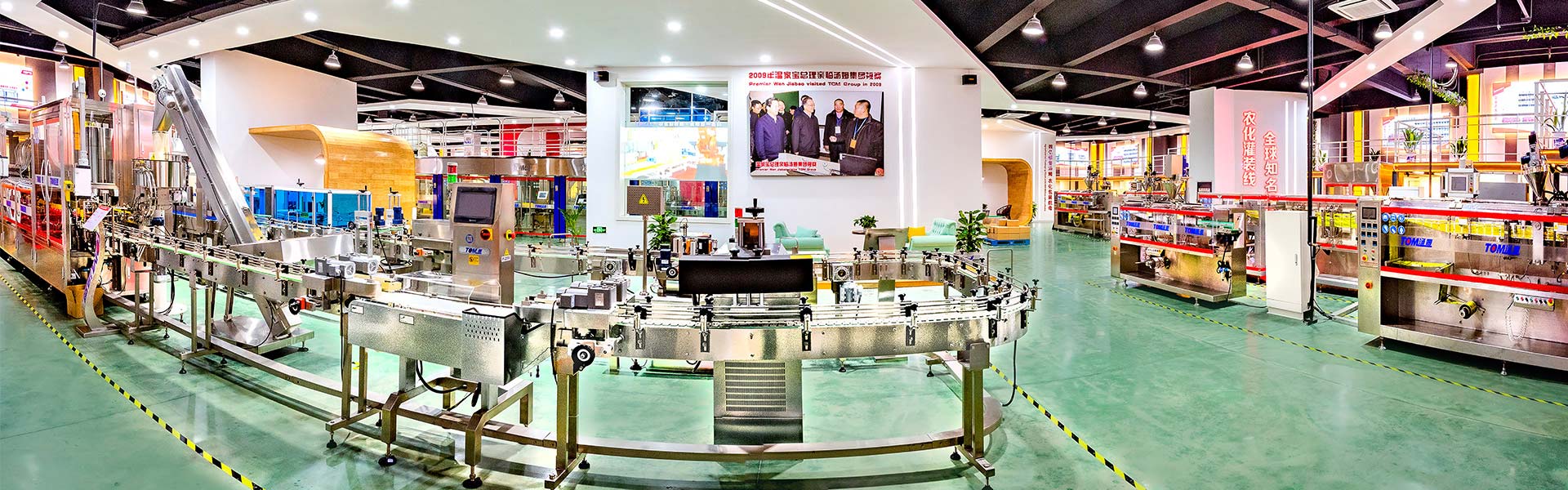
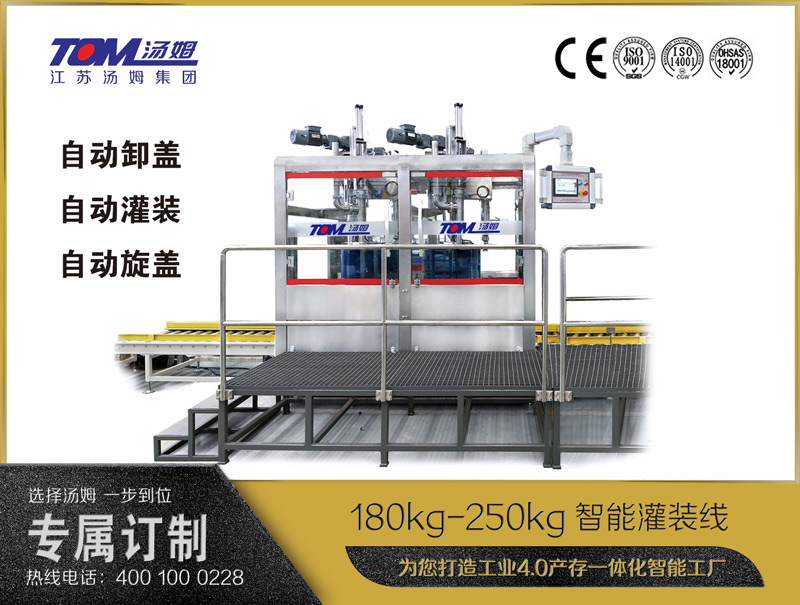
TOM offers a comprehensive range of filling and packing machines specifically designed for the chemical and lubricant industry, including automatic drum filling machines and grease filling machines. These oil drum filling machines are engineered to provide high efficiency, accuracy, and consistency in the packaging of various liquid products such as engine oils, greases, and other chemicals.
Automatic drum filling machine uses a high-precision rotary encoder for measurement, ensuring a filling accuracy of 1‰ while increasing filling speed by 20%-35%. The grease filling machine adopts a flow metering filling principle, suitable for filling various specifications of grease, antifreeze,lubricating oil, and other products.
The operation is simple, maintenance is convenient, and labor costs are saved, offering higher efficiency.
Primary Function and Objective
The core function of an automatic drum filling machine is to dispense a pre-determined quantity of product into a drum with high precision and repeatability. The main objectives are:
Increase Throughput: Significantly faster than manual operations.
Improve Accuracy: Minimize overfills and underfills, reducing product giveaway.
Enhance Safety: Minimize operator exposure to hazardous chemicals, heavy lifting, and potential spills.
Ensure Consistency: Deliver identical fill volumes for every drum, ensuring product quality and compliance.
Reduce Labor Costs: Automate a repetitive and physically demanding task.
Integrate with Production Lines: Function as a key component in a fully automated packaging line.
Main Frame/Structure: A robust, often stainless-steel (SS304 or SS316) framework that supports the entire system.
Product Supply Tank/Reservoir: Holds the bulk product to be dispensed. May include agitators to keep mixtures homogeneous.
Filling Nozzles: The component that enters the drum opening. They are often designed to be:
Bottom-Up Fill: The nozzle extends to the bottom of the drum and rises as the drum fills. This minimizes splashing, foam generation, and static electricity buildup, which is critical for flammable solvents.
Splash-Guarded: Designed to contain spills.
Dosing System (The Metering Device): The heart of the filler, responsible for accuracy. Common types include:
Flow Meter: (Most common for liquids) Measures the actual volume passing through it (e.g., Coriolis, magnetic, or positive displacement meters). Offers high accuracy.
Weight Scale: The drum is placed on a load cell system, and the filler dispenses product until the target weight is reached. Extremely accurate and ideal for products whose density may vary.
Piston Filler: Used for viscous products, slurries, or pastes. Dispenses a fixed volume per stroke.
Pump and Valving System: Transfers product from the supply tank to the filling nozzle. Includes control valves (e.g., pneumatic ball valves) for precise start/stop control.
Conveyor System: Automatically moves empty drums into the filling position and filled drums out. Types include roller conveyors, chain conveyors, or belt conveyors.
Drum Handling & Positioning System:
Lifter/Positioner: Automatically lifts the drum, seals it against the nozzle to prevent spills, and may lower it as it fills (for bottom-up filling).
Drum Pallet Handler: For handling drums on pallets.
Control System: The "brain" of the machine. Typically a
Programmable Logic Controller (PLC) with a
Human-Machine Interface (HMI) Touchscreen. The operator sets fill weights, speeds, and other parameters here. It provides data logging for batch records and traceability.
Standard Workflow (Operating Sequence)
1. Loading:
An empty oil drum is conveyed into the filling station on a roller conveyor.
2. Positioning:
The integrated drum handling system (drum lifter/positioner) lifts and centers the drum, precisely aligning its bung opening with the Oil Drum Filling Machine's filling nozzle. A pneumatic (or mechanical) system creates a tight, splash-proof seal between the nozzle and the drum opening.
3. Initiation:
A proximity sensor confirms correct drum presence and position. The operator initiates the automatic filling cycle via the Human-Machine Interface (HMI) panel, or the cycle starts automatically based on the programmable logic controller (PLC) sequence.
4. Filling:
Upon cycle start, the Oil Drum Filling Machine's control system opens the main filling valve, and the associated pump starts.
The Automaticmachine’s high-accuracy metering system (typically a mass flow meter or a load cell-based weighing scale) continuously monitors the amount of product being dispensed in real-time.
5. Completion (Two-Stage Fill):
Bulk Fill: The product flows at high speed until the volume/weight reaches a pre-set value near the target (e.g., 90-95%).
Dribble Fill (Topping Off): The control system automatically throttles the valve to a slow "dribble" flow. This final stage ensures precise, overfill-free achievement of the exact target weight or volume.
6. Retraction & Sealing:
The filling nozzle automatically retracts upwards from the drum bung.
The drum lifter then lowers the now-filled drum back onto the conveyor, breaking the seal.
7. Discharge:
The filled oil drum is conveyed out of the station. Simultaneously, the next empty drum is conveyed into position, ready for the next cycle.
8. Capping (Optional Integrated Step):
The system can be seamlessly integrated with an automatic capping machine. In this setup, the filled drum is conveyed directly to a capping station where a cap or lid is automatically applied and tightened to the required torque before final discharge.
Types of Automatic Drum Filling Machine
1. Single-Nozzle Drum Filler:
Ideal for lower to medium throughput operations. One oil drum is filled at a time, offering a simple and cost-effective setup for the grease packing machine.
2. Multi-Nozzle Drum Filler (2, 4, 6 heads):
Designed for high-volume production lines. Multiple oil drums are filled simultaneously, significantly increasing the output of the
drum filling machine.
3. In-Line Drum Filler:
Oil drums are filled sequentially while continuously moving on a conveyor system. This type of
Drum Filling Machine provides a steady, linear production flow.
4. Rotary Indexing Drum Filler (Carousel):
Used for very high-speed, continuous operation. Empty oil drums are loaded onto a rotating platform (carousel), where they are filled at successive stations before being discharged, maximizing the efficiency of the automatic drum filling machine.
5. Weighing Methods:
Net Weigher:
Offers the highest accuracy. The Oil drum filling machine weighs the drum while empty (tare weight) and then fills it to a precise target gross weight. This accounts for variations in drum weight.
Gross Weigher:
Operates on the assumption that all oil drums have the identical tare weight. The
machine fills directly to a fixed gross weight. This method is faster but less accurate than net weighing.
Advantages
1.
High Efficiency: Fills up to 60 drums per hour with consistent speed, minimizing downtime.
2.
Precision Accuracy: Automatic drum filling machine with advanced sensors and PLC control ensure filling accuracy within ±0.1%, reducing product loss.
3.
User-Friendly Interface: Touchscreen HMI for easy operation, recipe storage, and real-time monitoring.
4.
Durable Design: Made from stainless steel (SS304/316) and corrosion-resistant components for long-term use.
5.
Safety Compliance: Automatic drum filling machine meets international standards (CE, ISO) with features like leak detection, emergency stops, and explosion-proof options.
If you are looking for scaffolding perfect for your perfect, please contact us and tell us your requirements, you will get professional recommendations and accurate quotation.
Specifically for the agrochemical enterprises to provide the most provincial, most stable, most advanced packaging smart line, and strive to make Tom's products achieve practical, beautiful, humane, stable, thick and solid, humanization, to make due contributions for China and the world's.